
Blue Whale: The Ocean Giant and Its Fascinating Reality
The blue whale, the largest marine mammal in the world, is awe-inspiring not just for its size but for its vital role in ocean health. Understanding this blue giant is essential for appreciating its protection and environmental balance.
The Giant Majesty: Physical Characteristics of the Blue Whale
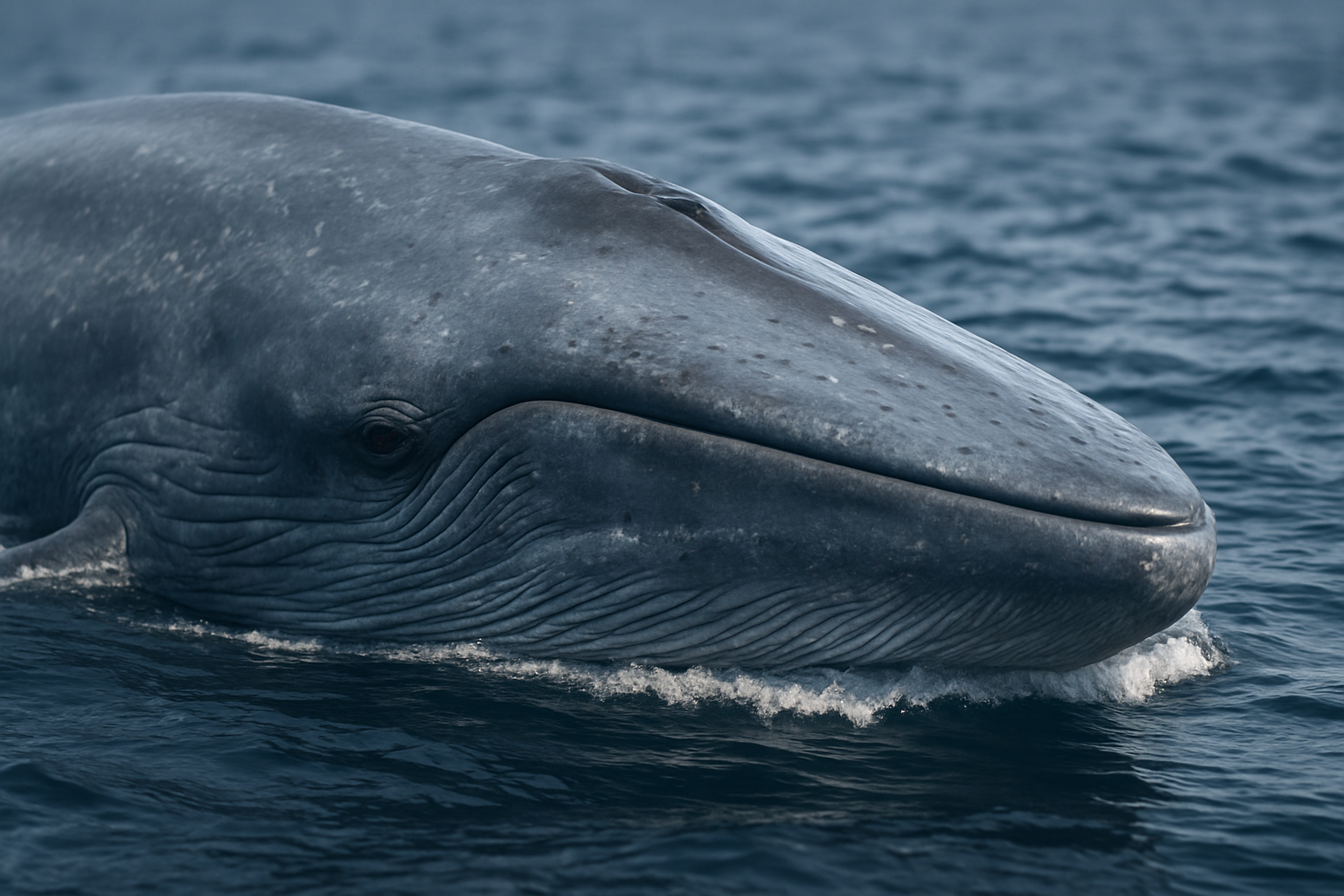
As we delve into the study of the blue whale, we glimpse a creature that defies the boundaries of imagination. The blue whale, Balaenoptera musculus, is not only the largest animal existing today but also the largest to have ever existed in the history of our planet. Covered with skin that ranges from bluish-gray to blue-gray, this oceanic giant boasts a body that can reach an incredible 100 feet in length and weigh up to an astounding 200 tons.
In terms of body structure, blue whales are sleek and elongated, perfectly adapted for marine life with astonishing efficiency. They have a flat, wide head and a body that tapers to the tail, whose flippers can be as wide as a small airplane. But it’s not just their size that makes them fascinating; their pectoral fins, up to 13 feet long, help these leviathans glide gracefully through cold, deep waters.
The colossal size of these mammals is not only an impressive feature but also a crucial attribute for their survival. The large body provides efficient thermoregulation in icy waters and allows them to dive to depths of over 1,600 feet in search of food, primarily krill, of which they consume up to 4 tons daily. Additionally, their large size reduces the number of natural predators, limiting them practically to orcas on rare occasions.
As we contemplate this ocean majesty in all its glory, we set the stage to dive into the depths of its habitat in the next chapter, exploring the routes and behaviors of the blue whale in the vast ocean.
Habitat and Migration: Ocean Routes and Behaviors
In the vast ocean, few spectacles are as majestic as the migration of blue whales, the largest animals on the planet. These giants travel thousands of miles in search of ideal conditions for feeding and reproduction, a journey that takes them through various seas and oceans around the world.
The blue whale, found in all oceans except the Arctic, favors cold, deep waters where nutrient-rich currents promote the proliferation of krill, their main food source. During the summer, blue whales migrate to polar regions where krill is abundant, allowing them to accumulate the energy reserves needed for breeding and migration. However, as winter approaches and ice begins to form, they move to lower latitudes and warmer waters, where they give birth and mate.
This migration pattern not only ensures continuous access to food but also allows them to reproduce in environments conducive to the survival of their young. The migratory routes of blue whales, although intrinsically linked to their biological needs, remain a mystery in many aspects. Scientists suggest that these paths are influenced by the animals’ ancestral memories, guiding them through the vast and open ocean with almost unfailing precision.
As this chapter closes, prepare to explore, in the next segment, the feeding and ecology of these fascinating aquatic mammals. Discover how the blue whale uses its enormous mouth to capture tons of krill and its ecological significance for the oceans.
Feeding and Ecology: The Role of the Blue Whale in the Oceans
As we delve into the depths of the oceans, we discover true titans of the marine environment, and among them, the blue whale plays a leading role not only for its colossal size but also for its vital ecological interactions. Such a grand creature, with a diet primarily based on krill, small crustaceans that form dense underwater clouds, offers a glimpse of how nature operates on both micro and macro scales.
Feeding Method
Surprisingly agile for its size, the blue whale feeds through a behavior called ‘lunge feeding,’ which involves opening its mouth enormously while swimming towards the krill, engulfing water and prey in massive quantities. After that, the water is filtered through its baleen plates, which function like a sieve, retaining the small shrimp and releasing the liquid back into the ocean. This method not only demonstrates the blue whale’s efficiency in its habitat but also the delicacy with which it preserves the balance of marine life.
Ecological Importance
Beyond its feeding method, the presence of the blue whale in the oceans is crucial for biodiversity and the health of the seas. By feeding on krill, the blue whale helps regulate the population of these crustaceans, which in turn affects the marine food chain and nutrient availability. Moreover, their iron-rich feces play a crucial role in the nutrient cycle, fertilizing the plankton that serves as the base for the entire marine food chain. These giants, therefore, contribute to ocean productivity and carbon dioxide absorption, playing an essential role in combating climate change.
As we conclude this chapter, it is evident that protecting the blue whale is protecting our seas. Moving forward, the next chapter will discuss the challenges faced by these magnificent creatures and the urgent measures needed to ensure their survival in a changing world.
Conservation and Threats: Challenges for the Species’ Survival
As we explore the majestic existence of the blue whale, it becomes imperative to focus on the crucial challenges threatening its survival. The planet’s largest creature faces threats not due to its grandeur but because of its vulnerability to human activities and environmental changes.
Human Impacts and Environmental Consequences
Historically, commercial whaling decimated blue whale populations, bringing them to the brink of extinction. Although whaling was globally banned in 1966 by the International Whaling Commission, the legacy of that period still haunts populations. Today, blue whales face new dangers: ship collisions and entanglement in fishing gear. These incidents are not only tragic individually but have a profound impact on the species’ recovery rate.
Moreover, climate change is rapidly altering marine habitats. Ocean warming and acidification interfere with the availability of krill, the primary food source for blue whales, which is decreasing in traditionally abundant areas. With less food available, whales must travel farther and exert more effort to sustain themselves.
Conservation Efforts and the Path to Recovery
In response, various global initiatives and regulations have been implemented. Protected areas in the oceans have been established to safeguard critical blue whale habitats. Environmental organizations, governments, and international institutions are collaborating to monitor whale populations and implement strategies to mitigate the risks of collisions and entanglements. Additionally, scientific research remains a key component, providing essential data to adjust conservation policies according to the emerging needs of this species.
These efforts are vital and require the continuous commitment of all sectors of society. As suggested in the article on new species discoveries in the Amazon, successful conservation depends on both local and global initiatives, demanding unprecedented collaboration.
As we conclude this chapter, it is imperative to remember that the continuity of the blue whale’s existence depends not only on actions directed at its conservation but also on how we approach and implement environmental management strategies in a broader context. As we move to the next chapter, we will explore how the application of respectful and effective techniques in financial processes, such as friendly collections, can reflect a greater commitment to globally responsible practices.
Conclusions…
The blue whale represents one of the greatest treasures of marine life, combining impressive size with an indispensable ecological function. By understanding its habits, size, and challenges faced, we reinforce the importance of marine conservation and global efforts to protect these magnificent animals. Conserving it means preserving the health of the oceans and, consequently, the planet. Awareness and involvement of all are fundamental steps to ensure its survival and the balance of marine ecosystems.
Did You Know?
- What is the maximum size a blue whale can reach? The blue whale can reach up to 100 feet in length, making it the largest known animal on Earth.
- Why is the blue whale considered the largest marine mammal? It is the largest marine mammal due to its length and body mass being greater than any other marine animal, including sharks and other cetaceans.
- What is the importance of the blue whale to the marine ecosystem? Blue whales contribute to ocean health by recycling nutrients and helping regulate the marine food chain.
- Where do blue whales typically live and migrate? They inhabit cold and temperate oceans, migrating between feeding areas in the summer and breeding areas in the winter.
- How do blue whales feed given their enormous size? They primarily feed on krill and small crustaceans, filtering large volumes of water through their baleen.
- What threats do blue whales currently face? Major threats include past illegal whaling, ship collisions, marine pollution, and climate change affecting their habitat.
- How do blue whales communicate? They use low-frequency vocalizations to communicate over long distances underwater.
- What is being done to protect the blue whale? There are international protection laws, marine protected areas, and population monitoring to preserve the species.