The Aedes aegypti mosquito is one of the most well-known vectors for transmitting serious diseases such as dengue, zika, and chikungunya. Its presence in urban areas and its ability to reproduce in household environments make it a public health threat, especially during rainy and hot periods. Understanding the role of this mosquito in the transmission dynamics of these diseases is essential for adopting effective prevention and combat measures. In this article, we will present essential information about its characteristics, the risks of epidemics, as well as strategies to protect your family and community, contributing to a safer and healthier environment.
Introduction to the Dengue Mosquito
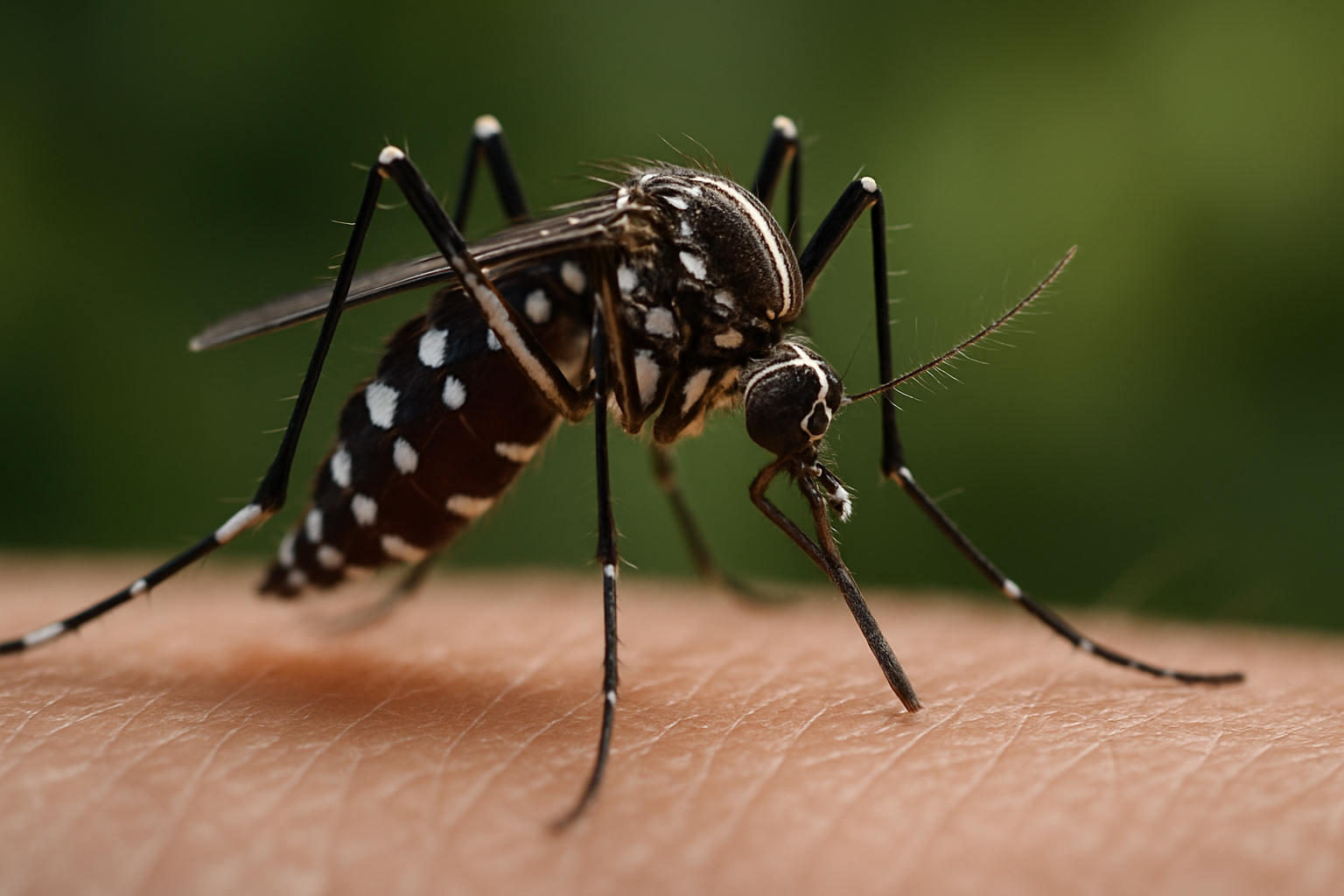
First of all, it is important to know the Aedes aegypti mosquito, the main vector of dengue, zika, and chikungunya. This mosquito has a black coloration with white stripes on its body and legs, which makes it easy to identify. Its life cycle consists of four stages: egg, larva, pupa, and adult, with an average duration of seven to ten days, depending on environmental conditions.
The habitat of the Aedes aegypti is generally close to urban areas, where it finds containers with stagnant water to lay its eggs. For this reason, places like plant pots, uncovered water tanks, used tires, and even small water spots in homes are potential breeding grounds that contribute to the proliferation of this species.
It is worth noting that the mosquito is diurnal, with greater activity mainly in the early morning and late afternoon. Thus, understanding its behavior and life cycle is essential for implementing effective control strategies.
Diseases Transmitted by the Dengue Mosquito
The Aedes aegypti is primarily responsible for transmitting serious diseases, mainly dengue, zika, and chikungunya. Although each of these diseases has specific characteristics, they all share a significant impact on public health.
Dengue, for example, can manifest with symptoms ranging from high fever, headache, muscle and joint pain to more severe forms that include hemorrhages and shock. The zika virus has gained attention in recent years for causing microcephaly in babies when transmitted from mothers to fetuses, as well as neurological symptoms in adults. Chikungunya, in turn, is known for causing high fever accompanied by intense joint pain, which can persist for months.
Because these diseases are transmitted by the same vector, it is important to be aware of their integrated prevention. For more information on diseases transmitted by arthropods, including other parasites, you can also consult the study on sarcoptic mites.
Causes and Factors of Epidemics
The epidemics of dengue, zika, and chikungunya are influenced by various environmental, climatic, and human factors. Firstly, conditions such as high temperatures and rainy periods favor the emergence of places with stagnant water, which serve as breeding grounds for the Aedes aegypti mosquito. Therefore, increased humidity and the accumulation of water in open containers enhance the reproduction of the vector.
Moreover, the unplanned growth of cities, combined with a lack of adequate sanitation, contributes to the increase of favorable habitats for the mosquito. Human behavior is also a determining factor, as the accumulation of garbage, containers, and stagnant water in residential areas allows the mosquito’s cycle to remain active.
In regions where there is little oversight and environmental education, epidemics tend to be more recurrent and intense. Thus, collective awareness is one of the pillars for controlling and preventing diseases transmitted by the mosquito.
Methods of Combat and Control of the Mosquito
Combating the Aedes aegypti involves chemical, biological methods, and preventive measures aimed at reducing the mosquito population and preventing disease transmission. Among the chemical methods, the use of specific insecticides to eliminate adult mosquitoes and larvae stands out; however, its use must be controlled to avoid resistance.
Similarly, biological control has gained relevance. For example, some entomopathogenic fungi are used to combat pests and vectors. A promising alternative is the use of Cordyceps fungus, which acts naturally to control insect populations, including the dengue mosquito. Another example is the Gibellula attenboroughii fungus, which shows potential in the biological control of these vectors.
Additionally, natural predators are important allies. The bat, the flying mammal, consumes a large number of insects, including mosquitoes, contributing to natural balance. In another context, the jumping spider represents the balance of natural ecosystems that influence mosquito populations.
Combining these strategies, along with environmental education, makes control more effective, reducing the risk of disease transmission.
How to Protect Your Family and Community
To protect your family and community from the Aedes aegypti mosquito and, consequently, from the diseases it transmits, it is essential to adopt some practical and collective measures. Above all, eliminating all potential breeding sites is the most important step. This includes regularly emptying and cleaning containers that can accumulate water, such as plant saucers, water tanks, unused pools, and tires, as well as avoiding garbage accumulation.
Furthermore, using properly registered repellents and applying them as directed is an effective way to reduce contact with the mosquito, especially during the mosquito’s peak activity times. It is also advisable to install screens on doors and windows to make it difficult for mosquitoes to enter homes.
At the community level, mobilization is essential. Awareness campaigns and community efforts to eliminate mosquito breeding sites can have a significant impact on reducing the Aedes aegypti population. Joint action strengthens control and brings benefits to all, as the mosquito does not respect property boundaries.
Therefore, shared responsibility and the constant adoption of these practices are safe paths to reduce risks and contain epidemics.
Conclusions
In summary, the Aedes aegypti mosquito is the main vector responsible for transmitting diseases that pose a challenge to public health, such as dengue, zika, and chikungunya. Understanding the mosquito’s life cycle, as well as the factors that promote its proliferation, is essential for developing efficient control strategies.
The various combat techniques, from chemical and biological methods to individual and collective actions, are essential for containing epidemics. Moreover, the integration of these measures, combined with environmental education and community engagement, enhances the results in reducing the risk of contagion.
Thus, each person plays a crucial role in prevention by adopting simple habits that eliminate breeding sites and using available resources correctly. Above all, the unification of efforts among families, communities, and public agencies is the formula for a healthier environment, free from the pain and complications caused by these diseases.
Did You Know?
What is the Aedes aegypti mosquito?
The Aedes aegypti is a black mosquito with white stripes, a vector for diseases such as dengue, zika, and chikungunya, that reproduces in stagnant water.
What diseases can the dengue mosquito transmit?
It primarily transmits dengue, zika, and chikungunya, all of which have the potential to cause severe symptoms and impacts on public health.
What are the main breeding sites of the Aedes aegypti mosquito?
Containers with stagnant water such as plant pots, used tires, uncovered water tanks, and accumulated garbage are the main places where the mosquito reproduces.
How does the climate influence dengue epidemics?
Periods of high temperatures and rain increase the accumulation of stagnant water and accelerate the mosquito’s cycle, facilitating proliferation and the occurrence of epidemics.
What methods are used to combat the dengue mosquito?
Chemical methods such as insecticides, biological control with entomopathogenic fungi, and natural predators like bats, as well as community preventive actions, are used.
What is biological control in combating Aedes aegypti?
It is the use of natural organisms, such as fungi from the Cordyceps and Gibellula attenboroughii genera, that attack mosquitoes without harming the environment.
How can I protect my home from the dengue mosquito?
By eliminating stagnant water, using repellents, and installing screens on doors and windows to prevent the entry of the mosquito.
What is the role of the community in combating diseases transmitted by Aedes aegypti?
Collective mobilization to eliminate breeding sites and raise awareness among residents is essential to reduce the mosquito population and prevent epidemics.
Why should the use of insecticides be controlled?
Because excessive use can lead to mosquito resistance to products, decreasing the effectiveness of chemical control.
What are the symptoms of diseases transmitted by the dengue mosquito?
Symptoms include high fever, body and joint pain, skin rashes, as well as more serious risks depending on the disease and the patient’s condition.