American Raccoon: The Enigmatic Inhabitant of the Americas
Known as raccoon in the United States, the American raccoon is a fascinating mammal that inhabits the Americas. This article reveals surprising details about its life and adaptation.
The American Raccoon: An Introduction to the Raccoon of the Americas
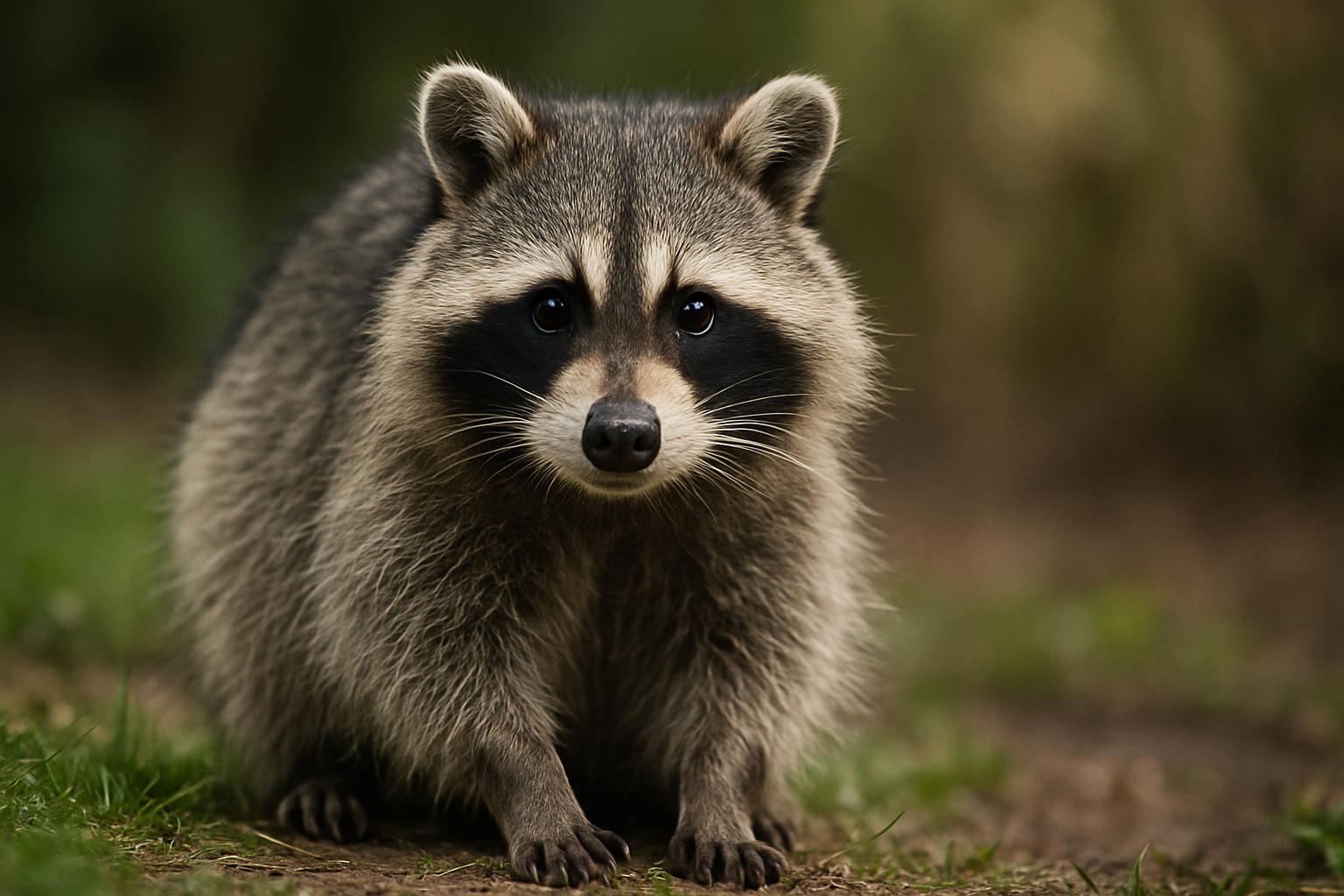
As we navigate through the pages of American wildlife, we encounter a clever and ubiquitous figure, the American raccoon, whose adaptation and cunning have made it a constant character in both urban and forest environments. This mammal, scientifically named Procyon lotor, belongs to the procyonid family and is recognized for its distinctive facial mask and dense gray fur.
The name ‘raccoon’ derives from the Powhatan word ‘aroughcun’, meaning ‘animal that rubs with its hands’, a reference to its characteristic ability to manipulate food skillfully. This physical peculiarity not only defines its identity but also highlights an adaptive intelligence that fascinates naturalists and laypeople alike.
Because of its ubiquitous role, the raccoon traverses the cultures of the Americas, appearing in native myths as a clever survivor and evolving into a symbol of adaptability and cunning. To understand more about how these adaptive animals have interacted with urban habitats in the Americas, additional reading can be found about the role of other mammals in cities.
Now let’s proceed to the next chapter and explore the habitats and vast distribution of the raccoon, glimpsing its innate ability to thrive in diverse environments, from dense forests to highly populated urban areas.
Habitat and Distribution: Where Does the American Raccoon Live?
Emerging from the shadows, the American raccoon (Procyon lotor) is a true symbol of adaptability and survival across various habitats in the Americas. This clever creature extends its presence from southern Canada to Panama, revealing its extraordinary ability to adapt to varied ecosystems.
Natural Habitats
In this vast territory, raccoons prefer dense forests, often found near water sources such as rivers and lakes, where abundant vegetation and food availability are ideal. However, they are not limited to these areas; they are also common inhabitants of wetlands and mangroves, places where their swimming ability and foraging in mud is highly advantageous.
Urban Adaptation
However, it is not only in natural environments that raccoons thrive. Their presence is also notable in urban areas, where they have skillfully adapted to explore new food sources and shelter. From trash cans to attics, raccoons use their intelligent predatory behavior to overcome the challenges posed by the urban environment. This adaptive success makes them frequent characters in both wild areas and metropolitan settings. In short, this versatility not only demonstrates their intelligence but also an incredible survival ability in the face of increasing urbanization.
As we prepare to explore the Habits and Behavior of these fascinating mammals in the next chapter, it is essential to recognize how the nocturnal nature and manual skills of raccoons shape their survival strategies in a world that continues to change.
Habits and Behavior: In the Rhythm of Nocturnal Life
As we explore the wildlife of the Americas, we encounter the American raccoon, an animal that reveals its most intriguing secrets under the cloak of night. While most sleep, these ingenious creatures awaken to the world, making use of their remarkable manual skills to forage for food and explore their environment. Raccoons are masters at manipulating objects, and with sensitive snouts and agile paws, they become skilled urban and natural explorers. Their manual skills are not just survival tools but also keys that unlock complex food challenges, opening sealed containers and accessing food that few other animals can reach.
In urban areas, raccoons demonstrate remarkable adaptability. They learn quickly, finding food in trash cans and even using drainage systems and small docks as resource sources. This interaction with humanized environments showcases the impressive adjustment capacity of the raccoon, as they have become regular visitors to our backyards and homes. However, this proximity also brings challenges for both sides, requiring ongoing efforts for harmonious coexistence. And for those interested in learning more about the adaptation of other species in urbanized environments, be sure to explore our article on the capybara, the largest rodent in the world, which has also adapted fascinatingly to areas inhabited by humans.
To conclude this chapter, as we prepare to dive into curiosities in the next segment, it is essential to reflect on the intelligence and adaptability of these enigmatic nocturnal inhabitants. Through observation and study of the American raccoon, we can learn not only about them but also about our own role and impact on the natural world.
Curiosities and Interesting Facts About the Raccoon
After diving into the diversity of raccoon habitats in previous chapters, we will now explore the curiosities and unique skills that these surprising beings possess. Imagine an animal capable of solving complex puzzles with almost human-like ability. We are not talking about primates, but rather the American raccoon, a master in the art of unlocking! Equipped with agile fingers, these intriguing animals can access trash cans and even locked doors, demonstrating intelligence beyond the ordinary in the animal kingdom.
However, beyond their problem-solving intelligence, the raccoon also stands out for its hygiene habits. Before consuming food, they often ‘wash’ items in nearby bodies of water, a behavior that reflects their careful nature and fascinating instinct. Perhaps it is this characteristic that has made them frequent figures in American folklore, where they are often portrayed as clever and cunning.
In all these elements lies the intrinsic ecological importance of the raccoon. Its presence indicates a diverse and functional ecosystem, where they play a vital role in seed dispersal and insect control. To better understand this role, discover more in our article on the ‘ecological importance of mammals in temperate forests’ (insert relevant URL from the list). Get ready to explore in the next chapter ‘Conservation and Coexistence: Respecting the American Raccoon’, where we will discuss the challenges these animals face and the necessary measures for peaceful coexistence between humans and raccoons.
Conservation and Coexistence: Respecting the American Raccoon
With the contemplative conclusion of how raccoons interact with other animals, a new challenge arises, now focused on the delicate interface between these clever mammals and human advancement. Although raccoons are known for their ability to adapt to urban environments, this coexistence is not always peaceful, and the challenges are many. The loss of natural habitat, competition for resources, and direct conflict with humans are everyday realities faced by American raccoons. Conservation measures, such as habitat protection and legislative initiatives, are essential to ensure the survival of this clever animal.
Despite efforts, the raccoon still faces the challenge of public misunderstanding, which often sees them as pests rather than integral parts of the urban ecosystem. For harmonious coexistence, environmental education and the implementation of practices such as securing trash and limiting access to food sources are crucial measures that can significantly reduce friction points between humans and raccoons. Our commitment to promoting and educating about biodiversity is reflected in all the posts we produce, such as the article about the frog species that cohabits similar habitats to raccoons learn more about the Bornean frog.
In summary, to preserve the raccoon population and ensure the health of our urban ecosystems, active community participation is essential. I invite all readers to engage in the protection of these incredible animals by sharing information, participating in local conservation projects, and promoting practices that respect urban wildlife. By doing so, we not only help raccoons but also enrich our own environment.
Conclusions…
The American raccoon is a remarkable animal, whose adaptability and intelligence make it unique in the fauna of the Americas. This mammal, popularly known as raccoon in the United States, stands out for its ability to survive in various environments as well as its intriguing behavioral characteristics. With its manual dexterity and nocturnal habits, the raccoon captivates and surprises, revealing a complexity that goes beyond mere curiosity. We hope this article has broadened your view of this fascinating species, showing how nature can be ingenious and full of surprises. Our commitment remains strong: to bring a differentiated perspective on fauna and flora, inspiring respect and admiration. Did you enjoy this post? Like, comment, and share so we can keep creating!
Did you know?
What is the American raccoon?
The American raccoon is a mammal found in the Americas, known in the United States as raccoon, famous for its intelligence and adaptation to urban and wild environments.
What is the natural habitat of the American raccoon?
It inhabits various regions of the Americas, preferring forests, areas near water bodies, and even urban zones due to its adaptability.
What are the physical characteristics of the raccoon?
The raccoon has dense fur, usually in shades of gray, a black mask around its eyes, and very skillful paws that resemble human hands.
How does the raccoon feed?
It is an omnivorous and opportunistic animal that feeds on fruits, insects, small animals, and food scraps found in urban environments.
Is the raccoon a nocturnal animal?
Yes, the raccoon is primarily active at night when it forages for food and avoids predators.
What is the ecological importance of the raccoon in nature?
It helps control insects and small animals, as well as dispersing seeds, contributing to the balance of the ecosystems where it lives.
Can the raccoon be found in urban areas?
Yes, thanks to its adaptability, the raccoon is often seen in cities, where it explores food scraps and shelter in urban spaces.
Are there measures to coexist peacefully with raccoons in the city?
It is advisable to keep trash securely closed, avoid feeding these animals, and seal entry points in homes to prevent conflicts.