Spider Crab: The Giant of the Depths
In the vast and enigmatic marine world, the spider crab emerges as one of the most fascinating creatures. With its long legs and impressive body, this species invites us to dive deep into its habitat and lifestyle, revealing the secrets that surround it.
Physical Characteristics of the Spider Crab
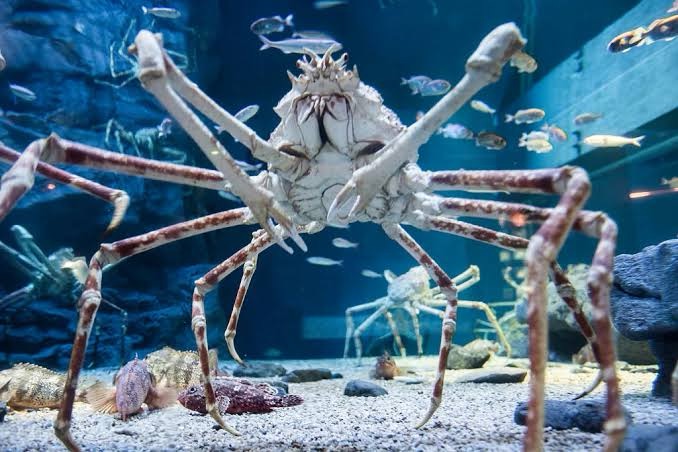
Amidst the unexplored vastness of the oceans, the spider crab stands out with an impressive physical presence. Imagine a creature whose wingspan resembles two meters when its long and slender appendages are stretched out. Observing these legs, we see an extraordinary masterpiece of nature: light and slender, yet surprisingly strong, allowing the crab to explore the ocean floor with grace and precision.
Its coloration generally mixes shades of brown and orange, providing effective camouflage against predators and facilitating concealment among corals and marine rocks. This earthy tone complements the rough texture of its shell, which has developed to protect its delicate interior from the imminent threats of the depths.
The body of the spider crab is relatively small compared to its legs, housing compact and efficient internal organs adapted to withstand the high pressure of deep waters. Its stalked eyes offer excellent peripheral vision. This attribute is vital for survival, allowing it to detect subtle movements in its environment.
As a master of evolutionary adaptation, this crustacean has gills specially adapted to extract oxygen from the cold waters of the depths. Moreover, its sharp claws are not only for defense but also skilled instruments for feeding and communication.
Dissolved in distant waters, this giant possesses abilities and characteristics comparable to those of the squid, another native of the abyssal vastness that challenges our perceptions of body structure. Thus, the spider crab remains an intriguing example of how marine life ingeniously adapts to its inhospitable and fascinating environment.
Habitat and Distribution
In the vast depths of the ocean, the spider crab inhabits a world of mysteries. This giant, known for its long spider-like legs, is often found in cold and temperate waters along the coasts of Japan, a region that serves as a primordial home for this remarkable species. Its geographical distribution extends from shallow waters to abyssal depths, over 300 meters deep.
The spider crab has remarkably adapted to this inaccessible environment. Its robust shell offers protection against predators, while its exoskeleton allows it to withstand the increasing pressure of the depths. The low temperature of its natural habitat also plays a crucial role, influencing its slow metabolism. This adaptation aids in energy conservation, essential in an environment where resources can be limited.
Its long limbs allow the spider crab to cover great distances on the seabed, spreading across vast territories in search of food, as I will detail in the next chapter on Feeding and Behavior. Enhanced mobility is fundamental, given the scarcity of organic matter in the ocean depths. In seas as rich as they are mysterious, this giant crustacean shares its world with other exotic creatures.
These interactions create a complex ecosystem. To explore more about how unique creatures adapt to their habitats, read about the adaptation of orcas in different environments. Despite its appearance marked by time, the resilience of the spider crab to the pressures of the underwater environment highlights its critical role in the ocean, being both a survivor and a dweller of the depths.
Feeding and Behavior
In the dark depths of the ocean, the spider crab moves with surprising grace, especially when hunger strikes. Equipped with long legs, it scours the seabed in search of food. This giant crustacean, despite its intimidating appearance, is an opportunist when it comes to feeding.
Its diet is quite varied, including mollusks, small fish, and even algae. However, the spider crab also plays the role of a scavenger, consuming organic matter in decomposition that it encounters along its path. This behavior not only ensures its survival but also helps clean the marine environment.
To capture its prey, the spider crab uses its powerful pincers to access the contents of shells and exoskeletons. In a virtually silent movement, it slowly approaches its target, waiting for the perfect moment to strike. The precision of this attack is essential for its success.
In addition to its predatory relationships, the spider crab frequently interacts with other marine organisms, sometimes becoming prey. Natural predators, such as octopuses and some species of sharks, do not hesitate to hunt it. However, its imposing size and resilient shell provide an intimidating defense.
In the intricate fabric of the marine ecosystem, the feeding behavior of the spider crab reveals much about the health of the habitat in which it lives. Its interactions and dietary choices contribute to ecological balance. Similarly, the ecological role of other predators is also crucial, ensuring diversity and a sustainable approach to their feeding journeys. Through this balance, the deep waters continue to thrive.
Ecological Importance
The spider crab inhabits the depths of the oceans, where it plays a crucial role in ecological balance. Its presence indicates a healthy marine ecosystem, acting as a predator of small invertebrates and as prey for larger species. Furthermore, its spectacular long limbs allow it to explore vast areas, contributing to the dispersion and population control of various benthic species.
By interacting with a variety of organisms, spider crabs enable a rich biodiversity to thrive. They participate in complex food chains, feeding on sea slugs and starfish, and occasionally being preyed upon by octopuses and sharks. These multiple interactions are vital for maintaining the health and diversity of the ecosystem, allowing other species to find their appropriate niches.
However, their habitat faces narrative threats. Human activities, such as trawling and pollution, contribute to the degradation of their environment. It is essential to recognize the importance of these giants of the depths and ensure their preservation. Losses in their populations can trigger a domino effect, affecting both predators and prey in their ecosystem.
Preserving spider crabs is not just about protecting a species. It is about understanding and respecting the complexity of marine interactions upon which so many other forms of life depend. Initiatives to protect them must consider this ecological importance in their strategies.
Just as new discoveries in the Amazon help us rethink terrestrial biodiversity, protecting spider crabs enhances our understanding and respect for the sea, one of the planet’s vastest habitats.
Challenges and Conservation
The spider crab of the depths is one of the most impressive creatures of the oceans, but it faces a series of unpredictable challenges. Its long legs make it a remarkable sight, but also a potential victim of overfishing. Industrial fishing is a constant threat, with trawl nets inadvertently capturing these magnificent creatures.
Moreover, ocean pollution poses a significant danger. Plastic waste, which has invaded our seas, can hinder the movement and development of crabs. Industrial toxins, often dumped unchecked, can poison their natural habitats. These factors increase the pressure on spider crab populations, which already have a challenging life cycle.
Conservation initiatives have been implemented, focusing on protecting the most critical habitats. Marine protected areas have been established in various regions of the world, creating safe havens for these sea arachnids. Conservation organizations are working with fishing communities to develop more sustainable fishing methods, minimizing bycatch.
Education and awareness are essential parts of these efforts. Increasing public knowledge about the importance of spider crabs in maintaining the balance of marine ecosystems is crucial. In a collaborative effort, environmental specialists are highlighting the importance of reducing plastic waste in the oceans, strengthening campaigns aimed at decreasing its production and improper disposal.
Just as the rhinoceros faces threats on land, the spider crab requires urgent actions for its marine preservation. Through global collaboration, we can ensure that these remarkable creatures continue to roam the dark and fascinating depths for many years.
Conclusions…
The spider crab is an impressive creature that holds secrets we must pay attention to. Understanding its biology and ecology is crucial for the preservation of this magnificent species and its habitat, emphasizing the importance of the seas on our planet.
Did you know?
Can you eat spider crab?
Yes, spider crab can be consumed, being expected in some cultures, although its taste and texture may vary.
What does the spider crab eat?
Spider crabs primarily feed on mollusks, crustaceans, and plant matter found on the seabed.
How long does the giant spider crab live?
The giant spider crab can live up to 50 years under ideal conditions, although the average lifespan is shorter.
What is the rarest crab in the world?
The one-eyed crab, found only in certain regions of the Pacific Ocean, is considered one of the rarest crabs in the world.
What is the most dangerous crab in the world?
The Pacific spider crab is known for its venomous presence, which, although not lethal to humans, can cause severe reactions.
What is the most expensive crab?
The snow crab, especially the King Crab type, is one of the most expensive, reaching high prices in gourmet markets.
What is the danger of the spider crab?
The spider crab can pose a danger due to its size and strength when defending itself, but it is not considered a significant threat to humans.
What is the largest crab in Brazil?
The U. mjoe crab is considered the largest crab found on Brazilian coasts, known for its impressive claws and vibrant color.
How long does the crab get fat?
The spider crab generally reaches its peak fat during the breeding seasons, a few months a year, when they feed abundantly.