The Kakapo: The Last Parrot That Can’t Fly
The kakapo, a marvel of nature, is a remarkable parrot that cannot fly. With an alarmingly reduced population, the species faces critical challenges for its survival. This article delves into the peculiarities of the kakapo, its habitat, and the necessary measures to ensure its preservation.
The Kakapo’s Natural Habitat
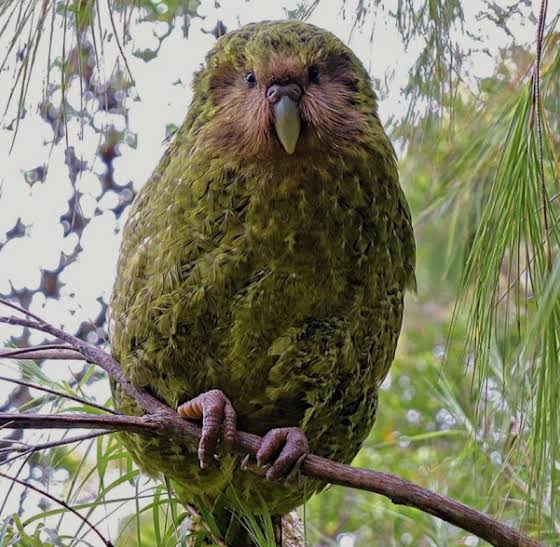
In the remote islands of New Zealand, there exists a unique habitat, home to the only parrot that cannot fly: the kakapo. These forests are dense, with intertwined trees amidst a lush undergrowth. The kakapo blends masterfully into this environment, its moss-green plumage harmonizing with the evergreen foliage.
The kakapo is an expert at staying hidden. During the day, it rests in shaded corners, concealed by ferns and low-growing plants. At night, with its more active nature, it roams the forest floor. Using its strong legs, the kakapo climbs trees, rummaging through leaves and moss in search of food.
These forests house not only imposing trees but also an intricate network of small plants and lichens. Such biodiversity offers the kakapo a rich and varied diet. Native plants, like the ‘rimu’, play a vital role. When their fruits ripen, they provide a true feast for this peculiar bird.
The kakapo’s survival in this forest is closely linked to its ability to utilize resources sustainably and quietly. This behavior is an essential adaptation to avoid predators, which are a constant threat. Furthermore, the kakapo uses the characteristics of its environment to locate its own territories, marking trails and detecting changes in its surroundings with its keen sense of smell.
To explore how other forest inhabitants also adapt to unique environments, check out this article on the toucan and its adaptations in nature. The stillness of these woods is broken only by the rustling of branches, a silent testament to the kakapo’s adaptive ingenuity.
The Biology of the Kakapo
The kakapo, also known as the owl parrot, is an extraordinary example of evolutionary adaptation. This large nocturnal bird has moss-green plumage that effectively camouflages it in the dense underbrush of its native forests in New Zealand. Surprisingly, the kakapo does not fly, a rare evolutionary trait among parrots, developing robust legs for ground locomotion.
Being nocturnal, its large dark eyes are adapted for night vision, and its auditory peculiarities allow it to locate sound sources imperceptible to humans. With a curved and powerful beak, the kakapo utilizes its keen sense of smell—a sense often underestimated in birds—to seek out foods that make up its predominantly herbivorous diet.
Its diet consists of native fruits, leaves, seeds, and pollen, with a preference for low vegetation and shrubs that offer a nutritious and abundant combination. This eccentric parrot also chews on twigs, extracting nutrients from the bark to the core.
Socially, the kakapo is notoriously solitary, coming together only for reproduction. During the mating season, males perform a ritual known as ‘booming’, a rhythmic and deep call that resonates over long distances. This behavior is not found in other parrot species, showcasing the uniqueness of their courtship rituals.
Curiously, the kakapo’s reproductive strategy depends on the abundance of fruits from certain native trees, which directly influences the availability of resources for feeding the young. This enigmatic bird illustrates the resilience and vulnerability inherent in such a restricted ecological niche.
To learn about other animals with notable adaptations, see the adaptation of the platypus.
Threats to the Kakapo’s Survival
The survival of the kakapo, this remarkable and unique bird, is in a precarious position due to a series of threats. Originally, the kakapo lived safely in the forests of New Zealand, isolated from predators. However, the introduction of invasive species such as rats, cats, and stoats has caused devastation to the kakapo population. These predators see the kakapo’s eggs and chicks as easy prey, as the bird cannot fly and its protective instincts are limited.
In addition to predators, habitat destruction intensifies the challenges faced by this species. Human colonization has led to the clearing of large portions of native forest for pastures and housing. This habitat loss not only eliminated essential shelters but also disrupted the delicate ecosystems that sustain the kakapo.
Climate change, coupled with human activity, also affects the food sources available for the kakapo, which is highly dependent on certain types of plants for its survival. These changes in forest composition directly impact the kakapo’s reproductive cycle and its ability to find mates.
However, there are animals that also face similar challenges due to alterations in their habitats. Thus, the kakapo’s plight is not unique among the inhabitants of New Zealand or the world. Despite its current situation, the kakapo is a resilient survivor. However, to ensure its future, it is essential to address these threats urgently and effectively. This opens the door for an analysis of the conservation practices and efforts that have been implemented to save this species from imminent extinction.
Conservation Efforts
The kakapo, an idiosyncratic bird from New Zealand, is at the heart of international conservation efforts. This remarkable parrot, unable to fly, is threatened with extinction due to habitat loss and introduced predators. Fortunately, numerous initiatives have emerged to preserve this natural treasure. One of the most notable is the Kakapo Recovery Program. A dedicated team of conservationists and scientists works tirelessly to ensure the survival of this singular bird.
The southern islands of New Zealand have become a sanctuary for the kakapo. Predators such as rats, cats, and possums have been eradicated from these islands, providing a safe refuge for the green parrot. To increase the kakapo population, all birds are closely monitored. Each kakapo has a radio transmitter, allowing the team to track its movements and health.
Simultaneously, technology plays a crucial role. Advances in genetics have allowed for detailed analysis of the kakapo’s genetic pool. This facilitates reproductive management, minimizing the risk of inbreeding. Notably, the installation of monitored nesting boxes with cameras allows for rapid interventions in case of emergencies.
International collaboration is vital. Experts around the world are consulted, generating knowledge exchanges that strengthen conservation strategies. Understanding animal behavior is an important link for many scientists involved in this global effort.
These efforts, conducted with perseverance and passion, offer tangible hope. The survival of the kakapo depends on this collective tenacity and undoubtedly illustrates the power of unity and collaboration for the sake of nature.
The Future of the Kakapo
As the world watches in admiration the story of perseverance and struggle of the kakapo, it is impossible not to ponder its future. The kakapo has survived challenges that date back thousands of years, but its struggle has intensified in recent centuries. Conservation efforts, crucial for its chances of survival, depend on unprecedented global awareness. The preservation of species like the kakapo reflects the state of health of the ecosystems that sustain all life.
While we are witnessing advances in the management and breeding of these nocturnal parrots, the task is immense and requires a collaborative international effort. Conservation projects involving local communities are vital. Indigenous peoples and rural populations constantly provide invaluable knowledge that can make a difference in the survival of endangered species. Alongside this, scientific advancement continues to offer new tools for the management and reintroduction of these unique animals into safe habitats.
However, more than technology, a transformation in the heart of humanity is necessary. We need to reconnect with the natural world and value its profound diversity. The kakapo is more than a living relic; it is a powerful symbol of resilience. Just like the toucan, which enchants with its vibrant colors and imposing presence, the kakapo offers a clear message: the beauty and complexity of life are worth protecting. We must unite efforts, sharing knowledge and passion, to ensure that future generations also know the extraordinary story of the kakapo.
Conclusions…
The story of the kakapo is a reflection of the battle for biodiversity preservation on our planet. Every effort counts to ensure that these magnificent creatures continue to exist. The future of the kakapo depends on our awareness and collective actions to protect their homes.
Did you know?
What is the rarest parrot in the world? The rarest parrot in the world is the kakapo, which is native to New Zealand and is in serious danger of extinction.
Why is the kakapo endangered? The kakapo faces extinction due to habitat loss, introduced predators, and low reproduction rates.
What is the parrot that cannot fly? The kakapo is known as the parrot that cannot fly, adapting to a terrestrial lifestyle.
What is the rarest bird on planet Earth? The rarest bird on the planet is considered to be the kakapo, with only a few individuals remaining.
Which parrot does not talk? The kakapo is not known for its ability to talk, unlike other parrot species.
Why do parrots talk to a person? Parrots talk to people due to their ability to mimic sounds and their social interaction.
Is it true that female parrots do not talk? Although this varies among species, many female parrots, including the kakapo, have less speaking ability than males.
Which parrot is the most intelligent? Parrots like the African grey are considered the most intelligent, with impressive speaking and problem-solving skills.
Which parrot can converse? Parrots like the African grey and the macaw are known for their conversational skills and imitation of human speech.