The Magic of the Blue Peacock
The blue peacock, with its iridescent plumage and impressive ornamental tail, is an icon of beauty and grace. Native to South Asia, this bird mesmerizes everyone with its vibrant colors. Let’s explore its biology, habitat, behavior, and the cultural role it has played throughout the ages.
The Biology of the Blue Peacock
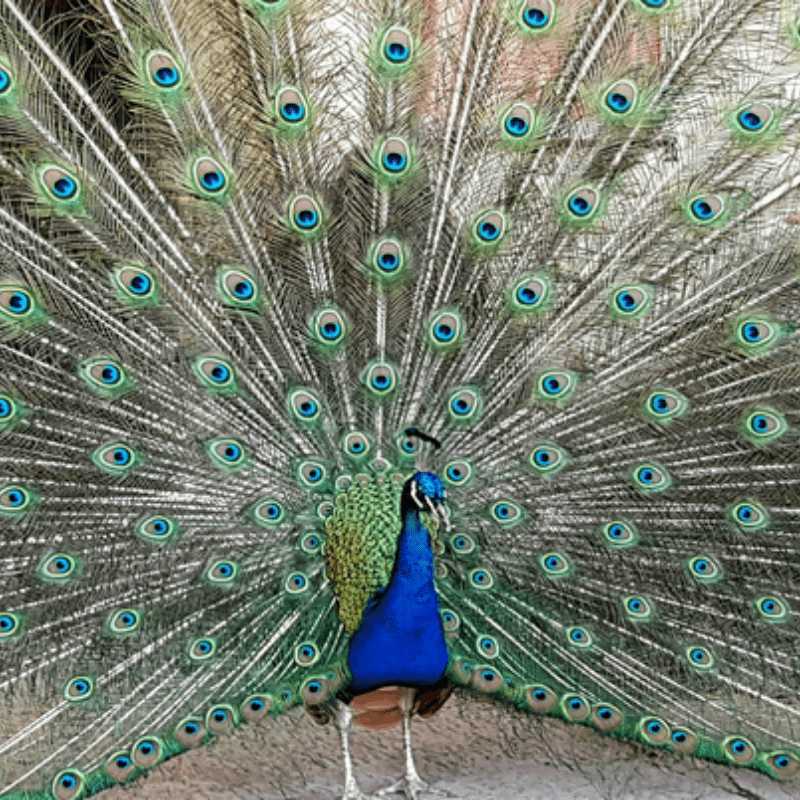
The blue peacock, with its extraordinary plumage, is one of the most fascinating examples of biodiversity. This bird displays a robust body, approximately 2 meters long, including its long, ornamental tail. The tail feathers, or retrices, are what truly stand out. They extend into an impressive fan, showcasing an iridescent pattern. This iridescence results from the microstructure of the feathers, which refracts light in unique ways, creating a vibrant palette of colors, from deep blue to lush green.
The feathers serve not only an aesthetic function but also play a role in attraction during courtship. Males, when displaying, fan out their tails in a mesmerizing spectacle. This attracts females, who select mates based on the health and beauty of their plumage. This sexual selection is one of the main forces shaping the appearance of the peacock.
In addition to attraction features, the plumage also serves adaptive roles. By blending into the environment, the colors and patterns help hide the peacock from predators. Young peacocks, in particular, have more subdued plumage, increasing their chances of survival. In summary, the biology of the blue peacock is a testament to adaptation and evolution. Its physical characteristics and adaptations allow it not only to survive but also to thrive. The beauty of its plumage is a strategy for perpetuating the species, being a perfect example of how nature molds itself in often surprising ways. For more information about the beauty of birds, you can check out this article on toucans.
Habitat and Distribution
The magnificently adorned blue peacock primarily inhabits subtropical and tropical forests, open savannas, and shrub areas. This exuberant bird is native to India and Sri Lanka, but its presence extends to other regions of Asia. In warm climates, they thrive better, preferring environments that offer shelter and access to water sources. Peacocks love areas rich in vegetation, where they can hide from potential predators, such as tigers and foxes. These birds have an excellent ability to adapt. They easily adjust to various habitats. In urban areas, the blue peacock has become a notable figure, often spotted in gardens and parks. Its confidence in the urban environment is due to the scarcity of natural predators and the availability of food, such as seeds, insects, and fruits. Moreover, peacocks exhibit an impressive ability to camouflage themselves among dense vegetation. Their feathers, while vibrant, contain elements that provide them protection. During the rainy season, they take advantage of the abundant vegetation. During this time, peacocks become harder to detect, using their environment to their advantage. The integration of the peacock into the ecosystem is vital, as they help in seed dispersal. These birds play a crucial role in maintaining the health of their habitat. Therefore, by respecting their natural environment, they ensure their own survival and that of the ecosystems they inhabit. The connection between the peacock and its habitat is an example of nature’s harmony.
Behavior and Social Interactions
The blue peacock (Pavo cristatus) is one of the most fascinating examples of avian behavior. Its courtship display is an impressive spectacle. Males fan out their long tails in a lush display, showcasing their iridescent feathers. This behavior can last for hours and attracts the attention of females. The females watch carefully, choosing partners based on the beauty and vigor of the feathers. This selection influences the health of their offspring.
The social hierarchy among peacocks is an intriguing phenomenon. Males establish territories and compete for females. The strongest dominate the best locations and access to more partners. Behaviors such as vibrant displays and loud vocalizations help affirm this position. Females, in turn, form groups to protect themselves from predators. They also avoid each other in disputes over territory and mating.
Interactions with other birds are complex. The blue peacock can socialize and does not show aggression, forming flocks with other birds. Although they may be seen as majestic creatures, they are also vulnerable prey. Predators such as felines, reptiles, and birds of prey are always lurking. Peacocks use their excellent flying ability and camouflage to escape dangers. Additionally, their vocalization ability allows them to alert other group members about threats.
Studies on blue peacock behavior reveal the magnificence of these animals. For a deeper analysis of the social dynamics of other birds, see Toucan: the bird that enchants with its beauty.
The Blue Peacock in Culture
The blue peacock has a striking presence in the cultures of various peoples throughout history. This magnificent bird, known for its exuberant plumage, symbolizes beauty, immortality, and power. In Greek mythology, the goddess Hera had a peacock as her symbol, representing royalty and divinity. The peacock’s feathers were considered so impressive that it was believed the eyes on the feathers represented vigilance and divine protection.
In the East, particularly in Hindu culture, the blue peacock is associated with fertility and love. The god Krishna is often depicted with peacock feathers, symbolizing his divine nature and virtuous qualities. In art and architecture, images of the peacock have emerged as emblems of grace, adorning temples and palaces.
During the Renaissance, the beauty of the peacock became a source of inspiration for artists. Artists captured its vibrant colors and majestic form in paintings, tapestries, and sculptures. The peacock symbolizes vanity and ostentation, reflecting the human desire to display beauty and wealth.
In literature, the blue peacock is often mentioned as a symbol of transformation and rebirth. The Greek philosopher Plutarch wrote about the peacock in his reflections on nature and the soul. Stoics and romantics also found profound meanings in its beauty, integrating it into their works.
Thus, the presence of the blue peacock transcends cultures and eras, becoming an icon of symbolism and aesthetic appreciation throughout history. To explore more about the beauty of fauna, visit this article on the toucan, which also celebrates the magnificence of birds.
Conservation and Threats
The white swan, a symbol of beauty and grace, faces significant challenges in its natural habitat. The loss of wetlands, where this majestic bird breeds and feeds, is increasing. Urban development and intensive agriculture are the main culprits behind this degradation. These environments are more than just living spaces; they are rich ecosystems that sustain life. Without them, the white swan cannot thrive.
Water pollution also poses a critical threat. Chemicals and human debris contaminate the lakes and rivers where swans feed. Plastic waste, often ingested by aquatic birds, can cause serious health problems. Furthermore, agricultural runoff enriches the water with nutrients, leading to algal blooms, which reduce water quality and harm aquatic life.
Climate change, another factor at play, alters migration patterns and aquatic ecosystems. Rising water temperatures and variations in humidity levels can drastically affect food availability.
Fortunately, conservation efforts are underway. Dedicated organizations are working to restore habitats and reduce the impacts of pollution. Public education plays a vital role in raising awareness about the importance of protecting these beautiful birds. Learning more about aquatic birds and their needs is essential for their survival. These efforts, combined with preservation policies, are crucial to ensuring that the white swan continues to beautify our lakes and rivers.
Conclusions…
The journey through the world of the blue peacock reveals not only its stunning beauty but also its fundamental role in ecology and human culture. This bird is an eternal symbol of elegance that continues to enchant generations.
Did You Know?
What is the origin of the blue peacock?
The blue peacock is native to South Asia, particularly India and Sri Lanka, where it lives in forests, open areas, and mountainous regions.
What makes the blue peacock’s plumage so special?
The iridescent plumage of the blue peacock reflects light in unique ways, displaying a palette of vibrant colors and stunning patterns, especially in the tail.
How do peacocks communicate?
Peacocks communicate through a range of vocalizations, including screams and calls, which serve to attract mates or alert about dangers.
What are the feeding habits of the blue peacock?
The blue peacock is omnivorous and primarily feeds on seeds, fruits, insects, and small vertebrates, often foraging on the ground.
What is the cultural significance of the blue peacock?
The blue peacock is a symbol of beauty and immortality in various cultures, often associated with the Hindu goddess Saraswati and used as an icon in art and religion.