Ghost Fish
In the depths of the ocean, one of the most fascinating inhabitants is the ghost fish, a species that captivates with its surprising transparency. This article will explore its characteristics, habitat, behavior, and the importance of its preservation, revealing the fascinating marine world it represents.
The Anatomy of the Ghost Fish
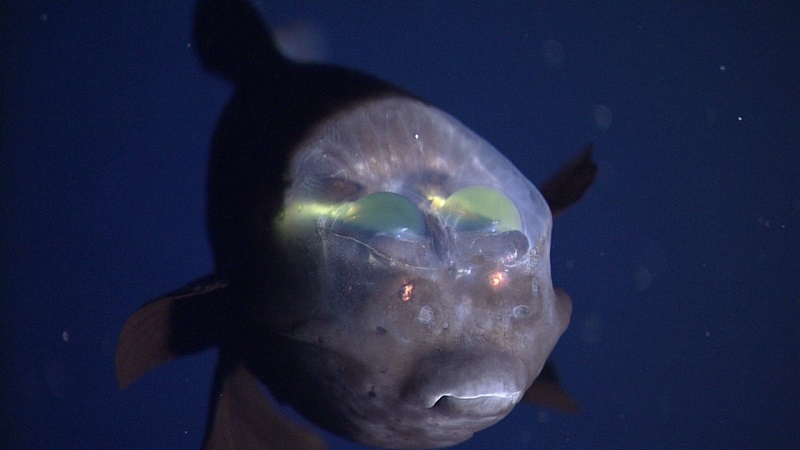
The enigmatic ghost fish, scientifically known as belonging to the order Opisthoproctidae, has a delicately transparent body, almost ethereal, that seems to defy the impositions of the underwater environment. This transparency is not just an aesthetic wonder but a crucial adaptation for its survival in the depths of the ocean. Thanks to the absence of pigmentation and its exceptionally thin skin, the ghost fish can practically disappear in the darkness of the deep waters, becoming a master of disguise.
Its body structure, besides being translucent, houses unique organs that maximize its energy efficiency. The tube-shaped eyes are proportionally large, allowing it to capture the minimal light that permeates the ocean depths. This feature is essential in a zone where luminosity is almost nonexistent, and the ability to detect shadows and outlines is vital for finding food and avoiding predators.
Another fascinating factor is the composition of its skeleton. Made of cartilage instead of solid bones, it provides a lightness that facilitates buoyancy in an environment where crushing pressures are the norm. The reinforced yet flexible fins allow it to swim efficiently, ensuring that this navigating being moves precisely through the underwater currents.
In addition to physical adaptations, the ghost fish has specialized eyes that are adapted to detect bioluminescence and other forms of light emitted by organisms in the depths. This remarkable visual system is similar to that found in other species adapted to extreme environments, like the resilience of tardigrades in adverse conditions. Thanks to these adaptations, the ghost fish thrives in a world that, at first glance, seems inhospitable to life.
The Deep Ocean Habitat
In the darkest regions of the oceans, where sunlight never penetrates, lives the enigmatic ghost fish. Thousands of meters below the surface, the temperature is frigid, ranging from 2 to 4 degrees Celsius. This inhospitable environment demands remarkable adaptations for survival. The extreme pressure in these depths, reaching hundreds of atmospheres, compresses any form of life that ventures so deep. For the ghost fish, its body is adapted to withstand these crushing forces. More flexible bone structures and pliable internal tissues allow it to inhabit these depths without succumbing.
The almost total absence of light further defines the world of this fish. The absolute darkness requires acute senses to locate food and mates. Many ghost fish have developed specialized sensory organs and unique strategies to compensate for their limited vision. This darkness also contributes to their opportunistic feeding habits, where any meal found can be a matter of life or death.
In this environment, energy frugality is essential. The scarcity of prey means that every movement needs to be efficient. Thus, the ghost fish moves slowly, conserving energy in its search for food. Its translucent skin, sometimes luminous, confuses predators and prey, hiding it in the ethereal world. This environment, although desolate, proves to be a perfect habitat for the complexity of the ghost fish.
Anyone wishing to understand such depths must consider other incredible creatures that face extreme environments, like the tardigrade, the smallest animal on the planet. Resilience is key to survival in the face of adversity.
Behavior and Feeding
In the dark depths of the ocean rests the enigmatic ghost fish, whose way of life sparks curiosity among nature enthusiasts. Astute by nature, this little creature has developed unique tactics to survive in a relentless and resource-limited environment. The ghost fish is a patient predator. Instead of frantically chasing its prey, it adopts a waiting and ambush approach. It remains motionless, almost as if it were part of the aquatic landscape around it. This behavior is crucial, given the poorly lit environment it inhabits. Specialist in camouflage, it uses its translucent body to its advantage. Blending in with the shadows of the currents contributes to its invisibility to distracted prey. Small crustaceans and plankton—the base of its diet—are captured through sudden and precise movements. Upon detecting the presence of a potential prey, the ghost fish can produce a quick and accurate movement that minimizes the chance of escape. This feeding efficiency is vital, as nutrients are scarce in the depths it inhabits. Interestingly, the ghost fish shares some characteristics with other beings adapted to extreme environments, like the tardigrade, which also withstands adverse conditions. The diet and predatory behavior of the ghost fish are a dance of nature, a balance between stealth and speed. The survival of this enigmatic inhabitant of the ocean depths reveals much about the silent engineering of nature in its purest form.
The Importance of Ghost Fish in Ecosystems
The ghost fish, an enigmatic creature of the ocean depths, plays a crucial role in marine ecosystems. Acting as both predator and prey, it occupies a delicate position in the intricate underwater food web. Feeding on small crustaceans and other benthic organisms, it helps regulate the populations of these species. Thus, it maintains ecological balance, preventing overcrowding and consequently, habitat degradation.
As prey, the ghost fish contributes to the diet of larger species, such as predatory fish and cephalopods, strengthening the health and diversity of the marine environment. This symbiotic relationship highlights the importance of each level of the food chain for the prosperity of the ecosystem. The presence of ghost fish in the waters is a vital indicator of the health of the marine environment. Species like this are sensitive to changes in habitat conditions, such as pollution and temperature alterations.
A habitat filled with ghost fish suggests a balanced biosphere, with favorable conditions of temperature, salinity, and oxygen. As a bioindicator, the disappearance or decline of populations of this fish alerts to environmental degradations. Such events may signal impacts from human activity, such as overfishing and marine pollution.
The lessons these almost ethereal beings teach us are crucial. Just as the resilience of tardigrades reminds us of the fragility of marine life and the importance of its preservation. We need to realize that the harmony and diversity of marine ecosystems deeply depend on the existence of fish like the ghost fish. They are, without a doubt, silent sentinels of the ocean.
Threats and Preservation
Diving into the depths of the ocean, the elusive ghost fish faces substantial threats to its habitat. This inhabitant of coral reefs faces significant challenges arising from human activities. The destruction of coral reefs due to global warming is an imminent concern. The rise in ocean temperatures causes coral bleaching, resulting in the loss of this essential habitat for the ghost fish.
Pollution, including oil spills and plastic waste disposal, also poses deadly threats. Waste suffocates the reefs and harms the delicately balanced ecosystem where these unique creatures thrive. Indiscriminate fishing, particularly dynamite fishing practices, increases the pressure on their populations.
To conserve the ghost fish, stringent preservation measures are essential. Firstly, it is crucial to implement policies that protect coral reefs and their invaluable biodiversity. Actions to reduce ocean pollution must be reinforced, encouraging more sustainable waste disposal practices.
Moreover, we cannot overlook the contribution of scientific research. Further studies are necessary to better understand the behavior and ecological needs of the ghost fish, enabling the development of more effective preservation strategies. Marine protected areas need to be established to create safe sanctuaries, allowing the recovery of weakened reefs and populations. A collaborative effort between scientists, governments, and the community is essential to preserve the ghost fish for future generations. By protecting reefs and fish, the legacy of this fascinating aquatic being will be secured, as highlighted in recent discussions about species preservation, such as the conservation of rhinoceroses.
Conclusions…
The ghost fish, with its uniqueness and beauty, stands out as an incredible example of marine biodiversity. Protecting these ecosystems and promoting knowledge about these creatures is vital to ensuring the health of the oceans.
Did You Know?
What is the habitat of the ghost fish?
The ghost fish inhabits the deep waters of the oceans, often in conditions of high pressure and low light.
What are the characteristics of the ghost fish?
This fish is known for its almost total transparency, allowing it to camouflage in its environment, as well as having a gelatinous body.
How does the ghost fish feed?
It primarily feeds on small marine organisms, using its low visibility to hunt its prey.
What is the importance of the ghost fish in the ecosystem?
The ghost fish plays a crucial role in the food chain and is an indicator of the health of marine ecosystems, reflecting changes in the environment.
Are there threats to the survival of the ghost fish?
Yes, pollution, overfishing, and climate change directly affect the habitat and survival of these creatures.