The Fascinating Desert Hairy Spider
In the arid and relentless desert, lives an intriguing creature: the desert hairy spider. Adapted to intense heat and possessing impressive camouflage skills, this species exhibits fascinating characteristics that allow its survival. Delving into its world reveals a set of sophisticated abilities that make it a true masterpiece of nature.
Physical Characteristics
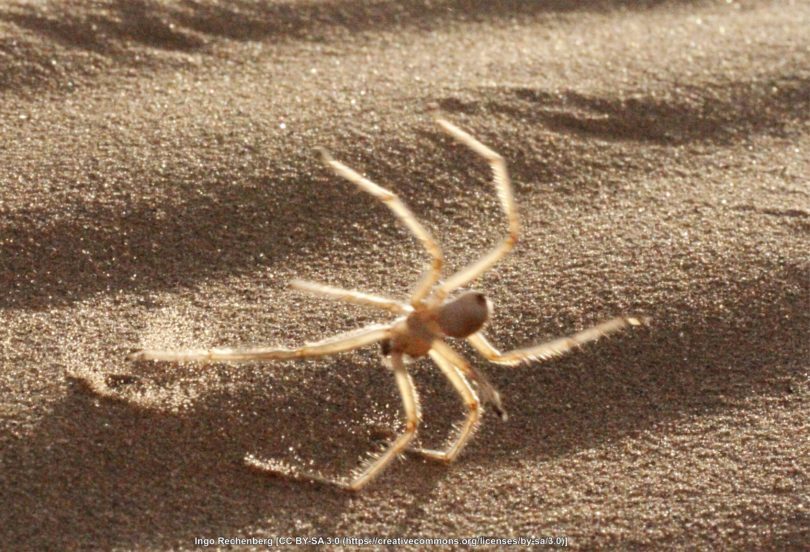
The desert hairy spider, with its robust body and thick fur, showcases fascinating features. Typically, its size ranges from 5 to 10 centimeters in diameter, including its long legs. This dimension is ideal for life in arid environments. Its predominant coloration is a golden-brown, reflecting the sand and stone of the desert. This camouflage is crucial for its survival, allowing it to blend into its habitat and avoid detection by predators such as birds of prey and reptiles. The legs are long and spiny, adapted for digging in sandy soils, creating burrows that serve as shelter. These structures help protect the spider from the extreme temperatures of the desert, keeping it shielded from the scorching heat during the day. Furthermore, the dense fur covering its body acts as a barrier against dehydration, retaining the moisture necessary to sustain its biological functions in such a harsh environment.
Another interesting adaptation is the presence of large, well-developed eyes. These eyes are essential for detecting rapid movements in the environment, whether for hunting or avoiding predators. The desert hairy spider not only survives but thrives in one of the planet’s most challenging ecosystems. For more information on how organisms adapt to their habitats, check out this article discussing the intelligence of arachnids.
Camouflage Behavior
The desert hairy spider, with its earthy colors and dense fur, exhibits exemplary camouflage. This crucial adaptation allows it to blend into its environment, thus avoiding voracious predators. When found in its natural habitat, the ground covered with stones and sand, its coloration becomes an irresistible trap for the eyes of predators like birds and reptiles.
This camouflage phenomenon is not limited to color alone. The hairy spider also utilizes the textures of the surface it is on. By remaining motionless, it transforms into a part of the terrain, its long legs contributing to the illusion of being tangled among the dry vegetation and desert debris.
Additionally, the desert hairy spider can alter its posture. In moments of danger, it curls up and crouches, avoiding casting shadows that might reveal its presence. A subtle, almost imperceptible movement allows it to reappear only when the threat has disappeared.
Another fascinating aspect of its camouflage is the use of sand. They can cover their bodies with small grains, making them indistinguishable from the ground. Strategies like these not only help it avoid being hunted but also allow it to approach its prey, offering a significant advantage. These clever camouflage techniques ensure the survival of the desert hairy spider in an extreme environment, always on constant alert.
To explore more about the intelligence of animals during hunting, click here.
Survival in Adverse Environments
The desert hairy spider is a true master of survival in the face of extreme conditions. With temperatures that can exceed 40 degrees Celsius during the day, this spider has found ingenious ways to protect itself from the intense heat. One of its most notable adaptations is its nocturnal behavior. At night, when temperatures drop, the spider becomes active, taking advantage of the coolness of darkness to feed and move more safely.
Moreover, the desert hairy spider has a body covered in dense hairs that help minimize water loss. These hairs also reflect sunlight, reducing heat absorption and keeping the spider cooler during the day. Another interesting strategy is its ability to seek small holes or shelters under rocks, where the temperature is significantly milder.
Dehydration is one of the biggest challenges in its arid environment. The spider is capable of efficiently retaining water, utilizing the humidity in the air during the cooler hours. By restricting its activity and remaining in less exposed areas to direct solar radiation, it manages to minimize moisture loss.
As studied in other organisms adapted to arid environments, the desert hairy spider exemplifies the resilience of life in adverse conditions. The survival strategies of this nocturnal creature not only ensure its existence but also reveal the intricate tapestry of animal adaptation. For more information on the incredible adaptation of living beings, check out this article about the elephant, the gentle giant of nature.
Diet and Predators
The desert hairy spider, with its impressive hunting technique, plays a vital role in its arid habitat. Its diet mainly consists of insects, including crickets, grasshoppers, and small scorpions. These creatures are attracted to the desert environment in search of shelter or food, becoming irresistible prey for the cunning spider. Utilizing its excellent camouflage, the spider patiently waits, hidden among the rocks and sparse vegetation. When a prey approaches, it employs a quick and lethal strike, ensnaring the insect with its robust legs. In moments, the prey is immobilized, allowing the spider to use its venom to subdue it and begin feeding.
In addition to being an effective predator, the desert hairy spider must be vigilant against its own enemies. Its natural predators include birds of prey and small mammals. Owls are known nocturnal hunters that frequently scout for prey. Thus, the spider has developed stealthy behaviors, reducing its activity during the day when it is most vulnerable. It is a constant dance between survival and the need to feed, in a complex web of interactions within the ecosystem.
The ability to capture prey and vigilance against predators make the desert hairy spider a fascinating example of adaptation. For more about the life and challenges of other insects, check out this article on intelligent spiders.
Ecological Importance
The desert hairy spider, with its distinct silhouette and thick fur, plays a vital role in the arid ecosystem. This fascinating little creature is a cunning predator, using its camouflage to ambush prey. Its diet mainly consists of insects, including crickets and grasshoppers. Thus, it helps keep the populations of these organisms in check. Without the presence of the desert hairy spider, crickets could proliferate uncontrollably, leading to imbalances in the ecosystem.
The spider is not just a predator. It also becomes food for a variety of other animals. Reptiles and birds that inhabit the desert, such as snakes and hawks, include the hairy spider in their diet. Therefore, the desert hairy spider occupies a crucial position in the desert food web, connecting the lives of different organisms.
Moreover, its predatory activity contributes to the biodiversity of the environment. This balance ensures that other insects, pollinators, and even small mammals can thrive. By controlling the insect population, the hairy spider promotes a healthy and diverse habitat, essential for the survival of countless species.
Thus, the continued presence of the desert hairy spider is an indicator of a healthy desert ecosystem. To understand more about the complexity of life in the desert, perhaps the stories of jumping spiders can inspire our view of the interactions between predators and prey in nature. Check this link to explore more about these incredible arachnids.
Conclusions…
The desert hairy spider exemplifies the beauty and complexity of life in extreme environments. Its surprising adaptations ensure its survival, challenging the aridity of the desert. By exploring its camouflage and resilience skills, we understand the value of biological diversity and the importance of preserving these remarkable living beings.
Did you know?
What is the habitat of the desert hairy spider?
The desert hairy spider inhabits arid and desert regions, where it adapts to extreme heat and adverse conditions.
How does the desert hairy spider camouflage itself?
It uses its colors and textures similar to the environment to hide from predators, becoming almost invisible.
What is the diet of this spider?
The desert hairy spider feeds on insects and small arthropods found in its habitat.
Is the desert hairy spider venomous?
Although it has venom to capture prey, it is not considered dangerous to humans.
How does the desert hairy spider reproduce?
After mating, the female lays eggs in a cocoon, which is protected until the larvae are ready to emerge.