The Fascinating Pink Praying Mantis
Discover the intriguing world of the pink praying mantis, a creature that not only enchants with its beauty but also reveals secrets of survival and adaptation. We will explore its habitat, behavior, and the challenges this species faces, diving into its crucial role in the ecosystem.
The Habitat of the Pink Praying Mantis
The pink praying mantis inhabits areas of dense vegetation, such as tropical forests and lush gardens. These regions provide shade, moisture, and protection from predators. The vegetation is abundantly green, filled with colorful shrubs and flowers that blend into the environment. This camouflage is essential for the pink praying mantis, as it helps it hide from curious eyes while waiting for its prey. The climate where the pink praying mantis resides is typically warm and humid. Frequent rains create an ideal environment for the growth of plants and insects, serving as food for these skilled predators. The mild temperature and high humidity favor reproduction, allowing eggs to be deposited on leaves and worn trunks. This method protects the larvae from the sun and dryness. Furthermore, the presence of attractive flowers in the vegetation is a boon for the survival of the pink praying mantis. The flowers attract a variety of insects, which ultimately become food for this incredible predator. As a result, the diversity of flora becomes directly proportional to the abundance of prey. In ideal climatic conditions, the pink praying mantis can thrive. Habitats that combine abundant vegetation with favorable climate are vital for the survival of this fascinating species. The balance between a safe environment and food abundance lays the foundation for the continuity of its lineage. The symbiotic relationship between flora and fauna is a delicate dance in nature, where each element plays its role masterfully. To learn more about the importance of plants in the ecosystem, discover more in this fascinating article about Brazilian water birds.
Behavior and Feeding
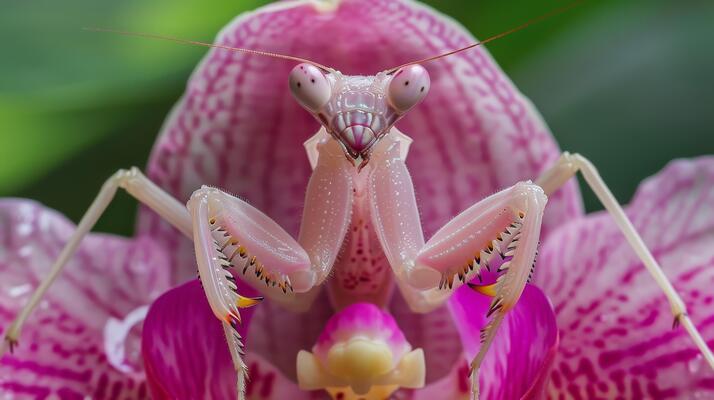
The pink praying mantis is a true master of disguise. This insect, with its impressive coloration, blends in with flowers and foliage. This camouflage is essential for its survival. When a more unsuspecting insect approaches, the pink praying mantis strikes swiftly. Its front legs, adapted for grasping, are quick and powerful, allowing it to capture prey such as flies and grasshoppers.
In search of food, the pink praying mantis employs waiting tactics. It positions itself motionless, mimicking flowers, until a prey comes close enough. This patience is an effective strategy and demonstrates its ability to be an efficient predator. Additionally, the ability to turn its head 180 degrees provides it with a panoramic view of its environment. This adaptation is crucial for identifying threats or the movement of prey.
The behavior of this insect in groups is also fascinating. Although they are often solitary, some pink praying mantises can be seen together during feeding time. They may indirectly cooperate, observing and taking advantage of the prey’s inattention. This interaction among them is not a form of team hunting but a way to maximize their capture opportunities.
Despite its predatory form, the pink praying mantis also faces challenges. Natural predators, such as birds and other insectivorous creatures, are always lurking. Therefore, its capture technique and camouflage are vital for survival. By understanding how this magnificent insect adapts and behaves in its habitat, we can appreciate even more the complexity of life on our planet. To learn more about the fascinating interactions of animal life, check out this article on the jumping spider, a curious example of adaptation in the animal kingdom.
Reproduction and Life Cycle
The reproduction of the pink praying mantis is an intriguing spectacle of nature. During mating, the male impresses the female with its elaborate dances. He approaches carefully, avoiding her iconic voracity. The female, while choosing her partner, observes his displays of strength and beauty.
After mating, an impressive phenomenon occurs: the practice of sexual cannibalism. Often, the female consumes the male, especially after fertilization. This interaction ensures that the female’s genetic qualities are passed on to the offspring, a strategy devoted to biology. However, not every male becomes prey. Some manage to distance themselves and escape.
After mating, the female is responsible for laying the eggs. On average, she deposits between 100 and 400 eggs, which are placed in a capsule called an ootheca. This structure protects the eggs from predators and external conditions and can be found in strategic locations, such as leaves or branches. The ootheca resembles a small trunk, camouflaging the eggs against predators.
After a few weeks, depending on environmental conditions, the hatchlings emerge. These young mantises are immediately on their own and must take care of themselves. Without parental guidance, they face a world full of dangers. Initially, they tend to be cannibalistic, feeding on their smaller siblings. Therefore, in their interactions, there is a struggle for survival. This fight for life and respect for hierarchy play a vital role in the life cycle of this fascinating insect. For more information on insect mating practices and social dynamics, see the article on squids.
Threats and Conservation
The pink praying mantis is a magnificent being but faces several threats in its habitat. Habitat loss is one of the most significant; deforestation and urbanization reduce their living areas. The excessive use of pesticides in agricultural crops also jeopardizes this delicate species. Insecticides do not only target pests, equally affecting pink praying mantises and other beneficial predators.
Moreover, the illegal pet trade has negatively impacted the population of this species. People tend to seek exotic beings, leading to the capture of these fascinating insects. This practice not only diminishes their populations but also interferes with their ecological dynamics.
To combat these threats, conservation initiatives are crucial. Habitat restoration projects are necessary. This includes replanting native vegetation and creating ecological corridors that allow for the safe movement of pink praying mantises. Awareness about pesticide use is equally vital. Farmers should be educated about biological control methods that preserve natural predators.
Protection programs and environmental education are essential to preserve this species. With the help of conservation organizations, communities can learn about the importance of pink praying mantises. It is important to encourage them to protect these incredible insects, avoiding their capture and expanding respect for the environment. Only through joint efforts can we ensure a future for the pink praying mantis and its ecosystem.
The Ecological Importance of the Pink Praying Mantis
The pink praying mantis plays a fundamental role as a predator in its natural habitat. Acting as a skilled hunter, it helps control insect populations. These insects include pests that may harm plants and crops, making the mantis a valuable ally for farmers and healthy ecosystems. With its front claws, it captures its prey with precision. Its exceptional camouflage allows it to blend into the environment, becoming practically invisible. This gives it a significant advantage over the less attentive. The pink praying mantis is not just an insect predator. It also serves as food for birds and other predators. This food cycle highlights its importance in the web of life. When the pink praying mantis thrives, it sustains the life of various species and contributes to biodiversity. Furthermore, the pink praying mantis influences trophic relationships in the ecosystem. By controlling insect populations, it ensures that there is no overpopulation, which could lead to ecological imbalances. This demonstrates the importance of the pink praying mantis in maintaining the harmony of nature. Therefore, when observing the elegance and beauty of the pink praying mantis, remember its critical role in preserving a natural balance. To explore more about the interdependence of living beings, I recommend the article on the toucan, which also plays a vital role in its environment.
Conclusions…
The beauty of the pink praying mantis hides a life full of challenges and adaptations. Preserving its habitat is essential to ensure the survival of this fascinating species and its vital role in nature.
Did You Know?
What is the habitat of the pink praying mantis?
The pink praying mantis inhabits warm and dry areas, such as forests and shrubs, where it can camouflage and hunt its prey effectively.
How does the pink praying mantis reproduce?
Reproduction occurs through an elaborate ritual, and often the female may devour the male after copulation, a behavior that ensures nutrients for the offspring.
What are the main threats to the pink praying mantis?
The main threats include the destruction of its natural habitat, pesticide use, and climate change, which affect its food sources.
How does the pink praying mantis hunt its prey?
Using its spiny front legs, the pink praying mantis captures prey with agility, taking advantage of its camouflage to stealthily approach.
What is the importance of the pink praying mantis in the ecosystem?
This insect plays a crucial role in controlling pest populations, being a natural predator of various insects and contributing to ecological balance.