Armadillo vs. Six-Banded Armadillo: Adaptations and Survival
The adaptations of animals are fundamental for survival in their habitats. In this article, we will explore the differences between the armadillo and the six-banded armadillo and how these unique characteristics influence their survival skills in the wild.
Physical Characteristics of the Armadillo
Imagine, for a moment, the scene of a tropical forest, where a small creature transforms into a true fortress. It is here that the armadillo offers us one of the most fascinating adaptations in the animal kingdom: its spherical shell, which not only captivates but also ensures its survival. Unlike other armadillos, which may be more common in their shapes and sizes, the armadillo is an intriguing example of how nature shapes creatures to face extreme challenges.
The Shell and Its Functions
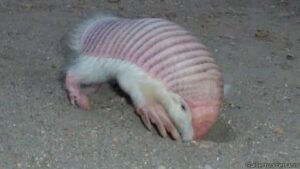
The armadillo’s shell is a remarkable adaptation. Composed of keratin plates, its rigid structure protects this animal from predators, functioning as a true shield. When threatened, the armadillo curls up, becoming a compact and nearly impenetrable sphere. Thus, even in a hostile ecosystem, this physically defensive ability allows the armadillo to escape the clutches of many predators, reinforcing the link between form and function.
Size and Mass
Besides its shell, the size of the armadillo also plays a crucial role in its survival. Generally measuring between 10 to 14 inches in length, this size is ideal for an animal that hides in holes and crevices in search of shelter. Moreover, even though its body mass may seem small compared to predators, it is sufficient for an active nocturnal life, where camouflage and speed are its allies. Thus, the interconnection between the physical characteristics of the armadillo exemplifies how evolution has shaped behaviors and survival in its habitat. By understanding the incredible physical characteristics of the armadillo, we realize that every detail is part of a complex picture of adaptations that ensure its continuity in nature. This incredible journey of species preservation leads us, with great anticipation, to explore the next phase of its life: its intriguing defense behaviors.
Defense Behavior of the Armadillo
In the vast landscape of nature, few behaviors are as fascinating as the surprising defense of the armadillo. This small mammal, with its robust body and shield of ossified plates, presents a unique strategy to face the dangers that surround it. When threatened, the armadillo curls into a compact ball, transforming into an impenetrable bunker against most predators. The ability to curl up is, in fact, its first line of defense and is accompanied by a series of evolutionary adaptations that ensure its survival.
Curling Up: A Protection Mechanism
By curling up, the armadillo protects the vulnerable parts of its body, such as its belly and limbs, from claws and teeth. This behavior is not just an instinctive reaction but a successful strategy that has evolved over millennia. Furthermore, the structure of its shell provides an extra layer of defense, making it difficult for predators to break through the natural armor that protects it. Even large predators, such as felines and canids, often give up in the face of this obstacle.
Ecological Importance and Social Behavior
In addition to its impressive defense technique, the armadillo plays a crucial role in its habitat. As a herbivore, its plant-based diet promotes vegetation regeneration, contributing to the health of the ecosystem. Although defensive behavior is individual, armadillos also exhibit social behaviors, such as helping each other in threatening situations. This social dynamic reinforces the resilience of the species, establishing a bond between individuals that curl up together in times of danger, creating a community united by defense and conservation. Thus, after considering the intricate defense strategies of the armadillo, we are led to reflect on how nature, through adaptations and collaborative behaviors, shapes the survival of its species. In the next chapter, we will delve into the physical characteristics of the six-banded armadillo, another remarkable inhabitant of the armadillo world, which exhibits a distinct approach to survival.
Physical Characteristics of the Six-Banded Armadillo
When encountering the cunning of the six-banded armadillo, nature reveals a fascinating example of evolution in action. This small mammal, slightly smaller than its cousin the armadillo, possesses physical adaptations that make it a true escape artist. With a slimmer and more agile body, the six-banded armadillo is a master at evading predators, using its compact size as a shield against the threats that surround it.
Body Structure and Agility
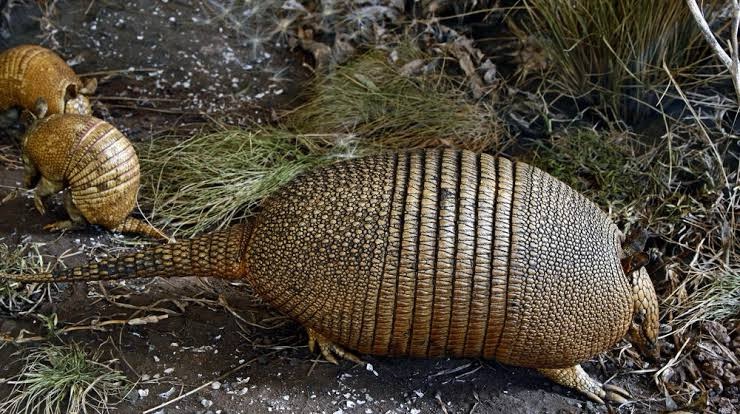
The shape of the six-banded armadillo, distinct from its counterpart, grants it unparalleled mobility. Its body is covered by a shell of bony plates, but unlike the armadillo, which can retract into a defensive ball, the six-banded armadillo prefers evasion. This ability to move quickly in different directions is crucial. Fascinatingly, it can even dig rapidly to disappear underground. The continuity of contact with the ground facilitates its escape, a maneuver that is not always possible for the armadillo, which relies more on the protection of its shell.
Dimensions and Survival
Moreover, its smaller dimensions help it infiltrate tight hiding spots. For example, it can enter rock crevices or tree holes, where larger predators cannot reach it. This ability not only expands its escape options but also ensures its food supply in varied environments. The animal world is full of adaptations, and the six-banded armadillo is an impressive example, teaching us about the complexity of survival in the most adverse circumstances. Therefore, it is clear that the physical characteristics of the six-banded armadillo are not mere coincidence. They have been shaped by necessity. As we move on to the next chapter, dedicated to the defense behavior of the six-banded armadillo, we will explore how this exceptional mobility is complemented by other skills that ensure its survival in the challenging jungle.
Defense Behavior of the Six-Banded Armadillo
In the vast tapestry of nature, few beings are as ingenious as the six-banded armadillo. This small mammal, with its unique and adaptive shape, has developed fascinating defense behaviors that allow it to survive in varied and challenging environments.
Mobility as Defense
The six-banded armadillo is a master of mobility. Unlike many animals that rely on camouflage or flattening to protect themselves, this armadillo stands out for its agility and ability to run at high speeds. When threatened, it uses its agile legs to quickly escape from predators, a behavior that, besides being unusual, reveals remarkable adaptability. This movement ability is complemented by its bony structure, which provides it with resistance against possible attacks.
The Shrinking Strategy
Another interesting aspect of the defense behavior of the six-banded armadillo is its ability to shrink its body. When it feels threatened, it folds in on itself, forming a compact ball. This strategy not only protects its vital parts but also makes it difficult for predators to access. Thus, the six-banded armadillo uses its characteristic shape as a true shield, demonstrating that the combination of form and function is essential for survival. These behaviors, although they may seem simple, highlight the complexity of wildlife, where each tactic plays a crucial role in the struggle for survival. Understanding the six-banded armadillo and its defense behavior leads us to appreciate the adaptive diversity of fauna. As we delve into the comparative adaptations of the armadillo and the six-banded armadillo, it is important to reflect on how these strategies shape interactions in the natural world.
Comparative Adaptations for Survival
In the vast tapestry of wildlife, the struggle for survival is a symphony of impressive adaptations. Among the musicians of this evolutionary concert, we find two fascinating creatures: the armadillo and the six-banded armadillo. Although both belong to the same family, their survival strategies and adaptations drastically differentiate them and, in fact, make each of them a protagonist in its own habitat.
The Armadillo: An Example of Defense
The armadillo, with its body covered in bony plates, possesses a remarkable adaptation that allows it to curl up into a ball when detecting threats. This ability, often observed in nature, not only protects it from predators but also helps it conserve moisture. Furthermore, its diet focuses on insects and small invertebrates, allowing it to thrive in variable environments. When we encounter the armadillo, we are amazed by this defensive posture, as if nature had decided to place armor on this small mammal.
The Six-Banded Armadillo: Camouflage and Agility
On the other hand, the six-banded armadillo stands out for its camouflage and agility skills. Its earthy coloration allows it to blend into the soil and vegetation, becoming almost invisible to predators. This adaptation is crucial for its survival strategy, as the six-banded armadillo relies on stealth to escape threats. Additionally, its diet, which includes plants and small animals, provides the necessary flexibility in the face of habitat changes. While the armadillo protects itself, the six-banded armadillo hides.
These extraordinary adaptations reveal the diverse ways of facing the challenges of life. After observing these fascinating differences, we are ready to dive into the next story of nature, where we will unveil the exceptional anatomy of the viperfish and how it helps it survive in aquatic environments.
Conclusions…
In conclusion, both the armadillo and the six-banded armadillo demonstrate impressive adaptations that allow them to survive in different environments. While the armadillo excels in its ability to protect itself from predators, the six-banded armadillo has an advantage in mobility and foraging for food. Understanding these differences not only enriches our knowledge of biodiversity but also highlights the importance of conserving these species. Protecting these animals means preserving the rich tapestry of life that they represent.
Did you know?
What are the main differences between the armadillo and the six-banded armadillo? The main differences include the defense behavior, with the armadillo curling into a ball and the six-banded armadillo using its agility.
Where do the armadillo and the six-banded armadillo live? Both species are found in regions of South America, but they prefer different habitats, with the armadillo being more common in dry areas.
How do adaptations influence survival? Adaptations, such as the hard shell of the armadillo and the agility of the six-banded armadillo, help each species avoid predators and forage for food effectively.
What is the diet of the armadillo and the six-banded armadillo? Both species are generally insectivorous but may include fruits and vegetables in their diet, especially when other food is scarce.
Are the armadillo and six-banded armadillo endangered species? Yes, both species face threats due to habitat loss and hunters, making conservation crucial.
What is the average size of these species? The armadillo generally measures between 10 to 12 inches, while the six-banded armadillo tends to be slightly smaller, around 8 to 10 inches.
How do they reproduce? Both species reproduce once a year, with females giving birth to a few young after a gestation period.
What are the natural predators of these animals? Natural predators include jaguars, birds of prey, and humans, who can threaten their habitats and lives.