Blue Parrotfish: The Stunning Resident of Coral Reefs
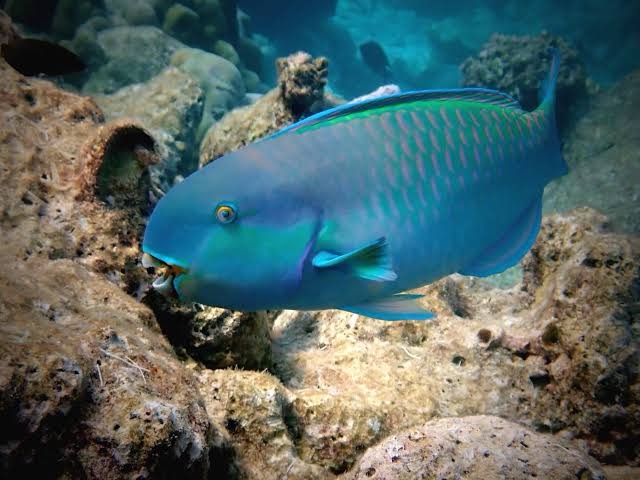
The blue parrotfish captivates marine life enthusiasts with its vibrant coloration and unique beak. These characteristics not only attract attention but also hold significant ecological meaning for the preservation of the reefs it inhabits.
The Wonders of the Blue Parrotfish
Stunning in its coloration, the blue parrotfish is more than just a magnificent sight in the crystal-clear waters of coral reefs; it is a fascinating example of marine life diversity. Its body, covered in shiny scales, displays a range of blue and green hues, providing a visual spectacle that enchants divers and nature lovers alike. But this beauty is just the beginning of the story of this extraordinary marine inhabitant.
Unique Characteristics
The blue parrotfish possesses a remarkable beak, similar to that of a parrot, which is essential for its diet. This specialized beak, made of keratin plates, allows it to scrape algae from rocks and corals. Thus, part of its diet contributes to the maintenance of reef health, as by removing algae, it promotes coral growth. Additionally, its robust body and long fins provide agility, allowing it to skillfully navigate through the reefs and evade predators.
The Vibrant Habitat
The natural habitat of the blue parrotfish is a vibrant environment, filled with stunning corals and a diversity of other marine species. It prefers shallow, nutrient-rich waters where it can find its primary food source. This intimate relationship with coral reefs not only sustains the fish’s life but also highlights the importance of these ecosystems in the survival of many species. Therefore, conserving the reefs is vital to ensure that these magnificent inhabitants continue to thrive.
To understand how these reefs sustain marine life, it is important to explore the habitat of coral reefs, where the blue parrotfish plays a crucial role. As we dive deeper into marine ecology, the connection between the blue parrotfish and the reefs becomes increasingly evident and vital for ocean health.
The Habitat of Coral Reefs
In the deep and vibrant coral reefs, a dance of colors and shapes captivates all who are fortunate enough to observe it. It is in this stunning setting that the blue parrotfish resides, a magnificent being that represents not only the beauty of our oceans but also the vitality of a balanced ecosystem. Coral reefs serve as a home, a shelter, and a crucial feeding ground for the blue parrotfish, ensuring its survival in an aquatic world full of challenges.
The Interdependence of the Blue Parrotfish and Coral Reefs
These reefs, formed by corals that are biologically living organisms, offer a habitat rich in biodiversity. The blue parrotfish maintains a symbiotic relationship with these corals, as it feeds on their algae, which in turn helps control the growth of these plants, ensuring adequate space for all reef inhabitants. This dynamic is evidently vital for the health of the reefs, providing a sustainable cycle where each species plays a significant role.
Threats to Habitat and Survival
However, the harmony of this ecosystem is threatened. Climate change and pollution are just some of the destructive forces that are ruining these reefs. As waters warm and water quality deteriorates, the blue parrotfish finds itself in a grim scenario. Without coral reefs, it not only loses its home but also its food source, putting its existence at risk. Thus, the protection and conservation of coral reefs become fundamental for the continuity of this fascinating species, as well as for countless others that depend on them.
As we explore the impact of the blue parrotfish’s diet and behavior, it is crucial to understand the inextricable relationship it maintains with its habitat. The health of the blue parrotfish reflects the health of the ocean itself, a constant reminder of the importance of maintaining biodiversity and protecting our coral reefs.
Diet and Behavior
Imagine yourself amidst the vastness of an arid and silent desert, where life persists in surprising forms. Here, jerboas, rodents adapted to this challenging environment, play a crucial role in the local ecology. But what exactly makes up the diet of these fascinating animals? The answer reveals not only their food preferences but also their extraordinary behavioral adaptations.
What Do Jerboas Eat?
Jerboas are essentially herbivores and rely on a varied diet that includes seeds, roots, and grains, adjusting to the options available in the desert. During the drier seasons, they become particularly ingenious, developing foraging strategies that maximize their efficiency. For example, many species of jerboas take advantage of the sun’s heat to highlight moisture in succulent plants, which become food treasures in an environment where water is scarce.
They primarily feed at night when the temperature allows for more comfortable activity, avoiding the extremes of daytime heat. To locate their food, jerboas use a combination of keen smell and sensitive hearing, allowing them to identify food even beneath the surface of the sand.
Foraging Behaviors
The foraging behavior of jerboas is fascinating and complex. Besides being highly adaptable, these animals do not hesitate to use their long hind legs to jump, which not only helps them move quickly but also makes them less vulnerable to predators during their searches. These skills are vital for their survival in such an unpredictable habitat, where each night is a new opportunity and a new challenge.
Therefore, jerboas not only survive but thrive, revealing the beauty of life in the desert. As we explore their reproductive cycle in the next chapter, we will be invited to understand even more how these fascinating rodents adapt and perpetuate their species under minimal conditions.
Ecological Importance
In the crystal-clear and vibrant waters of the oceans, one of the most fascinating inhabitants is the blue parrotfish. This fish, with its hypnotizing colors and intriguing behavior, plays a fundamental role in the coral reef ecosystem. A single blue parrotfish can consume up to 5,000 pieces of coral per year, an apparent cost, but one that actually promotes the health and regeneration of the habitat where it lives.
The Role of the Blue Parrotfish in Reef Health
Blue parrotfish, by feeding on corals, challenge the harmful proliferation of algae, which, if left unchecked, can suffocate corals and degrade the ecosystem. Moreover, their habit of grinding corals and excreting sand helps form the beaches and natural barriers necessary to protect the reefs from erosion. Therefore, they not only maintain ecological balance but are also natural architects of their environment.
Interaction with Other Species
In addition to their role as algae controllers, blue parrotfish also influence other species. For example, the diversity of marine life is increased by the presence of these fish, providing shelter and food for many organisms that depend on corals. Thus, the decline in the blue parrotfish population can have cascading effects, harming both corals and the various species that depend on them. Therefore, the conservation of this species is vital, not only for its survival but for the health of the entire marine ecosystem.
As we further explore the impact of the blue parrotfish on its habitat, we encounter the vital theme of conservation and the threats that these brilliant creatures face.
Conservation and Threats
The blue parrotfish, with its vibrant colors and fascinating behaviors, faces an uncertain future amid the transformation of the oceans. The threats surrounding this magnificent reef inhabitant are as alarming as the trade in corals and rampant tourism. The struggle for the survival of this remarkable species is urgently needed, as its ecosystems are being devastated.
Main Threats
The main threats to the blue parrotfish are closely linked to the degradation of its habitats. First and foremost, the destruction of coral reefs due to global warming is a pressing concern. Ocean acidification not only compromises the health of the coral itself but also affects the availability of food for these creatures. Furthermore, predatory fishing compromises their population, often leading to the capture of juvenile individuals, which significantly reduces the species’ reproductive capacity. Lastly, unregulated tourism and pollution cause direct damage to their habitat, making it difficult for fish populations to recover.
Conservation Initiatives
To ensure the conservation of the blue parrotfish, it is crucial to implement effective strategies. First, the creation of marine protected areas is essential to provide natural sanctuaries where fish can reproduce and thrive without human interference. Additionally, promoting sustainable fishing practices and developing educational initiatives on conservation can raise awareness among local communities about the importance of these fish for ecosystems. As a result, small actions can lead to significant changes in the protection of marine biodiversity. As we look at the threats faced by the blue parrotfish and the necessary measures for its protection, it becomes evident that collective and conscious actions are essential for the continuity of its story on our planet.
Conclusions…
The blue parrotfish represents more than just beauty above the water. Its ecological importance and the need to protect its habitat are crucial in the fight for the preservation of ocean biodiversity. By better understanding its characteristics, we can fight for a future where this species and others can thrive.
Did You Know?
What is the natural habitat of the blue parrotfish?
The blue parrotfish is commonly found in coral reefs, where it is vital for the health of the ecosystem.
What are the main physical characteristics of the blue parrotfish?
It has vibrant blue coloration and fused teeth that form a beak similar to that of a parrot.
What is the diet of the blue parrotfish?
Its diet mainly consists of algae and corals, which help maintain the marine environment.
How to keep a blue parrotfish in an aquarium?
It is important to have a large aquarium with enough space and an environment that simulates its natural habitat.
Is the blue parrotfish an endangered species?
Yes, due to coral reef degradation and overfishing, the species faces serious risks.
What special care is needed to keep a blue parrotfish healthy?
Maintaining water quality, providing a balanced diet, and having adequate space are essential.
How does the blue parrotfish reproduce?
Reproduction occurs in groups, where the male and female come together during the breeding season.
What is the role of the blue parrotfish in reef health?
By feeding on algae and corals, they help maintain the health and balance of the reef ecosystem.