
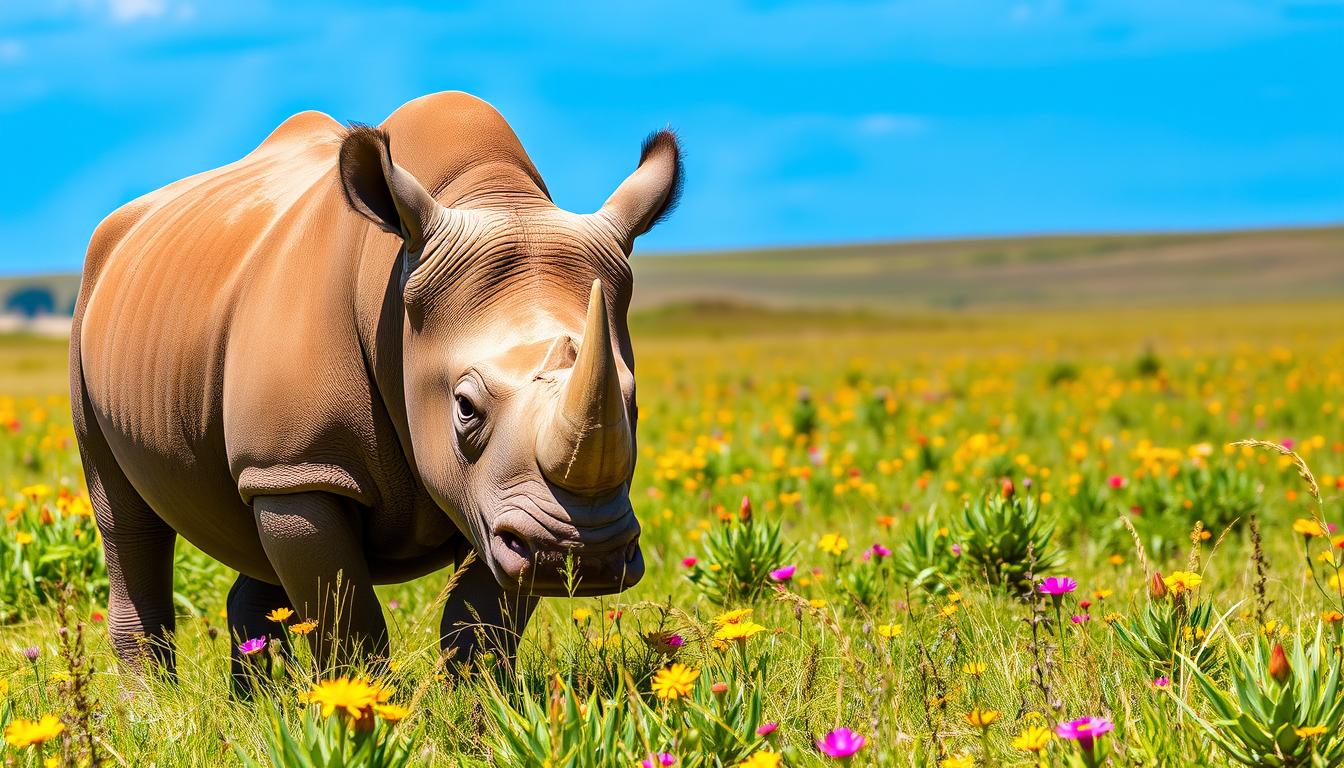
A shocking statistic shows that only 30,000 rhinoceroses still exist in the wild. This highlights the ecological importance of these animals. The rhinoceros is incredible, with a beauty that makes it an icon of wildlife. It is crucial that we protect these animals to maintain the balance of the ecosystem. The beauty of the rhinoceros is just one of the reasons we should care for it. It plays an important role in nature, from maintaining habitats to controlling populations of other species. Understanding the importance of the rhinoceros and protecting it is essential.
Main Points
- The rhinoceros is an endangered species, with only 30,000 individuals in the wild.
- The ecological importance of the rhinoceros is fundamental to maintaining the balance of the ecosystem.
- The beauty of the rhinoceros is unique and fascinating, making it an icon of wildlife.
- Conservation of the rhinoceros is essential to protect the planet’s biodiversity.
- The ecological importance of the rhinoceros includes habitat maintenance and regulation of other species’ populations.
The Fascinating World of Rhinoceroses
The rhinoceros is an amazing animal, with an evolutionary history that goes back millions of years. Its evolution is complex, showing how it adapted to different places and developed special characteristics.
Rhinoceroses are known for their large size, thick skin, and unique horn. These characteristics are the result of long evolution. They helped the rhinoceros adapt to the savanna and made it one of the most famous animals.
Origin and Evolution of the Species
The origin of rhinoceroses is fascinating. Studies show that they evolved from common ancestors with other mammals. Evolution was influenced by factors such as the search for food, predators, and competition with other animals.
Main Characteristics
The characteristics of the rhinoceros are unique and essential for its role in the ecosystem. Some of the main ones include:
- Thick and resilient skin
- Distinctive horn
- Impressive size
- Strength and agility
Ecological Importance
The rhinoceros is crucial for the ecosystem. It helps maintain the balance of nature. The loss of rhinoceroses can cause severe damage to the environment, including loss of biodiversity and habitat degradation.
Unique Anatomy of the Rhinoceros
The anatomy of the rhinoceros is fascinating and features unique characteristics. Size and weight vary among species. They can reach up to 3 meters in length and weigh around 2 tons.
Their skin is thick and resilient, reaching up to 2.5 cm in thickness. The horns are made of keratin, the same protein found in human hair and nails. They are used for defense, attack, and attracting mates.
Other notable physical characteristics include:
- Small but sensitive eyes
- Large and mobile ears
- A long and prehensile tongue
- A robust and muscular body
These characteristics make the rhinoceros incredible and important in the ecosystem. The anatomy of the rhinoceros is a perfect example of adaptation to the environment and survival. To understand the importance of the rhinoceros’s anatomy, it is essential to study the species and its habitat. The rhinoceros is majestic and fascinating. Its anatomy is just one of the many aspects that make it so special.
The Five Existing Species in the World
There are five species of rhinoceroses in the world. Each has unique characteristics and lives in specific habitats. They are essential for the balance of ecosystems.
The white rhinoceros is the largest species. It primarily lives in Africa. It is recognized by its gray skin and large horn.
The other species are:
- Black rhinoceros
- Javan rhinoceros
- Sumatran rhinoceros
- Indian rhinoceros
Each species has its characteristics and habitats. It is crucial to protect them to preserve biodiversity. It is important to know and respect the differences between species. This way, we can work towards their conservation.
Species
| Species | Habitat | Characteristics |
|---|---|---|
| White rhinoceros | Africa | Gray skin, prominent horn |
| Black rhinoceros | Africa | Black skin, curved horn |
| Javan rhinoceros | Asia | Brown skin, small horn |
| Sumatran rhinoceros | Asia | Brown skin, small horn |
| Indian rhinoceros | Asia | Gray skin, prominent horn |
Natural Habitat and Geographic Distribution
The natural habitat of rhinoceroses is essential for their survival. They live in different places, such as savannas, forests, and swampy areas. The geographic distribution of each species varies according to climate, available food, and predators.
The main habitats of rhinoceroses are:
- Savannas: where they eat grasses and other plants
- Forests: where they hide and eat fruits and leaves
- Swampy areas: where they eat aquatic plants and cool off
The geographic distribution of rhinoceroses also depends on the available habitat. They need a lot of space to move and eat. Their distribution is limited by human presence and habitat destruction. It is crucial to understand the geographic distribution and natural habitat of rhinoceroses to protect them. We need to protect their habitats, create corridors for migration, and educate local communities about the importance of conserving them.
Social and Reproductive Behavior
The social behavior of rhinoceroses is fascinating and complex. They interact in a unique way, following a social hierarchy. This influences how they communicate and relate to each other.
Reproduction is a crucial aspect. They have a long gestation period. Parental care is essential for the survival of the calves. Life expectancy also depends on factors such as food availability and the presence of predators.
Some important points about the social and reproductive behavior of rhinoceroses include:
- Social hierarchy: rhinoceroses establish a social hierarchy, with dominant males leading the group.
- Communication: they communicate through a variety of sounds, including grunts and roars.
- Reproduction: the female rhinoceros has a gestation period of approximately 15-16 months, and the calves are born weighing around 40-50 kg.
Understanding the social behavior and reproduction of rhinoceroses is fundamental. This helps develop effective strategies for their conservation and protection.
The Rare Albino Rhinoceros: A Unique Variation
The albino rhinoceros is very rare and fascinating. Its skin and horns are white. This occurs due to a genetic mutation that affects melanin, which gives color to the skin and horns.
Some characteristics of the albino rhinoceros include:
- White skin and horns
- Blue or red eyes
- Unique social behavior
It is crucial to know that the albino rhinoceros is not a different species. It is a variation of the existing rhinoceros species. The unique variation of the albino rhinoceros makes it a very special animal. It deserves to be studied and protected.
Studying the albino rhinoceros can teach us a lot about these animals. It shows the importance of protecting the unique variation of wildlife. The albino rhinoceros demonstrates how nature creates unique and fascinating variations. It is our duty to protect these creatures for future generations.
Threats to the Species’ Survival
Rhinoceroses face various threats, such as illegal poaching, habitat loss, and climate change. These threats significantly affect rhinoceros populations. Therefore, it is essential to work together to mitigate these impacts.
Illegal poaching is a major threat, as hunters seek the horns of rhinoceroses. They are highly valued in the black market. Additionally, habitat loss due to agricultural and urban expansion is also a significant problem. This makes it difficult for rhinoceroses to find food and shelter.
Impacts of the Threats
- Illegal poaching decreases rhinoceros populations, putting them at risk of extinction.
- Habitat loss increases competition for resources, leading to conflicts between rhinoceroses and other animals.
- Climate change alters the availability of food and water, affecting the health and well-being of rhinoceroses.
It is crucial to take action to address these threats and protect rhinoceroses. This includes creating protected areas, educating about the environment, and working together internationally. Thus, we can combat illegal poaching and habitat loss.
Conservation Efforts Worldwide
Conservation of rhinoceroses is a global effort. Many organizations and governments are involved. They create protected areas, conduct monitoring, and educate about the environment.
Some of the main conservation actions include:
- Creation of protected areas, such as national parks and wildlife reserves, to provide a safe habitat for rhinoceroses.
- Monitoring programs to track rhinoceros populations and identify potential threats.
- Environmental education to raise awareness about the importance of rhinoceros conservation.
These global efforts are crucial to protect rhinoceroses and their habitats. Conservation is an ongoing process that requires the unity of all. With the help of global efforts, we can together protect these incredible animals. And thus, preserve the biodiversity of our planet.
Organizations and Conservation Efforts
| Organization | Conservation Efforts |
|---|---|
| WWF | Creation of protected areas and monitoring programs |
| IUCN | Environmental education and habitat conservation |
The Role of Zoos in Preservation
Zoos are essential for the preservation of rhinoceroses. They play an important role in the conservation of these animals. With successful breeding programs, zoos increase the population of rhinoceroses in captivity.
This is crucial for the survival of the species. Additionally, zoos also educate the public about the importance of conservation. They show how zoos are important for preservation.
Breeding Programs
Breeding programs in zoos aim to promote healthy reproduction of rhinoceroses. They ensure genetic diversity and the health of the population. These programs are essential for the conservation of the species.
Environmental Education
Environmental education is a powerful tool in rhinoceros conservation. It helps change public perception about the importance of nature. Zoos offer a variety of educational programs.
From guided tours to hands-on activities, these programs promote awareness. They show the importance of zoos in species preservation.
Technology and Monitoring
Technology is essential to protect rhinoceroses. It helps monitor their populations and habitats. Thus, it is possible to collect important data about the behavior and health of rhinoceroses.
The use of GPS is one example. It allows tracking the movements of rhinoceroses. This helps identify important areas for them and care for the health of populations. Additionally, technology aids in anti-poaching surveillance. This prevents illegal poaching and protects rhinoceroses from human threats.
GPS Tracking
- Allows the collection of accurate data on rhinoceros movements
- Helps identify critical habitat areas
- Facilitates monitoring of population health
Anti-Poaching Surveillance
Anti-poaching surveillance is crucial for rhinoceros conservation. It helps prevent illegal poaching and protects rhinoceroses. With technology, it is possible to monitor habitat areas and detect suspicious activities. This helps prevent illegal poaching and protect rhinoceroses.
How You Can Help with Conservation
You can help in various ways to save rhinoceroses. One great way is to support conservation organizations. They work hard to protect these animals and their habitats.
It is also crucial to reduce the negative impact of our actions. This includes reducing pollution and habitat destruction. These actions harm the lives of rhinoceroses. To help, you can do simple things like:
- Reduce consumption of products that harm the environment
- Support the creation of protected areas for rhinoceroses
- Educate others about the importance of saving rhinoceroses
Another way to help is to spread information about the importance of protecting rhinoceroses. You can use social media, community events, and other means to reach more people.
Every effort makes a difference. Together, we can make a significant change to save rhinoceroses. So, start helping right now and be part of this important cause.
Conclusion
Rhinoceroses are true jewels of nature. They showcase the grandeur and beauty of the natural world. In this article, we discussed their special characteristics, their role in the ecosystem, and the challenges they face.
These creatures face threats such as illegal poaching and habitat loss. But, thanks to conservation efforts, there is progress in their protection.
Each of us can help save rhinoceroses. We can support conservation organizations and practice sustainability. It is also important to talk about the importance of protecting them to our friends and family.
This way, we can ensure that future generations see rhinoceroses in their natural habitat. This is very important for the future of wildlife.
FAQ
What makes rhinoceroses so fascinating?
Rhinoceroses are incredible animals. They have an impressive size and unique horns. Additionally, their ecological importance is great. Some species, like the albino rhinoceros, are even more special.
What are the main threats to the survival of rhinoceroses?
The biggest threats are illegal poaching and habitat loss. Illegal poaching is done to obtain their horns. Habitat loss and climate change also significantly affect populations.
What are the main species of rhinoceroses in the world?
There are five species of rhinoceroses in the world. They are the white rhinoceros, black rhinoceros, Javan rhinoceros, Sumatran rhinoceros, and Indian rhinoceros. Each has unique characteristics and lives in specific habitats.
How do zoos contribute to the conservation of rhinoceroses?
Zoos are very important for the conservation of rhinoceroses. They have successful breeding programs and conduct environmental education. These efforts raise awareness about the importance of conserving this species.
How can individuals help in the conservation of rhinoceroses?
There are various ways to help in the conservation of rhinoceroses. You can donate to conservation organizations, reduce environmental impact, and spread information about the importance of conserving this species.