The Fascinating World of the Red-Lipped Batfish
Imagine a fish that stands out in the depths of the sea with its bright red lips and fins that allow it to ‘walk’ on the ocean floor. The red-lipped batfish is not just a curiosity; it possesses fascinating adaptations that teach us about abyssal ecosystems.
Unique Characteristics of the Red-Lipped Batfish
At a depth where sunlight barely penetrates, there exists a fascinating creature that defies the norms of evolution: the red-lipped batfish. This extraordinary being displays a combination of physical traits that not only make it visually striking but also perfectly adapted to its hostile abyssal environment.
Vibrant Lips
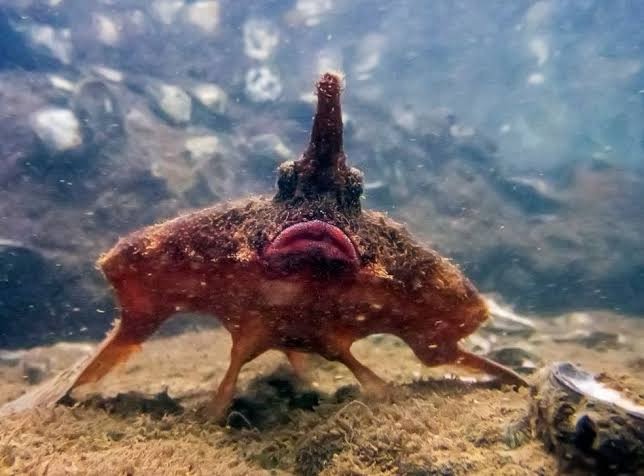
The red lips of the batfish are undoubtedly its most striking feature. These lips serve not only an aesthetic purpose; they are adapted to attract prey amidst the oppressive darkness. The vibrant color contrasts with the often monotonous background of the deep ocean, allowing the creature to stand out. Thus, the lips play a crucial role in its hunting strategy, attracting small fish and crustaceans that stray into its path.
Fins That Resemble Legs
In addition to its intriguing lips, the structure of the batfish’s fins is another marvel of adaptation. These fins, which resemble legs, allow the batfish to ‘walk’ on the ocean floor, utilizing the softness of the substrate to move. This ability is vital, as in a habitat where mobility is often limited, the capacity to move agilely in various directions becomes essential for escaping predators or hunting.
For all these reasons, the red-lipped batfish is a perfect example of how physical traits can evolve in response to the demands of a habitat. As we delve deeper into the world of the batfish, we become aware of how these characteristics are just the beginning of its impressive adaptations. Understanding better what makes this creature a survivor is crucial before we venture into its fascinating interactions in the abyssal environment.
Adaptability and Behavior in the Abyssal Habitat
In the depths of the ocean, where sunlight does not penetrate and temperatures are cold, the red-lipped batfish reveals itself as a fascinating example of adaptability. With its unique shape and modified fins, it navigates the complex coral reefs and substrates of the ocean floor. These adaptations are not only for locomotion but play a vital role in its hunting and survival strategies.
Efficient Locomotion
The locomotion of the batfish is an impressive combination of its robust fins and flexible body. While many fish are content to swim, this intriguing inhabitant of the ocean floor uses its fins as if they were legs, allowing it to move agilely through the obstacle-filled environment. This ability not only facilitates the hunting of prey but also aids in escaping predators.
Behaviors and Interactions
The social behavior of the red-lipped batfish is equally fascinating. Its vibrant coloration, which includes the famous red hue of its lips, is not merely an aesthetic display. It serves as a communication mechanism among its species and potentially as a warning to predators about its toxicity. Furthermore, its ability to hide among rocks and corals allows it to minimize risks. This behavioral adaptability is crucial, as the abyssal ecosystem is filled with daily challenges.
By understanding how the batfish adapts to the abyssal environment, we begin to perceive the complex interconnections of its world. What seems to be a simple inhabitant of the ocean floor actually plays a fundamental role in this fragile and intriguing ecosystem. As we conclude this look at its abilities, we set the stage to explore how its presence directly influences the health of the marine ecosystem.
The Role of the Batfish in the Marine Ecosystem
The vast and mysterious depths of the ocean harbor fascinating creatures, and among them, the red-lipped batfish stands out. This remarkable inhabitant of the waters showcases its vibrant colors, playing a crucial role in the marine ecosystem. As a predator, it exerts control over the populations of its prey while simultaneously serving as food for larger predators, creating a delicate balance. The interaction between predator and prey that occurs in this environment is essential to mitigate fluctuations that can affect the food chain.
A Vital Link in the Food Chain
The red-lipped batfish feeds on a variety of organisms, from small invertebrates to smaller fish. This dietary habit makes it an efficient predator, helping to maintain the health of its prey populations. However, if the batfish were to become extinct, this dynamic would suffer a dramatic interruption. Without its controlling role, prey could proliferate, leading to overpopulation. This change would inevitably result in an ecological collapse in the areas it inhabits, affecting the biodiversity that relies on this balance.
Conservation and Ocean Health
The conservation of the red-lipped batfish is, therefore, an issue that goes beyond the preservation of a single species. In fact, protecting these fish means protecting an entire ecosystem. The degradation of the oceans, resulting from human actions, threatens not only the existence of this fish but also all marine life that depends on it. Awareness and conservation efforts are essential to ensure a healthy future for these habitats.
Thus, by understanding its vital role in the marine ecosystem, we become more aware of the interdependence that exists among all forms of life in the oceans. Now, let’s dive into some intriguing facts about the red-lipped batfish that reveal its lesser-known secrets and charms.
Curiosities and Amazing Facts
Imagine a world where a fish displays vibrant red lips, as if always ready for a kiss. The red-lipped batfish is undoubtedly one of the wonders of marine life, and its peculiarities are truly fascinating.
Behavior and Habits
This fish, often found in deep waters, is known for its intriguing behavior. In small groups, they not only swim but also hide among the rocks, creating a complex web of social interactions. Although they are shy, they attract the attention of predators with the shine of their lips, which are more than just decorative; these lips help in attracting mates, especially during the breeding season.
Reproduction and Myths
During the mating period, males perform an impressive dance that mesmerizes females. This dispels a popular belief that these fish do not communicate. On the contrary, their dances are elaborate and full of meaning. Moreover, it is often said that these fish are solitary, but studies show that they form unique bonds, challenging the conventional perception of what we know about abyssal fish. Comparisons with other species that inhabit the depths, such as the squid, reveal a complex and interdependent ecosystem.
So far, we have explored the wonders of the red-lipped batfish, and its story leads us to consider the threats that these magnificent beings face in the depths of the ocean.
Threats and Conservation of the Deep Seas
As we delve into the threats surrounding the red-lipped batfish, we are confronted with the harsh reality of a marine world in danger. This magnificent inhabitant of the depths is not only a biological wonder but also an indicator of the health of our oceans. Unfortunately, their lives are constantly at risk due to human practices and environmental changes. One of the main threats comes from overfishing, which, by affecting food webs, harms not only the batfish but the entire web of marine life. Additionally, pollution, in its various forms, penetrates the abyssal waters, compromising delicate habitats and introducing toxic substances that end up in marine organisms.
Impact of Climate Change
Beyond these direct pressures, climate change plays a devastating role. Rising ocean temperatures alter the behavior and migration of species, including the red-lipped batfish. Ocean acidification, resulting from the increasing absorption of atmospheric carbon dioxide, compromises the formation of calcareous structures that many marine creatures depend on, directly impacting the ecosystem in which the fish resides.
Conservation Initiatives
However, not all is lost. Conservation initiatives are emerging in various parts of the world, focusing on habitat protection and raising awareness about the importance of marine ecosystems. Programs promoting sustainable fishing and reducing pollutants are spreading. Awareness of the vital role that oceans play in the health of the planet is essential, not only for the survival of the batfish but for all life that depends on the waters. Protecting the deep seas is, therefore, a collective effort that requires immediate action. As we look to the future, we have the responsibility to ensure that these fascinating creatures do not become just a memory in the vast book of marine life.
Conclusions…
The red-lipped batfish is an impressive example of the diversity of marine life. Its unique adaptations, such as the vibrant coloration of its lips and the fins that facilitate movement along the ocean floor, reveal the evolutionary strategies that allow survival in hostile environments. By learning more about this enigmatic fish, we gain a better understanding of the complexity of abyssal ecosystems and the importance of preserving these habitats. Understanding these creatures not only broadens our knowledge but also awakens us to the urgency of protecting the oceans and their wonders.
Did You Know?
- What is the red-lipped batfish? It is an abyssal fish species known for its bright red lips and its ability to ‘walk’ on the ocean floor.
- Where is the red-lipped batfish found? This fish is found in the deep oceans, usually in cold water areas.
- What is the importance of the batfish’s fins? The fins of the red-lipped batfish are adapted to allow it to move along the ocean floor instead of swimming.
- How does the coloration of the batfish’s lips help in its survival? The vibrant coloration can help attract mates or serve as a warning signal to predators.
- What are the main predators of the batfish? In its deep habitat, predators include sharks and other large fish species.
- Is the red-lipped batfish an endangered species? Currently, there is not enough information to categorize the batfish as endangered, but the conservation of marine habitats is critical.
- How does the red-lipped batfish feed? It primarily feeds on small organisms found on the ocean floor, using its adaptations to capture them.
- What is the average size of the red-lipped batfish? This species typically reaches about 30 centimeters in length, depending on environmental conditions.