The Importance of the Helmeted Guineafowl in Rural Security
Exploring the influence of the Helmeted Guineafowl on rural security reveals a fascinating aspect of life in the countryside. These birds, known for their alert nature, play a crucial role in protecting properties, serving as attentive and effective guards against potential threats. Let’s better understand their characteristics and behavior.
Characteristics of the Helmeted Guineafowl
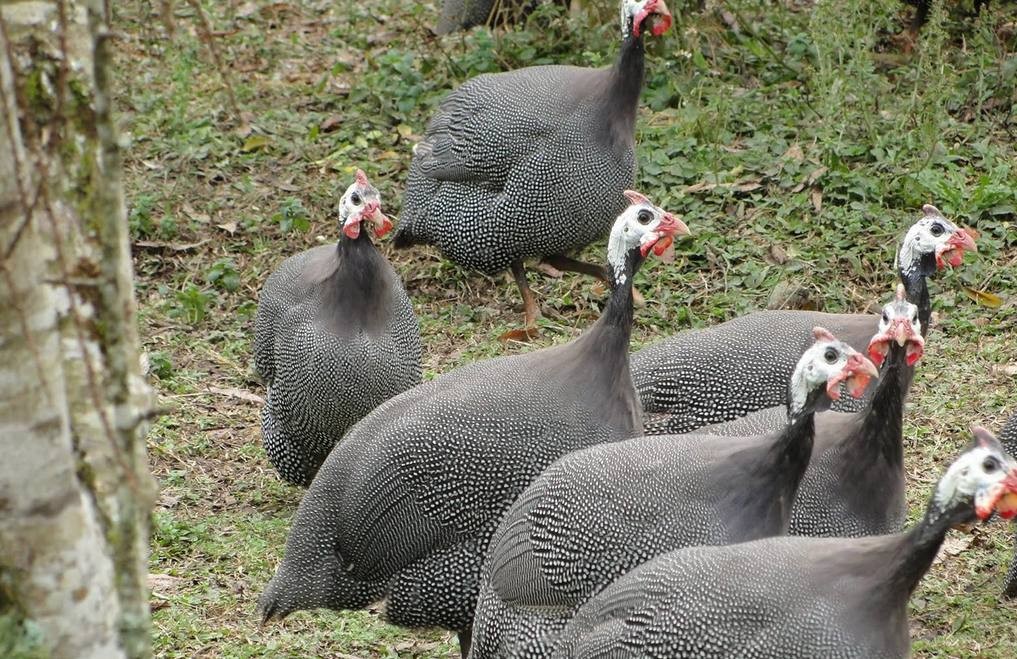
The Helmeted Guineafowl has a unique and impressive plumage. Its robust body is covered with feathers that range from gray to dark blue, with small white spots that reflect light in a fascinating way. This coloration is not only aesthetically pleasing; it also allows the bird to blend into its environment, helping it avoid predators. Its eyes are alert and bright, important for spotting threats. A notable feature is the caruncle, a fleshy protuberance found on its head, which not only enriches its appearance but also plays a vital role in communication and mating rituals.
The sound produced by the Helmeted Guineafowl is an unmistakable call. Its vocalization is a mix of grunts and squawks that rise into the air, creating a vibrant atmosphere in rural areas. These sounds are essential for social interaction within the group. Verbal communication goes beyond sounds; they also communicate through postures and body movements, expressing states of alertness or relaxation.
Socially, the Helmeted Guineafowl is a bird that values group life. It tends to form flocks that help each other in their daily activities, such as feeding. These social habits assist in gathering food, such as insects and seeds, and are fundamental in exchanging information about safety and sources of nutrition. Careful observation of this bird’s behaviors reveals a harmony that is often underestimated, making the Helmeted Guineafowl a true gem of rural biodiversity. For a more in-depth discussion on fauna, it is recommended to visit this link.
The Helmeted Guineafowl as a Guardian
The Helmeted Guineafowl is a true guardian of rural properties. With its slender body and distinctive plumage, it stands out as a vigilant sentinel. In flocks, these birds become even more effective, using their social nature to protect their territory. Their curious and alert behavior helps monitor the surrounding environment. They have an excellent sense of hearing and can detect even the subtlest sounds of danger. When a predator approaches, a shrill and characteristic call echoes through the air. This alarm call not only alerts their companions but also serves to frighten off the intruder. Helmeted Guineafowls have a complex communication code, filled with vocalizations that vary in tone and intensity. Thus, they can effectively convey messages about the presence of predators or threats.
In addition to vocal communication, their visual interactions are essential. They maintain eye contact frequently and help each other stay alert. This mutual vigilance creates a safe environment where intruders feel discouraged from approaching. While part of the flock remains alert, another part can forage, ensuring that feeding is not compromised.
Due to their territorial nature, Helmeted Guineafowls also emit sounds that mark their presence, delineating their space. These habits of vigilance and communication demonstrate how important this bird is in protecting rural properties. An example of a fascinating creature that also plays a vital role in its habitat is the anhinga, which interacts in unique ways with its ecosystem.
Interaction with the Ecosystem
The Helmeted Guineafowl, with its striking aesthetics and curious behavior, plays a fundamental role in the ecosystem. This bird, which inhabits rural and wild regions, is a natural pest controller. With its natural foraging instinct, it feeds on a variety of insects, worms, and even small rodents. This habit not only helps balance the population of these organisms but also reduces the need for pesticides, which can be harmful to the environment. The positive impact of the Helmeted Guineafowl is undeniable, especially in agricultural areas, where biological control becomes essential for the health of crops.
In addition to pest control, the Helmeted Guineafowl occupies a significant position in the food chain. Although it is an effective predator of insects, it also becomes prey to birds of prey, mammals, and other predators. This interdependence highlights how the Helmeted Guineafowl, even as a relatively small animal, plays a vital role in the web of life. The balance it helps maintain is essential for preserving local biodiversity.
By interacting with various elements of its environment, the Helmeted Guineafowl not only contributes to a healthy ecosystem but also exemplifies how nature works in synergy. In a world where intensive agriculture and excessive use of chemicals threaten environmental harmony, the incorporation of beings like the Helmeted Guineafowl is a reminder of the power of natural solutions. Combining respect for biodiversity with sustainable agricultural practices is a crucial step toward ensuring a lush and productive future. To learn more about the relationship between living beings and their habitat, you can visit here.
Cultural and Agricultural Importance
The Helmeted Guineafowl, with its distinctive feathers and unmistakable call, holds a special place in the hearts of rural communities. This bird is not only a source of food but also a symbol of wealth and tradition in various cultures. In regions of Africa, for example, the domestication of the Helmeted Guineafowl dates back centuries. It is linked to festivities and ancestral rituals, representing a deep connection to the land and ancestry.
In agriculture, these birds play a vital role. They are known for controlling pests, as they consume insects and small worms. This natural ability helps farmers keep their crops healthy, reducing dependence on pesticides. In rural communities, the Helmeted Guineafowl is often raised freely, integrating into daily life and the agricultural system.
Moreover, the bird is valued in traditional dishes, contributing to the local gastronomic culture. The consumption of Helmeted Guineafowl is associated with celebrations, promoting a sense of community and unity among people. Recipes that use this bird are often passed down from generation to generation, preserving history and cultural identity.
In some regions, the Helmeted Guineafowl is also linked to social status. Having a healthy flock can be seen as a sign of prosperity. This encourages people to take good care of these animals.
The relationship between the Helmeted Guineafowl and humans goes beyond mere utility; it is a link between the past and the present. From a broader perspective, the importance of this bird in agriculture can be reflected in sustainable practices that value biodiversity. To learn more about the relationship of different species with the environment, see this example about intelligent spiders.
Challenges and Conservation
The Helmeted Guineafowl, with its unique splendor, faces significant challenges in its natural habitat. As forests and fields are transformed for modern agriculture, the reduction of this habitat becomes a concerning reality. This not only affects the survival of the species but also the dynamics of the rural ecosystem, where the Helmeted Guineafowl plays a vital role. As a bird that controls insects and pests, its presence is essential for maintaining environmental balance.
Moreover, hunting and capture for trade are leading to a sharp decline in wild populations. What was once merely a cultural practice now threatens the continuity of the species. In this scenario, conservation becomes imperative. Protecting the Helmeted Guineafowl is not just about saving a bird; it is about preserving biological diversity and the cultural heritage of entire regions.
Conservation initiatives need to operate on multiple fronts. The creation of protected areas and rehabilitation programs is fundamental to ensure that these birds can thrive again. Environmental education is equally crucial, raising awareness about the importance of this species and its habitat. Local communities must be involved to understand the value of the Helmeted Guineafowl, not just as a source of food but as a guardian of the environment.
Scientific research also plays a vital role. Studying the habits of the Helmeted Guineafowl and its adaptability can provide insights that will aid in its preservation. Therefore, connecting local and global conservation efforts is essential to ensure a future where the Helmeted Guineafowl continues to adorn the fields with its presence. For more information on the importance of wildlife conservation, check out this article about bats, a mammal essential to the ecosystem.
Conclusions…
The Helmeted Guineafowls are not just exotic birds; they are essential for security in rural areas. Their vigilance, social behavior, and ability to alert to dangers make them true allies of farmers.
Did you know?
What is the importance of the Helmeted Guineafowl in agriculture?
The Helmeted Guineafowl is crucial in agriculture as it protects crops and animals from predators and provides natural pest control.
How does the Helmeted Guineafowl communicate?
These birds have a varied vocal repertoire and use distinct calls to alert about threats and coordinate social interactions.
What are the physical characteristics of the Helmeted Guineafowl?
The Helmeted Guineafowl has distinctive plumage, a compact body, and a bare skull, characteristics that differentiate it from other domestic birds.
Can the Helmeted Guineafowl adapt to urban environments?
Although they are more common in rural areas, the Helmeted Guineafowl can adapt to urban environments but usually prefers spacious areas.
What is the social behavior of the Helmeted Guineafowl?
These birds have complex social behavior, living in cohesive groups and interacting with each other through vocalizations and alarm behaviors.