Harpy Eagle: The Largest Eagle in the Americas, a Powerful Predator
The harpy eagle, a majestic bird of prey, is a true icon of the avifauna of the Americas. With its impressive wingspan and hunting skills, it represents the magnificence of the predatory bird kingdom. In this article, we will explore its characteristics, habitat, and fascinating behavior.
Physical Characteristics
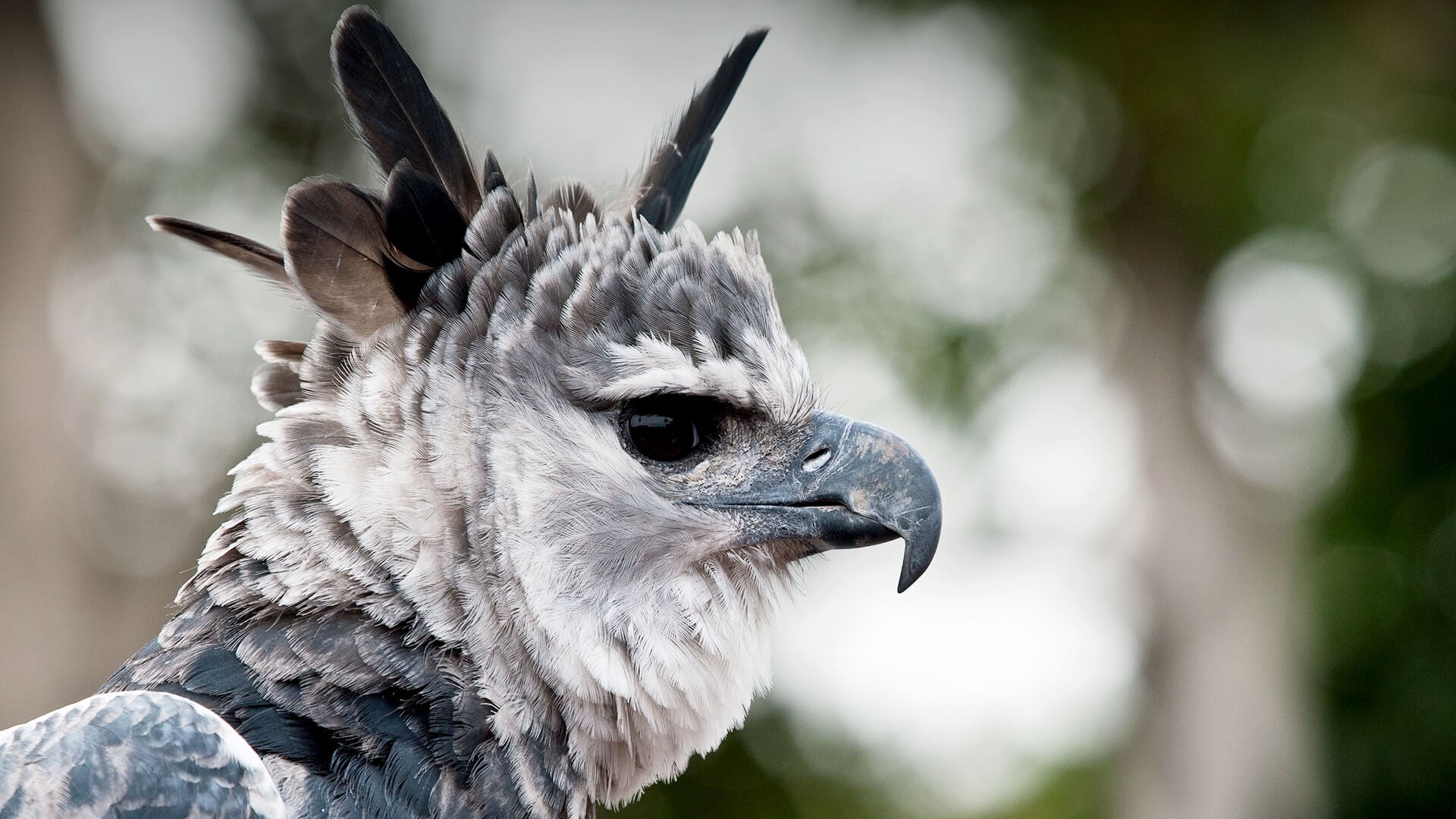
The harpy eagle is one of the most majestic birds of prey on the planet, standing out for its imposing presence and formidable size. With a wingspan that can reach an impressive two meters, harpy eagles are true queens of the sky in tropical forests. This extraordinary bird has predominantly gray and white plumage, featuring a crown of black feathers that rises when it is alert. The tail feathers are striped in black and white, aiding in camouflage among the shadows of dense trees.
The claws of the harpy eagle are exceptionally powerful, a lethal adaptation for capturing large prey in its habitat. The claws are larger than those of grizzly bears, reaching up to 13 centimeters in length, which gives them an incredible gripping ability. Its sharp eyes, capable of detecting movement from great distances, allow it to be an efficient hunter, even in dense forests.
The difference between males and females is also notable. Females are significantly larger, weighing between 7 and 9 kilograms, while males average 4 to 5 kilograms. This size difference is an evolutionary adaptation, allowing females to hunt larger prey, such as monkeys and sloths, while males specialize in smaller captures. The extraordinary variety of birds in the rainforest includes potential prey, making harpy eagles formidable predators. Their curved and strong beak complements their perfect design, capable of tearing flesh and aiding in the descent while devouring their captures. It is in the combination of these physical attributes that the harpy consolidates its status as the largest predatory eagle in the Americas.
Natural Habitat
In this world of wild wonders, the harpy eagle finds its home in the pristine and untouched forests of the Americas. Preferring the dense vegetation of tropical forests, it positions itself at the top of the tallest trees. Here, it watches tirelessly, alert to movements around it. These forests, united by immense canopies, provide the ideal refuge with shelter and vast hunting territories.
The vast regions of the Amazon, extending across multiple countries, represent the heart of its home. Similarly, the tropical forests of the Orinoco Basin and the Atlantic Forest harbor these magnificent birds. Each of these regions offers a humid climate, essential for the lush life that sustains the food chain of the harpy eagle. The abundant rains typical of these forests maintain thriving biodiversity.
These forests are not only its dwelling but also ensure critical environmental resources for its survival. The high levels of humidity and forest density guarantee an abundance of prey, while the enormous trees provide safe and elevated nesting platforms. Stable temperatures throughout the year allow the eagle to maintain its predatory routine without the worry of seasonal migrations.
Unfortunately, this vital habitat faces severe threats, including deforestation and forest fragmentation, putting these impressive predators at risk. Understanding and preserving these environments, therefore, becomes crucial to ensure the continued majestic existence of the harpy eagle and the balance of tropical forests. The more we protect these areas, the greater the chances are for the remarkable species of the Amazon to continue thriving alongside the harpy.
Hunting Behavior
The harpy eagle is a master of the tropical forests, with exceptional hunting efficiency. Its broad wings and short tail allow for maneuvers in dense scenarios. These characteristics are essential when pursuing its preferred prey. Its skill and stealth are impressive. It often waits patiently, almost motionless, before launching its dizzying attack. Reaching from the treetops, the harpy eagle surprises monkeys, sloths, and other small mammals, capturing them with its powerful claws. Hunting techniques include everything from ambushes to quick short chases. The harpy often approaches its target by flying silently between the trees, a remarkable ability, similar to the capacity to hunt and forage from bats. Although there are cases of cooperative hunting, the harpy eagle typically operates solo due to its territorial needs. They vigorously protect their rich hunting territories, with social cooperation being more visible in raising the young, when both parents contribute to feeding the offspring. Its ability is a vital part of the ecosystem’s balance. The population control of certain species is part of this, something explored in the next chapter about its ecological importance. The adaptability and prey selection of the harpy eagle show a solid evolution to conquer its habitat. The preservation of these majestic birds is crucial for maintaining the biodiversity where they reside.
Ecological Importance
The harpy eagle plays a crucial role in the ecosystems of the tropical forests of Central and South America. As a top predator, this majestic bird helps maintain the population balance of various prey species. Its dietary choices, which include sloths and monkeys, are essential to prevent overpopulation and the depletion of natural resources. This natural control contributes to biological diversity, allowing various species to coexist harmoniously.
The preservation of the harpy eagle has a cascading effect, positively influencing the ecosystem. Protecting this species helps safeguard the dense forests essential for its survival. These forests, in turn, are a critical reservoir of biodiversity and an important carbon sink, combating climate change.
Moreover, the harpy eagle has a significant role as a bioindicator. Its presence indicates a healthy and balanced environment. The decline in the number of harpy eagles can signal environmental degradation, such as deforestation and habitat fragmentation. Protecting this bird allows for monitoring the state of tropical forests, essential for life on Earth.
The conservation strategies for the harpy eagle are, therefore, an investment in preserving biodiversity. Efforts aimed at its protection involve habitat restoration and promoting sustainable practices in local communities. Environmental education, highlighting the importance of the eagle, fosters awareness and local involvement in its conservation.
The importance of the harpy eagle extends beyond its powerful wings. Its survival symbolizes the continuity of complex and interconnected ecosystems. Protecting this eagle is, ultimately, protecting the wealth of life that makes the Amazon a natural treasure.
Conservation and Challenges
The majestic harpy eagle faces a series of challenges threatening its survival in the tropical forests of the Americas. Among the most significant threats are indiscriminate deforestation, agricultural expansion, and illegal hunting activities. These practices destroy the harpy’s habitat, reducing the availability of prey and compromising nesting sites.
In response, significant conservation efforts are underway. Reintroduction and captive breeding programs are in progress to help stabilize the population. Additionally, the creation of protected areas has proven effective in ensuring a safe refuge for these magnificent birds.
Environmental education plays a crucial role in this mission. Educational initiatives are promoted to raise awareness among local communities, highlighting the ecological importance of the harpy eagle. These actions aim not only to change perceptions but also to encourage sustainable practices that benefit both wildlife and humans.
Community involvement is essential. Projects that empower residents to become guardians of biodiversity have shown promising results. Partnerships with research institutions and NGOs are fundamental to the success of conservation initiatives.
When addressing the issue of harpy eagle conservation, we encounter a scenario that reflects challenges faced by other endangered species. The interconnection of these issues reinforces the need for a collaborative and integrated approach. Without our ongoing support, the silence of the forests will be not only an ecological loss but a reflection of human failure to protect what is truly rare and extraordinary.
To learn more about conservation initiatives, visit our article on the toucan.
Conclusions…
The harpy eagle is a remarkable example of the beauty and incredible adaptation of birds. Its role as a predator in the ecosystem is vital, and its conservation is essential for the biodiversity of tropical forests. Protecting this species ensures the continuity of its magnificent presence in the skies of the Americas.
Did you know?
Where does the harpy eagle live?
The harpy eagle inhabits tropical forests, especially in Central and South America, preferring areas with dense forest cover.
What is the largest eagle in the world?
The harpy eagle is considered the largest eagle in the Americas and one of the largest in the world, with a wingspan that can reach up to 2.2 meters.
Is there harpy eagle in Brazil?
Yes, the harpy eagle is found in the Amazon region of Brazil, where its habitats are preserved in tropical forest areas.
What does the harpy eagle eat?
It primarily feeds on monkeys, sloths, and large birds, using its powerful claws to capture its prey.
Which is the strongest eagle of all?
The harpy eagle is considered one of the strongest due to its large musculature and hunting skills, making it a formidable predator.
What was the largest eagle that ever existed?
The largest eagle ever recorded was the Haast’s eagle, which lived in New Zealand and fed on moa, large extinct birds.
Who is bigger, condor or harpy?
The condor is generally larger in wingspan, but the harpy eagle is more robust and powerful in terms of musculature and hunting ability.
What is the harpy eagle’s biggest enemy?
The main predator of the harpy eagle is humans, who threaten its habitat through deforestation and agricultural activities.
Is it true that the eagle renews itself at 40 years?
This is a legend. The harpy eagle does not renew itself at 40 years but can live up to 25 years in the wild.