Hairy Frog: The Enigmatic African Amphibian
The hairy frog, an intriguing African amphibian, surprises with its hair-like projections and self-defense abilities. In this article, we will explore its unique characteristics, habitats, behaviors, and the hidden beauty of this small giant of nature.
Unique Characteristics of the Hairy Frog
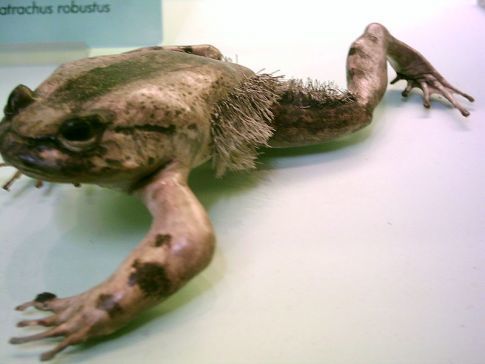
The hairy frog, a fascinating amphibian that resides in the forests and swamps of Africa, possesses notable characteristics that make it unique. Its skin is covered with hair-like projections, which not only give it a peculiar appearance but also serve adaptive functions. These projections help the hairy frog camouflage in its environment, making it nearly invisible among dense vegetation. Such camouflage strategies are essential for avoiding predators and capturing prey.
In addition to its projections, the hairy frog exhibits a profound ability to conserve water. During dry periods, it can enter a dormant state, reducing its metabolic activity. This allows it to survive in dry forests where moisture is scarce. Such adaptation is a testament to its resilience in the face of environmental changes.
The behavior of the hairy frog is also intriguing. They communicate through a series of croaks that echo through the forest, especially during the breeding season. Males are generally more vocal, hoping to attract females. This part of the life cycle is essential for maintaining their populations.
The hairy frog is not just a visual spectacle; its survival modes, camouflage, and vocal repertoire are fascinating examples of how evolution has shaped this amphibian. For a deeper analysis of animal adaptations in their habitats, check out this article on elephants and their incredible adaptations.
Habitat and Distribution
The hairy frog, known for its peculiar appearance and distinct projections, inhabits specific regions of Africa. Its preferred home is tropical rainforest areas, where moisture is abundant and vegetation is dense. These characteristics provide the necessary shade and protect the frog from predators. Aquatic habitats, such as ponds and slow-flowing rivers, also play a vital role in its life. Water is essential for its reproduction and larval development.
The hairy frog exhibits interesting behavior in response to its environment. It is predominantly nocturnal, taking advantage of the cooler temperatures at night. During the day, it camouflages itself in moist spots, among leaves and logs, creating a biomimetic effect that makes detection by predators difficult.
In the ecosystem it inhabits, the hairy frog plays a crucial role. As a predator, it controls the population of insects and other small invertebrates. Its presence is an indicator of environmental health, as it requires a balanced and clean habitat. The degradation of its habitat due to human activities, such as deforestation and pollution, threatens not only the hairy frog but the entire local ecosystem.
These delicate wetland environments are becoming increasingly rare. Therefore, protecting forests and water sources is essential for the survival of this intriguing frog. For those seeking to understand more about biodiversity and the importance of forests, I recommend visiting the fascinating world of Brazilian water birds, which reveals the importance of aquatic habitats in wildlife preservation.
Surprising Defense Strategies
In the vast tapestry of wildlife, the African hairy frog presents a truly unique defense. This amphibian, always discreet in its hairy appearance, hides a fascinating ability that challenges the logic of animal behavior.
When threatened, the hairy frog has the ability to break its own bones. This defense mechanism, while surprising, is vital for survival. By breaking bones, the hairy frog can inflate its body by embedding the exposed fragments in its soft tissue, creating an even more intimidating appearance. The visual effect is drastically dissuasive for many predators, who hesitate to approach an animal that appears to be in pain but may actually be a formidable opponent.
This behavior is an extreme example of self-preservation. By inflating itself, the hairy frog becomes much larger, intimidating potential attackers. Its distinct projections also help camouflage it among foliage, providing an additional form of protection.
The hairy frog has the ability to employ various defense strategies. In addition to breaking bones, it can emit loud sounds, alerting other predators. Its camouflage is an effective passive defense. This incredible adaptation is not seen in many other amphibians. It serves as an intriguing reminder of the diversity of defense strategies that nature has to offer. See, for example, how the platypus also utilizes its peculiarities to survive in its habitat.
Behavior and Interactions
The hairy frog, with its characteristic hairy appearance, exhibits intriguing behaviors, revealing a complex dynamic with its environment. This amphibian is notorious for its ability to camouflage in pockets of vegetation, where it often waits for prey. Its predominant diet includes small insects, but its interactions with predators can also be observed. Despite its formidable appearance, the hairy frog is not as dominant as other frog species, such as the bullfrog. The latter often uses aggression to secure territories. The hairy frog, on the other hand, seems to opt for a more evasive approach and avoids direct confrontations.
When it comes to social interactions, this amphibian displays behaviors that reveal curiosity and even some sociability. During the breeding season, males emit calls that echo through the vegetation. In comparison, many frogs prefer territorial disputes through louder and more frequent croaks. The hairy frog, perhaps due to its more nocturnal habits, maintains a low profile.
Interactions in the environment also extend to subtle symbioses. Birds and other small predators seeking food find in the hairy frog a source of nourishment, although there are indications that the presence of predators may discourage the frog’s activity. This relationship illustrates a delicate balance that keeps the hairy frog in a specific role in the ecological web. To learn more about the surprising animal life, see this article on elephants, which also relates to fascinating social behaviors in the animal kingdom.
Importance of Conservation
The hairy frog, with its curious appearance and surprising characteristics, is more than just a simple inhabitant of African forests. It plays a vital role in the delicate balance of its ecosystem. Unfortunately, its survival is threatened by human actions and environmental changes. Deforestation, pollution, and climate change directly affect its habitat. These factors not only reduce its breeding areas but also impact food availability and water quality. What happens in one part of the world resonates in another. The disappearance of a single animal can trigger a chain reaction that alters local flora and fauna. The hairy frog, with its peculiar reproductive process and unique adaptations, needs healthy habitats to thrive. Protecting this species is, therefore, a matter of preserving what remains of our aquatic and forest ecosystems. Awareness of the importance of conservation must be promoted. Education about the risks the hairy frog faces is essential to galvanize the protection of its habitat. Conservation projects can help restore affected ecosystems. This is not only an ethical issue but also a necessity to preserve biodiversity. By working to save the hairy frog, we, as inhabitants of this planet, ensure a healthier future for all forms of life. As a reminder that we are all interconnected, the hairy frog is a species that deserves our attention. Protecting it is a step towards preserving the richness of nature, essential for life on our planet. To better understand the impact of environmental changes, see this article on the rhinoceros, a species that also faces similar challenges.
Conclusions…
The hairy frog is a fascinating example of adaptation and creativity in nature. Its unique characteristics and defensive abilities are a reminder of the incredible biodiversity that our planet harbors, deserving our admiration and protection.
Did You Know?
What type of frog is poisonous? Various frogs are poisonous, with the Golden Poison Frog being one of the most well-known. They have toxin glands in their skin.
What is the rarest frog in the world? The horned frog, Endangered Frog, found in Ecuador, is considered one of the rarest in the world, threatened by habitat loss.
What type of skin does the hairy frog have? The hairy frog’s skin is characteristically rough and has projections that emulate hair, providing camouflage in its habitat.
What is the strongest frog in the world? The bullfrog is considered one of the strongest, capable of jumping long distances and effectively preying on small vertebrates.
What does a frog’s visit mean? A frog’s visit can symbolize transformation and adaptation, often seen as a sign of luck in various cultures.
What to do to scare away frogs? To scare away frogs, keep areas dry and clean, remove shelter spots, and use natural repellents like essential oils.
What attracts frogs? Frogs are attracted to moist environments with water, light, and food like insects, often gathering in ponds or wet gardens.
Which animals have hair? Animals like mammals, including dogs, cats, bears, and many others, have hair, which helps in thermal regulation and protection.
How long does a frog live? The lifespan of a frog varies, but many species live between 5 to 15 years under suitable conditions.