The Fascinating Blue Carpenter Bee
The blue carpenter bees are intriguing and fascinating creatures that challenge the common perception of bees. Instead of living in hives, they choose wood as their home, revealing a world of solitary and surprising behavior that deserves deep exploration.
Physical and Behavioral Characteristics
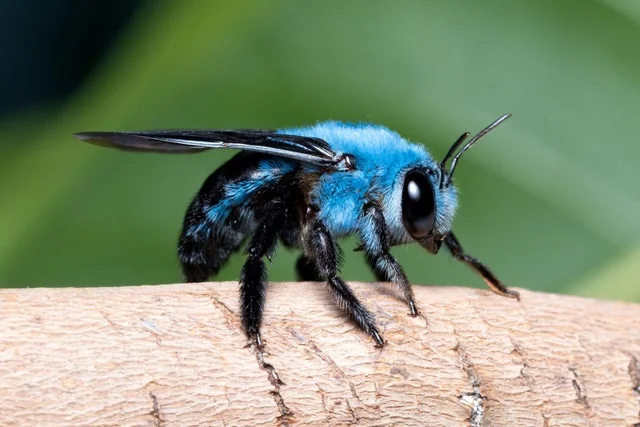
The blue carpenter bee is a true masterpiece of nature. Its body, covered in a vibrant and metallic coloration, displays a range of bluish tones that make it unmistakable. This pigmentation is not just for dazzling; it also serves as a camouflage strategy. By taking refuge among flowers and vegetation, the bee can hide from predators. Its size is impressive, measuring about 2.5 to 3.5 centimeters in length, revealing a robust and beautiful appearance.
The physical adaptations that these bees have developed are remarkable. Their legs are adorned with dense hair, ideal for collecting pollen. This not only aids in pollination but also ensures the survival of the species. The blue carpenter bee is solitary, a characteristic that distinguishes it from its relatives. Each female builds her own nest, a behavior that requires great courage and determination.
The instinct for organization is a hallmark of these bees. They are experts at selectively boring into wood, using their powerful mandibles. This skill allows them to create galleries where they deposit their eggs. These structures serve not only as nurseries but also protect the larvae from predators. Although communal life is absent for these bees, it does not diminish their relentless pursuit of pollination. They are tireless, visiting a variety of flowers, thus contributing to the health of the ecosystem. To learn more about the adaptations of other creatures, you can visit the beetles that enchant with their vibrant coloration. The fascinating behavior of the blue carpenter bee reflects the complexity of wildlife and its interactions with the environment.
The Nest in Wood
The blue carpenter bee is a remarkable artist of nature, transforming wooden logs into complex homes. The process of nest construction begins with careful excavation. Using their powerful mandibles, they can bore into the wood and create intricate galleries. The sound of their work is a testament to their determination, echoing through the forests. The selection of the site is meticulous. They prefer dry and decaying wood, which facilitates excavation and provides an ideal environment for their offspring. Once the entrance of the nest is dug, the bee begins to create internal compartments, each suitable for housing an egg. The materials that these bees choose are not random. The composition of the wood offers benefits that go beyond mere structure. Decaying wood contains nutrients that will help the young ones throughout their development. Moreover, choosing a protected location increases the chances of survival. Each nest is not just a dwelling; it is a cradle where the next generation of carpenter bees will begin their life. The careful construction allows the eggs to be incubated in a safe and conducive environment. Subsequently, the young will develop, ready to become the architects of the future. Thus, each nest represents the continuity of this fascinating species, essential for the ecosystem. For more details on the diversity of fauna, refer to articles like this one.
Life Cycle and Reproduction
The blue carpenter bee presents a fascinating and autonomous life cycle. The journey begins when the female becomes an adult, preparing for the crucial phase of reproduction. Armed with her boring skills, the bee makes small holes in dead wood, where she will deposit her eggs. This solitary behavior provides a safe environment for the development of the next generation.
Each egg is placed in an individual hole. After laying, the female controls the amount of food available for the young, usually pollen from flowers. This food is a mixture of nectar and pollen. The mother prepares everything meticulously, ensuring that each home has the necessary resources to sustain the larva that will develop there.
The eggs hatch after a few days, giving rise to larvae that feed voraciously. This growth is rapid, and within weeks, the larvae transform into pupae. The pupal stage occurs inside the hole, in complete darkness, where the larva’s body undergoes an impressive transformation.
After a few weeks, the new blue carpenter bee emerges. The cycle concludes when the young adults, usually males, begin to seek a mate, who has already become a mother. This cycle reiterates the essence of solitary behavior in the world of this species. Females do not depend on a colony but work hard to ensure the continuity of their lineage, thus following a vital pattern essential for survival. The complexity of the blue carpenter bee’s life shows how even small creatures can live with such intensity, undoubtedly one of the lesser-known secrets of the natural world. To understand more about the lives of fascinating insects, such as spiders and beetles, check out this article.
Ecological Importance
The blue carpenter bee is more than just a beautiful insect; it is a vital piece of the ecosystem. Its primary function is pollination, an essential process for the reproduction of many plants. Through their activity, these bees ensure that flowers and trees produce fruits and seeds, perpetuating various species. With their hairy bodies, they transport pollen from flower to flower, promoting fertilization and biodiversity.
In areas where the blue carpenter bee is abundant, the variety of flowering plants increases. This, in turn, attracts other animals, creating an interconnected system of life. Therefore, the presence of this bee is an indicator of ecosystem health. Its decline can signal broader problems in natural environments.
Moreover, their activities benefit not only plants. Many birds and small mammals depend on the fruits and seeds that result from successful pollination. Thus, the blue carpenter bee acts as a link between different levels of life, making it fundamental for maintaining the web of life.
The preservation of blue carpenter bees is therefore crucial. The reduction in their populations could lead to a collapse of biodiversity in various areas. Habitat destruction and the excessive use of pesticides are direct threats to these pollinators. Protecting them and their habitats is necessary to ensure the continuity not only of many plants but of the entire ecosystem. To learn more about the importance of pollinators, explore this article.
Threats and Conservation
Blue carpenter bees are magnificent creatures, but they face numerous threats that compromise their survival. The destruction of natural habitats, often caused by urbanization and intensive agriculture, is one of the main causes of their decline. Monoculture reduces floral diversity, which limits the food source for these bees. The use of pesticides is also a serious concern; harmful chemicals not only kill adult bees but also affect the development of larvae, putting the entire population at risk.
Another critical factor is climate change. Global warming alters the flowering cycles of plants, disrupting the co-evolutionary relationship between plants and bees. These factors together create an alarming scenario for the blue carpenter bee and other essential pollinators in the ecosystem.
Conservation strategies are essential to ensure the protection of these bees. Restoring natural habitats is an effective approach, promoting the reintroduction of native plants that provide adequate food. Additionally, creating ecological corridors can help connect habitat fragments, allowing bees to move between areas. Educating the public about the importance of bees and encouraging sustainable agricultural practices, such as crop rotation and responsible pesticide use, are also important steps. For more information on habitat protection, refer to the article on elephants and conservation, which discusses the interconnection between species and their environments.
Conclusions…
The blue carpenter bee, with its solitary behavior and peculiar nesting habits, teaches us about the diversity of wildlife. Understanding these fascinating creatures is fundamental to ecosystem preservation and inspires us to respect and protect the magic of nature around us.
Did You Know?
What is the blue carpenter bee?
The blue carpenter bee is a solitary bee known for boring into wood to create its nests, instead of living in hives like other species.
What is the habitat of the blue carpenter bee?
It prefers forested areas or gardens with softwood, such as pines and cedars, where it can easily nest.
How do blue carpenter bees reproduce?
These bees have a solitary life cycle, and females are responsible for building the nest and raising the young, without the help of a colony.
What challenges do blue carpenter bees face?
Threats include habitat destruction, climate change, and excessive pesticide use, which can affect their survival.
How can we help protect blue carpenter bees?
Promoting the conservation of natural habitats, using fewer pesticides, and creating suitable spaces in gardens are effective ways to help these bees.