
A Dive into the Mysteries of the Christmas Tree Worm
The Christmas tree worm, known for its spectacular spiral structures, reveals itself as one of the wonders of the oceans. In this in-depth study, we will explore its habitat, behavior, and the fascinating aspects that make it unique in the marine kingdom.
Mysteries of the Habitat
In the crystal-clear waters of tropical oceans, the Christmas tree worm hides in the depths of the sea. Its preferred home is among coral reefs, where gentle currents provide not only a shelter but also a generous food source. The warm, nutrient-rich waters create the ideal environment for this spiral wonder to grow and thrive.
The worm attaches itself to hard substrates, allowing its colorful spiral structures to unfold in a hypnotizing dance, capturing suspended particles in the water. This symbiotic relationship with the environment is essential for its survival. The seafloor, covered with vibrant corals and multicolored rocks, forms an impressive mosaic where various forms of marine life coexist.
Rocks and corals provide not only sustenance but also protection. Natural predators, such as certain fish or starfish, are common, but the worm’s adaptation to its environment gives it a natural defense. Ocean currents play a crucial role, moving nutrients, but without enough force to destabilize these magnificent structures.
Among the habitat companions, we can find the impressive squid, which also plays a part in this rich marine theater. The environmental conditions that favor the growth of the worm are thus largely dependent on the harmony formed between temperature, currents, and interaction with other forms of marine life, ensuring the continuity of this remarkable underwater spectacle.
The Exuberant Structure
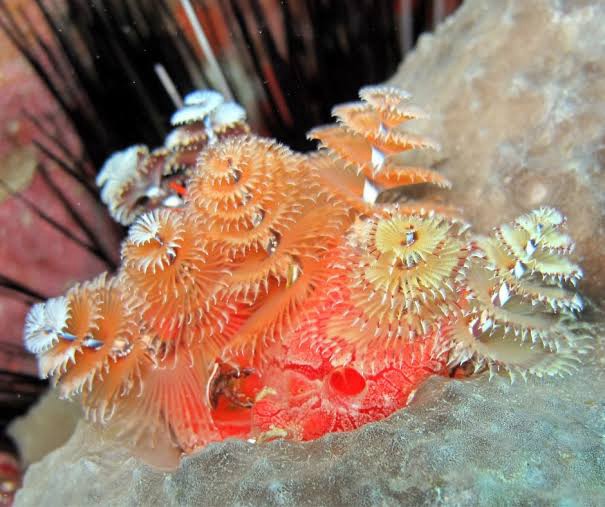
The Christmas tree worm is a spectacle of nature, with its spiral structures reminiscent of the conifers that adorn our year-end celebrations. These spirals, also known as radioles, are of stunning beauty. They display a diversity of colors ranging from deep blue to vibrant red and radiant yellow. But beyond the impressive aesthetics, these spirals serve important purposes.
They are not just for decoration. These projections consist of radioles, feather-like appendages that perform vital functions. These intricate structures are used to filter food particles from the water and facilitate respiration. The vast array of spirals allows for a larger surface area to capture these particles, ensuring that the worm feeds efficiently.
The intense coloration is not merely a matter of beauty. In the tension of the underwater environment, these vibrant colors help the worm camouflage among the equally colorful coral reefs. This camouflage trick protects the worm from predators, helping it go unnoticed.
The worm also possesses the fascinating ability to quickly retract its spirals into its tube when disturbed. This agile movement ensures instant protection against threats. This characteristic can be observed in creatures like the tardigrade, which, despite being small and vulnerable, has effective defense mechanisms.
Thus, even in a competitive habitat, the Christmas tree worm manages to thrive, brilliantly blending with its environment while its colorful spirals serve a function as important as aesthetics.
Behavior and Feeding
The Christmas tree worm, with its elegance and vibrant colors, is a stunning example of natural engineering. This beautiful annelid lives in tubes constructed within coral reefs, balancing beauty with precise functionality. Its feeding is a fascinating spectacle of biological engineering.
The colorful ‘Christmas trees’ are, in fact, tentacles radiating from the worm’s central body. These tentacles are not merely decorative; each is equipped with tiny cilia that capture food particles in the aquatic environment. The structure is designed to maximize the capture of suspended particles, such as plankton and organic debris.
The feeding process is a fluid dance. The Christmas tree worm extends its tentacles in a hypnotizing display, while the cilia create currents that draw nutrients toward its mouth. This method is effective in the rich and dynamic environments of the reefs, where a constant flow of food passes through the water.
In the marine ecosystem, the Christmas tree worm plays a crucial role. By filtering its food, it helps maintain ecological balance, preventing the excessive accumulation of organic matter. Furthermore, its tube-building activities enhance the texture of the reefs, providing additional habitat for other species.
The symbiotic relationship with corals is vital, as its feeding activities help maintain the health of the reefs. The feeding behavior of the Christmas tree worm exemplifies the complexity of these ecological webs. Like other underwater wonders, it reminds us of the beauty and subtlety of interconnected relationships in the sea. For other equally intriguing creatures, consult the bat, the flying mammal, which also plays intriguing roles in its ecosystems.
Ecological Relationships
The Christmas tree worm, with its impressive colorful spirals, plays a subtle yet vital role in the complex marine environment. Beneath the waves, it forms complex relationships with a vast number of aquatic lives. These small worms, besides enchanting the human eye, are equally vital for the biodiversity of coral reefs.
Despite its modest size, the Christmas tree worm has a surprising connection with the life around it. Symbiosis is an essential notion here. These worms often share the environment with corals, with both parties benefiting from the calcium carbonate habitat that houses various cnidarians. In return, fluorescent corals may provide safety for the worms during predation.
Predators, such as fish and starfish, add a touch of natural pressure to the existence of the worms. However, this worm is not entirely defenseless. The ability to quickly retract its fairy-like spirals into its calcium tube grants it a quick protection opportunity.
Besides predators, the worms serve the intricate role of *reef cleaning*. Feeding on suspended plankton, they sustain the nutritional balance of the ecosystem. Thus, they help recycle nutrients that flow through the reefs, favoring a vigorous marine community.
This extraordinary creature is not unlike the toucan, standing out not only for its beauty but for the critical role it plays in the health of its environment.
The interactions of the Christmas tree worm are not without impact on the marine environment. By integrating into this biological tapestry, these same interactions continuously support the richness and diversity of marine ecosystems, signaling their importance beyond their hypnotic appearance.
Conservation and Ecological Importance
The echidnas, with their peculiar snouts and spines, play an essential role in maintaining ecological balance. As insectivores, they consume a significant amount of ants and termites, helping to control the populations of these insects and preventing imbalances that could affect local vegetation. Furthermore, their digging abilities promote soil aeration, facilitating water filtration and improving overall soil health.
Echidnas dig into the ground in search of termites, creating tunnels that increase water penetration and nutrient distribution. This behavior is similar to that of other burrowing animals, making echidnas vital for biodiversity. Unfortunately, these unusual creatures face various challenges. Urbanization destroys their habitats and makes them vulnerable to introduced predators, such as domestic dogs and cats.
In the face of these threats, conservation efforts are underway. Initiatives include protecting natural habitats and creating preservation areas where echidnas can thrive without human interference. Conservation programs also seek to engage local communities, raising awareness about the importance of these fascinating creatures.
In addition to government efforts and conservation organizations, it is crucial to promote scientific research focused on echidnas, something noteworthy in the world of Australian fauna. This research not only contributes to our understanding of echidnas but also to the unique fauna of the region, similar to the study of the platypus. Protecting echidnas is not just about preserving a singular species; it is also about maintaining the delicate balance of the ecosystems in which they live.
Conclusions…
The Christmas tree worm is not just a stunning sight of the seas but also an example of adaptation and ecological complexity. Understanding its biology and ecology enriches our knowledge of marine biodiversity and highlights the importance of preserving these wonderful ecosystems.
Did you know?