The Fascinating African Clawed Frog: A Study on Cellular Regeneration
Dive into the extraordinary world of the African Clawed Frog, a creature that not only captures the imagination but also plays a crucial role in science. This article explores its fascinating ability for cellular regeneration and the impact this has on current biomedical research.
The Origin of the African Clawed Frog
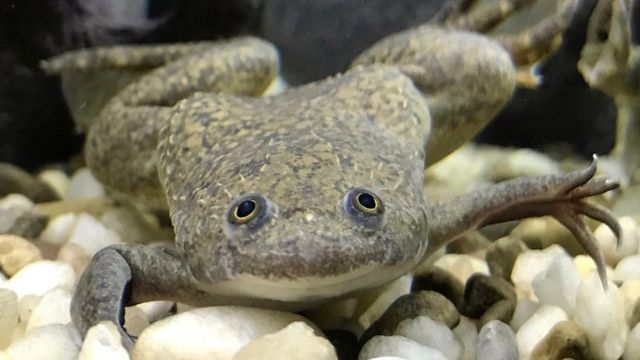
The African Clawed Frog, or Clawed Frog, is a truly fascinating species. Native to regions of sub-Saharan Africa, this amphibian has emerged in aquatic environments, adapting over millions of years. During its evolution, the frog developed unique characteristics that distinguish it among frogs. One of the most notable features is the presence of claws on its feet, which serve as effective tools for digging and moving along the bottoms of water bodies. These adaptations are the result of selective pressure in varied habitats that require specific survival skills.
Another peculiarity is its aquatic reproduction. The African Clawed Frog typically breeds in freshwater, where females lay eggs that transform into tadpoles. Over time, these tadpoles evolve into adult frogs. Metamorphosis is one of the most striking stages of the frog’s development.
Moreover, the African Clawed Frog possesses an intriguing immune system that stands out among amphibians. Its ability to adapt to hostile environments and resist diseases has made it a relevant subject of study. The diversity of habitats in which the frog thrives is also rich. This aspect can be explored in more detail through research on other adaptive organisms. For example, the evolution of bats may offer insights into special adaptations in different ecosystems. Thus, the trajectory of the African Clawed Frog is not just a story of survival but also a testament to the incredible variety of life on our planet.
The Magic of Regeneration
In a small corner of nature, we find the extraordinary African Clawed Frog, whose feats of cellular regeneration are nothing short of magical. This amphibian has the remarkable ability to regenerate body parts, a phenomenon that attracts the attention of biologists and scientists. But what lies behind this incredible process? Regeneration begins with the loss of a limb, for instance, a leg. The frog immediately sets in motion a series of organized cellular events. Damaged cells release chemical signals, calling neighboring cells to mobilize and initiate the healing process. This is the so-called ‘cellular aggregation phenomenon.’ At this moment, the involved cells begin to divide rapidly. A layer of specialized cells, known as fibroblasts, comes into play and forms a structure called a blastema. This growing mass of cells is essential for the future development of the new limb.
The fibroblasts do not act alone. Cells known as stem cells also play a crucial role, as they have the ability to transform into different cell types. They differentiate and adapt, forming muscles, cartilage, and even nerves. A recent study highlights that the African Clawed Frog possesses specific genes that regulate these processes. The remarkable complexity of this regeneration continues to surprise researchers. The mechanism behind this ability reveals a fascinating approach to nature. The frog not only recovers what it lost but does so in an intricate and effective manner, reminding us of the immense biodiversity that our planet still has to offer. For more information on the adaptations of other animals, check out this interesting article on the platypus.
Scientific and Medical Applications
The incredible regenerative capabilities of the African Clawed Frog are attracting the attention of scientists worldwide. This small amphibian has the ability to regenerate not only lost limbs but also complex tissues, such as skin and organs. This remarkable feature is a fertile ground for biomedical research. Researchers are exploring the cells and mechanisms involved in the frog’s regeneration to develop innovative therapies.
One of the most radical promises of this research is the possibility of using these principles to heal wounds and injuries in humans. The mechanisms that allow the frog to regenerate limbs are being studied to understand how the inflammatory response and cell growth can be stimulated in patients. This could transform the treatment of burns and chronic wounds. Additionally, certain properties found in the frog’s skin secretion are being analyzed for their potential applications in cancer treatments. Bioactive substances that can inhibit the growth of tumor cells have been isolated, sparking interest in the creation of new medications.
Researchers are also studying the role of specific molecules that regulate regeneration and cellular healing. Understanding how the African Clawed Frog controls regeneration could lead to advances in therapies for degenerative diseases and injuries. As we continue to unveil the secrets of this amphibian, the possibilities of applying its regenerative capabilities in medical treatments seem promising. To delve into how regeneration in different species can impact medicine, see this article on the incredible biology of elephants.
Education and Conservation of the African Clawed Frog
The African Clawed Frog is a treasure of nature with impressive abilities. Its unique cellular regeneration capabilities spark scientific curiosity. However, the future of this species depends on our education and conservation efforts. The first vital step in preserving the African Clawed Frog is to inform the public about its importance. Often, creatures like the frog are relegated to a supporting role in the narrative of nature. This is a mistake. Educating the population about biodiversity helps create an emotional connection with these fascinating creatures.
The protection of natural habitats is crucial. Environmental degradation and urbanization put this species at risk. Therefore, conservation efforts must include the restoration of degraded ecosystems. Preservation initiatives can lead to the discovery of new breeding sites. Furthermore, education programs in local communities promote sustainable habits. Working together with schools and universities can raise awareness. Projects that encourage young people to study ecology can sow a new generation of nature defenders. Partnerships with research organizations are also essential. They allow data on the frog’s population to be collected and analyzed, thus promoting the exchange of valuable information.
Conserve the African Clawed Frog and its habitat through education. Through collective awareness, we can ensure that this vital species does not disappear. By understanding the beauty of wildlife, we value our role in preservation even more. Learn more about the importance of biodiversity by visiting the fascinating world of the rhinoceros, which also faces similar challenges.
The Future of Research with the African Clawed Frog
As we step into the future of research, the promises that the African Clawed Frog brings to biomedical science are truly intriguing. This small amphibian holds the extraordinary ability to regenerate cells, a phenomenon that piques the interest of scientists around the world. Cellular regeneration is not just a biological curiosity; it offers valuable insights into wound healing, organ regeneration, and even innovative options for combating degenerative diseases.
Research can take multiple directions. Scientists can explore the genetic composition of the African Clawed Frog to identify the genes responsible for this ability. Understanding the cellular mechanisms behind regeneration could lead to direct applications in regenerative medicine. Additionally, the use of genetic editing methods could enable the introduction of regenerative characteristics in other species, including humans.
Besides regeneration, the frog’s venom presents compounds that could be used in medications. Recent studies point to the possibility that these venoms could treat autoimmune diseases and neurological disorders. This new approach of using venoms as a therapeutic basis opens a new line of research in pharmacology.
On the other hand, the conservation of the species should not be neglected. The advancement of research must go hand in hand with the protection of the African Clawed Frog’s natural habitat. Protecting this fascinating animal is essential not only for biodiversity but also for the future of scientific discoveries. The delicate interactions of life in ecosystems reveal that every species, including this frog, plays a crucial role. For a deeper exploration of the fascinating creatures of nature, how about learning about jumping spiders and their impressive abilities?
Conclusions…
The African Clawed Frog exemplifies the beauty of nature and its unexplored potential. Research on its cellular regeneration abilities not only teaches us about biology but also opens doors to new medical-scientific therapies that could revolutionize the treatment of human diseases.
Did You Know?
What is the importance of the African Clawed Frog in scientific research?
The African Clawed Frog is vital in scientific research due to its ability for cellular regeneration, which can provide insights for human medical treatments.
How does the African Clawed Frog perform cellular regeneration?
This frog possesses specialized cells that allow the regeneration of lost tissues, providing a valuable model for biomedical studies.
What are other uses of the African Clawed Frog in science?
Besides cellular regeneration, this frog is used in toxicity testing and investigations into diseases to better understand biological processes.