The Fascinating Life of the Dumbo Octopus
The dumbo octopus, one of the most enigmatic creatures of the underwater realm, glides gracefully in the depths of the ocean. With its ears resembling a famous Disney character, this peculiar animal stands out for its rare characteristics and intriguing behavior, which will be explored throughout this article.
The Mysterious Habitat
In the abyssal depths of the ocean, where sunlight barely penetrates, the dumbo octopus finds its home. In this challenging environment, temperatures drop to a chilling 2 to 4 degrees Celsius, creating a world of shadows and mysteries. Here, the waters are dense and dark, keeping well-guarded secrets beneath its silvery surface.
The vegetation, although rarely seen with the naked eye, exists in the form of scattered mats of chemosynthetic bacteria. They thrive around hydrothermal vents, where life is sustained not by sunlight, but by chemical elements, one of the invisible wonders of this habitat.
The dumbo octopus shares these regions with extraordinary creatures. Among them are the fearsome vampire squids, with their tentacles lined with sensors, and the exotic dragonfish, adapted to colossal pressure and complete darkness. Small bioluminescent shrimp also stand out, dotting the dark environment with light.
This unique ecosystem is rich in biodiversity. In it, each creature has evolved characteristics that challenge human imagination. The interaction between predator and prey occurs in deep silences, broken only by minimal vibrations through the icy currents.
This silent kingdom remains as intriguing as it is challenging, hosting few species that have developed the ability to survive. Here, the dumbo octopus, with its peculiar appearance, is part of an elaborate natural orchestra, each species playing its role with impeccable synchronicity in this enigmatic setting.
Little is known about these depths, just as little is known about the fascinating world of squids, which share some of these abyssal characteristics. Mysteries still await the curious who dare to explore further.
Unique Characteristics
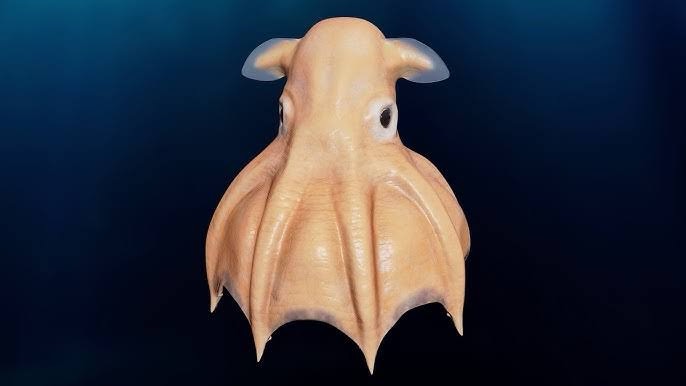
At the heart of the deep oceans, where sunlight is merely a distant echo, resides the enigmatic dumbo octopus. This fascinating cephalopod is immediately recognized by its ‘ears,’ which are actually fins. They resemble the ears of the famous animated elephant and play a vital role for the creature.
The Prominent Fins
These fins are more than mere aesthetic appendages. They function as stabilizers, assisting the dumbo octopus in graceful and efficient movements in the aquatic environment. By gently moving its fins, it can hover and change direction almost effortlessly, which is crucial for conserving energy and avoiding predators.
Coloration and Camouflage
The coloration of the dumbo octopus, often ranging from pale pink to shades of lavender, is a strategic adaptation. These subtle colors allow it to blend in with the deep, dark ocean environment. However, the dumbo octopus also has the ability to change its coloration as needed, an effective tactic for camouflage or signaling emotion.
Gelatinous Body
Finally, the gelatinous composition of the dumbo octopus’s body is yet another vital adaptation. In the extreme depths where pressure is intense, a soft body allows for flexibility and resilience. Without hard structures to bend or break, it navigates effortlessly through its habitat.
This harmony of unique characteristics shows how nature has shaped the dumbo octopus to thrive in one of the planet’s most challenging environments. To learn more about incredible creatures with unique adaptations, check out the platypus: it looks like a duck but isn’t.
Fascinating Behavior
The dumbo octopus, with its ear-like fins, is a truly enigmatic creature because it lives in the depths of the ocean. In this desolate environment, it finds its meals with a brilliant strategy, capturing small crustaceans and worms present on the seafloor. Its mouth, located in a central position, allows it to feed efficiently while moving gracefully.
The reproduction of dumbo octopuses is a spectacle of dedication and resilience. Females lay eggs in a protective shell, and she diligently cares for them until they hatch. This parental care is rare among mollusks and highlights the importance of offspring survival in this adverse environment. It is not uncommon for the mother to remain with the eggs throughout the incubation period without feeding, demonstrating an example of maternal sacrifice.
The social interactions of the dumbo octopus are fascinating as well. They have a series of behavioral signals, using subtle colorations in their skin to communicate with other individuals, a tactic similar to cephalopods in general, like squids. This visual communication system is crucial when words are impossible in the depths of the ocean.
These behaviors allow the dumbo octopus to thrive in an environment where few succeed. The underwater world is filled with extraordinary adaptations. Dumbo octopuses are an example of goals that many animals aspire to achieve. To understand the full complexity of the animal world, be sure to explore other phenomena of nature, such as the extraordinary life of the platypus.
Challenges and Threats
Amid the dark depths of the ocean, the dumbo octopus faces challenges that threaten its existence. Fishing, although less targeted at this species, affects its environment. Trawling nets can destroy essential habitats on the seafloor, disrupting its delicate ecology.
However, marine pollution is an even more insidious rival. From plastic waste to oil spills, these contaminants invade the oceans, directly affecting the health of dumbo octopuses. They may ingest microplastics that, in addition to causing physical damage, introduce toxins into their bodies. These substances reduce their lifespan and reproductive capacity, threatening the continuity of the species.
Climate change further amplifies these challenges. Rising sea temperatures and ocean acidification affect the biodiversity of the depths, altering food availability and potentially destroying crucial breeding areas. These changes disrupt the entire marine ecosystem, leaving the dumbo octopus vulnerable.
Just as the discovery of new fungi in the Amazon highlights the fragility of ecosystems, it is essential to adopt measures that protect our ocean. Preserving the habitat of the dumbo octopus is not just a matter of conservation, but of maintaining the balance of an entire environment. Future efforts, discussed in the next chapter, will be essential to ensure the survival of these magnificent cephalopods in the face of growing threats.
Conservation and Future
In a remote and dark corner of the ocean, the enigmatic dumbo octopus glides slowly. With its peculiar appearance, it attracts the attention of scientists and nature enthusiasts. However, its survival faces threats, primarily due to the exploitation of the seafloor.
Conservation efforts are crucial to ensure that this iconic species continues to thrive. Conservation projects have focused on protecting marine ecosystems. The implementation of protected underwater areas is an essential strategy. These zones provide a safe refuge, allowing the dumbo octopus to thrive away from harmful human activities.
Non-governmental organizations and governments are promoting stricter regulations. Deep-sea trawling, which destroys habitats, is a practice that must be urgently restricted. Additionally, scientific research is fundamental. Studies on its feeding and reproductive behavior are helping to better understand its needs.
As individuals, our actions also have a significant impact. We can start by adopting sustainable practices in our daily lives, such as reducing plastic consumption. Choosing fish and seafood from sustainable sources is also essential. All of this helps preserve the oceans for the dumbo octopus and other fascinating creatures.
Educators and marine life advocates have a vital mission: to raise awareness. Through documentaries and lectures, we can inspire the next generation. A deeper understanding of underwater biodiversity is key to the future of the dumbo octopus. The tardigrade has already taught us about resilience. May we learn to protect the wonders that the sea offers us.
Conclusions…
The dumbo octopus is a marvel of nature, illustrating the fascinating diversity of marine life. With its peculiar adaptations and deep habitat, this rarely seen creature reminds us of the importance of ocean conservation and its unique inhabitants.
Did you know?
Where does the dumbo octopus live?
The dumbo octopus inhabits the depths of the ocean, typically in waters from 200 to 3,000 meters, mainly in regions of the Pacific and Atlantic.
What is Dumbo?
Dumbo is the name of a famous Disney character known for his large ears. The dumbo octopus received this name due to the resemblance of its body structures to the character’s ears.
How long does an octopus live in captivity?
An octopus in captivity typically lives between three to five years, depending on the species and health conditions.
How old is Dumbo?
The character Dumbo has an indefinite age but represents childhood and innocence, illustrating the journey of a young elephant in a world full of challenges.
How many lives does an octopus have?
Octopuses have one life, but they can regenerate body parts, such as tentacles, if injured, which may give the impression of multiple lives.
What is the biggest enemy of the octopus?
The biggest enemies of the octopus include sharks, seals, and other marine predators, as well as threats like overfishing and pollution.
How many hearts can an octopus have?
An octopus has three hearts: two to pump blood to the gills and a third for the body.
How long does the octopus sleep?
Octopuses have varied sleep patterns and can sleep from four to eight hours a day, although this time may vary.