Intelligent Raven
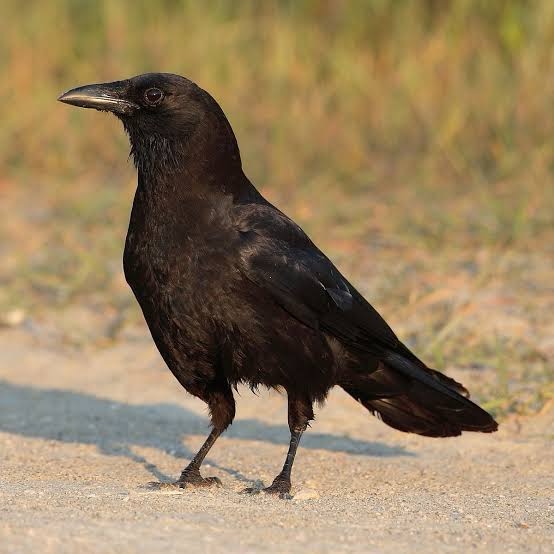
Ravens, with their black plumage and piercing gazes, are much more than ordinary birds. Known for their impressive cognitive abilities, these fascinating animals reveal an intelligence that defies expectations. In this article, we will explore the remarkable capacity of ravens, from problem-solving to complex communication among themselves.
Intelligence in Birds
Among the wonders of avifauna, few can rival the cognitive skills of ravens. These birds have demonstrated remarkable intellect, even surpassing many mammals. Ravens particularly excel in using memory to solve complex problems and in their adaptive capacity in the face of challenges.
Studies on raven behavior often reveal their ability to solve sophisticated puzzles. In a notable experiment, these birds tackled a series of challenges where they had to use a sequence of objects to obtain a reward, showcasing an impressive understanding of cause and effect.
Another striking feature of ravens is their exceptional memory. In an environment simulating survival situations, ravens demonstrated the ability to remember the locations of caches they had hidden months earlier. This capacity to store and retrieve information gives them a vital advantage, comparable to the spatial memory of squirrels.
When compared to other birds known for their intelligence, such as parrots and pigeons, ravens show reasoning skills that are not only comparable but, in many aspects, superior. While parrots are known for their ability to mimic sounds, ravens can use their ‘voice’ to communicate new discoveries to their social group.
In the avian kingdom, intelligence is not exclusive to ravens, but their analytical skills and solid memory position them prominently. This aligns with behaviors seen in other species, such as the fascinating toucan, known for its beauty and intelligence. Ravens, with their agile minds and adaptability, continue to surprise us with their cognitive feats.
Tool Use
Ravens, majestic and notoriously intelligent species, exhibit a surprising ability: tool use. In various parts of the world, they fascinate us with behaviors once thought to be exclusive to primates. The New Caledonian raven, a species native to the Pacific islands, is known for crafting elaborate tools from twigs and leaves. This raven skillfully reshapes plant material into hooks, which it then uses to extract larvae hidden in tree crevices.
Another notable example is the urban raven, which innovatively utilizes urban traffic. They often drop nuts on crosswalks, patiently waiting for cars to pass and break the tough shells. Once broken, the ravens return to collect their rewards when the light turns red. These behaviors are not mere accidents; ravens demonstrate impressive reasoning and adaptation to their environment.
Research indicates that such skills are not purely instinctive. Ravens exhibit social learning and cultural transmission, passing their knowledge to one another. This highlights their ability to innovate and modify techniques as needed. In controlled experiments, they have proven to be meticulous problem solvers, showing capabilities for foresight and consequence prediction.
In summary, tools for ravens are extensions of their ingenuity, allowing them to successfully navigate environmental challenges. This extraordinary behavior underscores their cognitive complexity, serving as an eloquent testament to their intelligence. These birds are not mere survivors but true architects of their own future. For other equally intriguing species, see how the jumping spider also surprises with its learning ability.
Problem Solving
In the corridors of the known, few birds demonstrate the sagacity for problem-solving like the raven. This ingenious bird has been the subject of numerous studies highlighting its remarkable insight. Its feats are evidenced by its ability to perform complex tasks with intriguing ease.
A famous experiment places a series of tubes of different heights filled with water, where a piece of food floats just out of the raven’s reach. The result was surprising. The raven, with its keen eyes and agile mind, began dropping stones into the tube, thus understanding the concept of volumetric displacement to raise the water and obtain the food. Such a feat demonstrates a rudimentary understanding of physics, something few animals possess.
Another intriguing study placed ravens in front of a sequence of locks that needed to be opened in a specific order to obtain a reward. Patiently observing, the ravens tested and adjusted their approaches until they unlocked the final lock. They succeeded, through trial and refinement of their strategies, something that requires mental flexibility and learning. Ravens show an extraordinary ability for adaptation and learning, overcoming obstacles that demand innovative thinking. This problem-solving capacity makes them special among birds, prompting us to question what truly defines intelligence in the animal kingdom.
The parallelism between their abilities and those seen in other animals is remarkable. Much can be discovered about animal intelligence by studying ravens, just as is the case with the jumping spider, whose intelligent behavior also continues to fascinate researchers.
Communication and Society
In the relentless pursuit of effective communication, ravens demonstrate notable skills. These black birds not only emit a wide variety of sounds but also use gestures and postures to convey complex messages. Indeed, the way they communicate is strongly linked to their social structure, highlighting a hierarchical organization that facilitates their interactions.
Ravens are known to operate in tightly-knit flocks, where communication is essential for the survival and success of the group. In these flocks, they use specific calls to alert about predators or to coordinate movements in search of food. The ability of ravens to use differentiated ‘dialects’ in distinct regions evidences the adaptability of their language.
In addition to vocal sounds, gestures such as bowing or raising their wings are used to indicate intentions of alliance or conflict. This rich repertoire becomes vital when transmitting information, such as the location of food or danger alerts.
Young ravens learn by observing their adult peers, suggesting a form of social education within their groups. This transmission of cultural knowledge is a testament to their complex social and intellectual life, an interesting parallel with the intelligence observed in jumping spiders, for example. The social interactions among ravens not only reinforce their status as intelligent animals but also position them as fundamental mediators in natural communities. Communication solidifies their relationships, allowing them to act not only individually but as synchronized and efficient units within their ecosystem.
Impact on Ecology
Among the many surprises of the natural world, few animals can match ravens in adaptability. Their unique intelligence places them in an ecologically crucial position. Ravens stand out as opportunists, capable of modifying their feeding strategies according to resource availability. They not only adapt but also shape the environment around them.
By feeding on carrion, ravens play an essential role in cleaning the ecosystem. They prevent the spread of diseases by removing organic remains from the environment. This action benefits various other species, establishing a harmonious balance in complex food webs. However, their influence does not end here.
The cognitive ability of ravens allows them to interact in remarkable ways with other species. They are known for using tools to access difficult foods, but also for stealing bait from fishermen, revealing an ingenuity that confounds many. Underestimating them would be simplistic; they are the ‘thinkers’ who continue to challenge our understanding of the limits of animal intelligence.
Intriguingly, ravens also influence plant distribution through seed dispersal. By hiding food for future consumption, they accidentally sow wider areas. This behavior resembles that observed in some elephants, which are also known for dispersing seeds in their habitat.
Ravens remain living testaments to ecological interconnectedness. Their constant and adaptive presence reminds us that even the simplest of birds can have a profound impact on the global ecological balance. In every flight, they weave a destiny that transcends their own lives, defining unknown futures for all who share their homes with them.
Conclusions…
The intelligence of the raven is as intriguing as its appearance. By examining their exceptional cognitive abilities, it becomes clear that these birds are true masters of adaptation. Their capabilities inspire us to reevaluate what we know about animal intelligence, revealing a world of complexity in raven behavior.
Did You Know?
What are the cognitive abilities of the raven?
Ravens possess remarkable skills, such as tool use, solving complex problems, and excellent memory, allowing them to adapt to different situations.
How do ravens communicate?
Ravens use a variety of vocalizations and body signals to communicate, demonstrating a capacity for complex social organization.
Are ravens really as intelligent as primates?
Yes, research shows that ravens possess intelligence comparable to that of primates, performing tasks that require planning and reasoning.
What is the natural habitat of ravens?
Ravens are adaptable and can be found in various habitats, including forests, mountains, and urban areas around the world.
Why do ravens have a bad reputation?
The negative association of ravens with death and misfortune stems from historical myths, but their true abilities and behavior are fascinating and positive.