
The Magic of the Maned Wolf
The maned wolf is one of the most intriguing inhabitants of the Brazilian savanna. With its long legs and golden fur, it plays an essential role in the ecosystem but faces serious challenges to its survival. Let’s explore its diet, habitat, nocturnal behavior, and the importance of conserving this fascinating species.
Physical Characteristics of the Maned Wolf
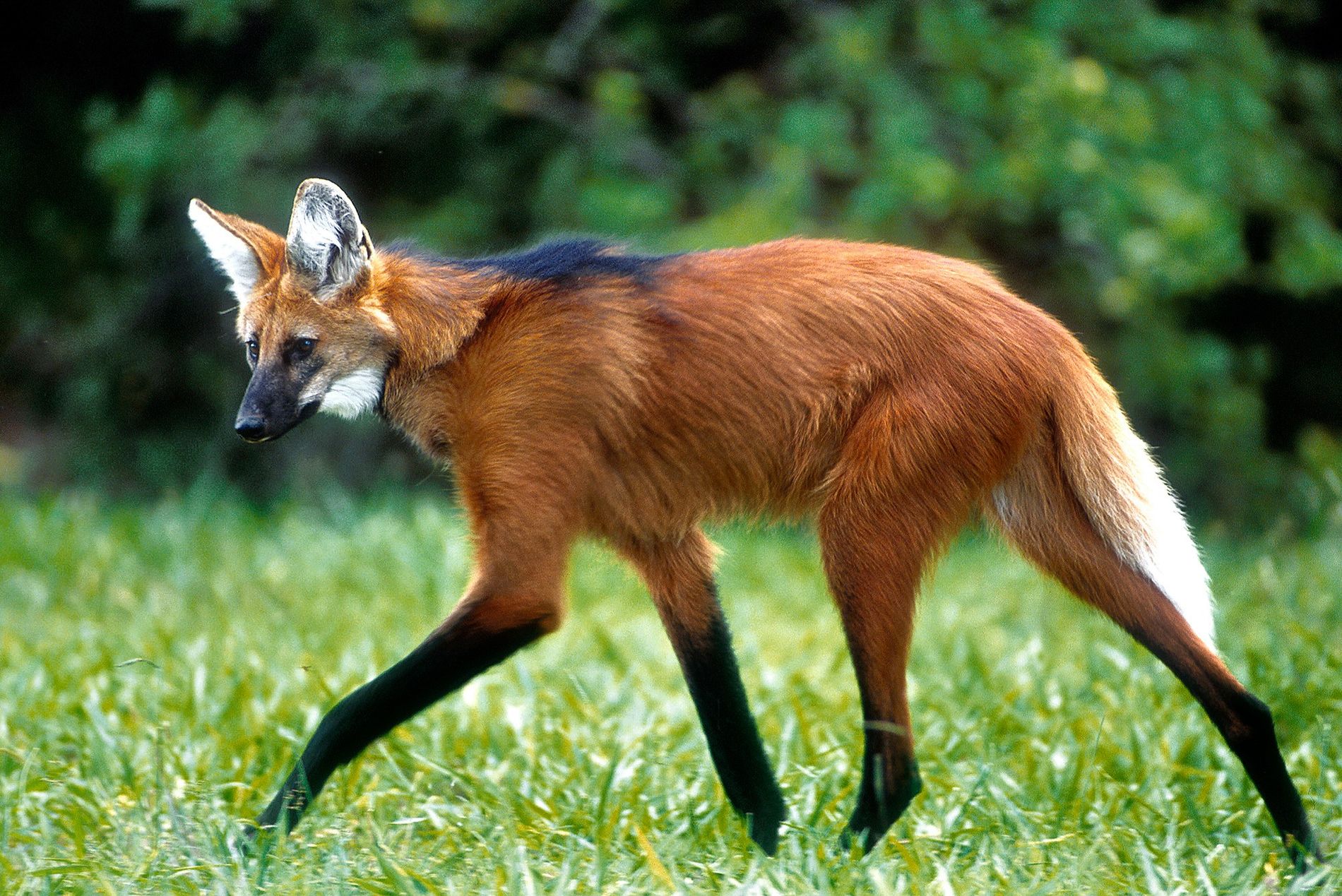
The maned wolf is a mammal of considerable size. Typically, it measures between 70 to 80 centimeters in height, weighing up to 30 kilograms. Its long legs are a distinctive feature, allowing it to cover large distances in its habitat. These slender legs are a perfect adaptation for life in the savannas and open fields, where agility and speed are essential for hunting and escaping predators.
The fur of the maned wolf is equally impressive. With a vibrant orange hue, its coat is adorned with black and white markings that aid in camouflage among the vegetation. This coloration allows it to blend effectively into the environment, making it difficult for prey and predators to detect it. The fur is also long and silky, giving the animal a majestic appearance.
The large, erect ears are another notable adaptation. They not only assist in acute hearing but also in temperature regulation. The ears act as radiators, dissipating heat during the intense daytime heat. Additionally, its eyes possess sharp vision, crucial for detecting subtle movements in the landscape.
These morphological characteristics enable the maned wolf to be a master of survival in its habitat. By presenting adaptations that favor agility, camouflage, and environmental sensitivity, it becomes an efficient predator and a skilled survivor. For more about fascinating animals like the maned wolf, visit this site.
Habitat and Distribution
The maned wolf, with its elegant appearance and long legs, finds its home in a variety of habitats in Brazil. It is most often associated with the savanna, an ecosystem characterized by sparse vegetation and scattered shrubs. This wide-open environment is ideal for hunting and foraging. The adaptability of the maned wolf is remarkable, as it also establishes itself in savanna areas, forests, and semi-arid regions. Its habitats include fields, pastures, and even the edges of tropical forests, where it can hunt and move easily.
The characteristics of the savanna, such as the presence of xerophytic shrubs and grasses, allow the maned wolf to develop exceptional skills for camouflage. It becomes almost invisible among the vegetation, which is crucial for its survival. During the dry season, when water resources become scarce, the maned wolf adapts its behavior. It travels long distances in search of water and food, demonstrating its resilience and ability to survive in challenging environments.
Its geographical distribution is broad, covering states like Minas Gerais, Goiás, and parts of Mato Grosso do Sul. Maned wolves once occupied vast areas of Brazil, but habitat fragmentation has reduced their presence. Despite the challenges, they continue to thrive in places where the vegetation remains preserved. The preservation of these ecosystems is vital, not only for the maned wolf but for the health of the entire local biodiversity. For a deeper insight into Brazilian fauna, discover the fascinating water birds of Brazil.
Diet and Hunting Behavior
The maned wolf, with its elegant silhouette and reddish-orange fur, is one of the largest canids in South America. Its diet is predominantly omnivorous. It feeds on small mammals, such as rodents and marsupials. Additionally, fruits and vegetables are part of its menu, especially at the peak of harvest maturity when food is abundantly available. This dietary diversity allows the maned wolf to adapt to different environments and seasons.
During the dry season, the maned wolf may prioritize hunting its most common prey, which includes small rodents. Conversely, in the rainy season, it tends to feed on native fruits, such as the wolf fruit. These fruits are not only nutritious but also help in seed dispersal, an important ecological role in the environment where it lives.
The maned wolf has a distinct hunting style. It is solitary, using a strategic approach to surprise its prey. With its acute senses, it can detect small movements on the ground. Using its long limbs to run, it slowly approaches and strikes with precision. Upon capturing its prey, it utilizes its powerful jaws, ensuring an effective and satisfying meal.
In the food chain, the maned wolf occupies a regulatory role. It maintains the balance of small mammal populations. Its presence contributes to the health of the ecosystem, reflecting the interconnectedness between predators and prey. For an in-depth study of the hunting habits of other animals, check this link.
The Nocturnal Life of the Maned Wolf
When darkness falls over the vast savannas of Brazil, the maned wolf emerges in search of a life filled with nocturnal adventures. A master of adaptability, this creature uses a unique set of vocalizations to communicate with its peers. Its howl, an unmistakable melody, echoes through the bushes, serving as a call to members of its pack or as an alert to intruders. It is a language developed over the years, incorporating subtle variations that convey information about territory and social status.
In the twilight of night, the maned wolf reveals its hunting prowess. With its long limbs and agility, it moves with silent grace, a cunning predator. Its diverse diet, which includes small mammals, birds, and fruits, makes it a versatile hunter. The maned wolf’s acute senses, especially its hearing, play a crucial role in its ability to find food in the dark.
The social interactions of the maned wolf during the night are equally fascinating. They are known to form strong bonds within the pack, displaying mutual care behavior. Greeting rituals, such as rolling and licking, can be observed during nighttime gatherings. These interactions are not only essential for pack cohesion but also for mutual defense against predators and for collective hunting. To learn more about the fascinating nocturnal life of other creatures, check out this article on bats, which share the same nocturnal skill and adaptability to the environment.
Conservation and Preservation
The maned wolf, with its majestic and imposing presence, faces significant challenges that threaten its existence. Conservation initiatives have emerged to protect this iconic animal. First and foremost, national parks and reserves have been established to ensure a safe habitat. These areas preserve natural ecosystems and provide a vital space for maned wolves to reproduce and thrive. Additionally, environmental education programs have been fundamental. Collaborating with local communities helps raise awareness about the importance of the maned wolf. Often, ignorance breeds fear and prejudice, leading to unnecessary conflicts. Education is a powerful tool in the preservation of the species.
However, the challenges are enormous. Habitat loss due to deforestation and agricultural expansion continues to be a pressing threat. Furthermore, the frontier of human development advances, fragmenting natural habitats. Wildlife trafficking and the hunting of maned wolves directly impact local populations. Combating these issues requires collaboration between governmental and non-governmental organizations. Protecting the maned wolf requires a collective effort.
Awareness is vital. In some regions, urban communities are coming together in habitat rehabilitation projects, creating ecological corridors. Preserving the maned wolf is not just about saving a species; it is about maintaining balance in our ecosystem. Every individual can make a difference, whether by participating in conservation campaigns or supporting education. To connect with nature and understand the importance of the maned wolf, awareness is the first step. For a deeper understanding of the connection between species, it is worth exploring the beauty of Brazilian birds.
Conclusions…
The preservation of the maned wolf is vital for Brazil’s biodiversity. Protecting its habitat and increasing awareness about its importance will contribute to the survival of this magnificent canid. The fight for conservation is all of our responsibility.
Did You Know?
- What does the maned wolf eat? The maned wolf is an omnivorous carnivore, feeding on small mammals, birds, reptiles, and fruits, resulting in a highly diverse diet.
- Where does the maned wolf live in Brazil? The maned wolf primarily inhabits the savanna and other open ecosystems, such as fields and forests, in various regions of Brazil, especially in the Midwest.
- Why is the maned wolf endangered? The maned wolf faces extinction due to habitat loss, hunting, and fragmentation of its territory, resulting in a decreasing population.
- What does the maned wolf do at night? The maned wolf is a crepuscular and nocturnal animal, primarily active in search of food, using its acute senses to hunt.
- Why is the maned wolf important to Brazil? The maned wolf plays a crucial role in controlling prey populations and seed dispersal, helping to maintain ecological balance.
- Which animal is at the highest risk of extinction in Brazil? The maned wolf is one of the endangered animals, along with the jaguar and the golden lion tamarin, due to habitat loss and hunting.
- Which animals are going extinct in 2024? Currently, several endangered species such as the maned wolf and the Brazilian tapir are at risk of extinction if conservation efforts are not made.
- How to prevent the extinction of the maned wolf? Conserving its natural habitat, implementing captive breeding programs, and raising public awareness are fundamental strategies to prevent extinction.
- Why are pandas endangered? Pandas are endangered due to habitat loss and reliance on a single food source, bamboo, which is also threatened.