Giant Anteater: The Long-Tongued Wonder
The giant anteater, a remarkable mammal, stands out for its long, sticky tongue, perfect for capturing ants and termites. This article dives into the life of this fascinating animal, its characteristics, diet, habitat, and the challenges it faces in the wild.
Physical Characteristics of the Giant Anteater
The giant anteater, a magnificent mammal that slowly roams the forests of South America, is a true wonder of nature. This giant can reach up to two meters in length, including its tail, and is a spectacle to behold. Its weight can exceed 50 kilograms, making it one of the largest members of the anteater family. From a distance, its elongated figure and dense, coarse fur stand out against the lush environment. The coloration of its fur varies between a gray-brown and a more vibrant black, with an exceptional yellow-orange stripe crossing its body, a recurring theme in nature’s artwork that blossoms through its shapes and colors.
This animal possesses unique adaptations that make it a master of its habitat. The long, curved claws of the giant anteater are not just an aesthetic detail; they are its main tools. With them, it breaks the bark of trees and digs into ant nests, its primary food sources. These powerful limbs are crucial for its survival, allowing it to access food often hidden in difficult places.
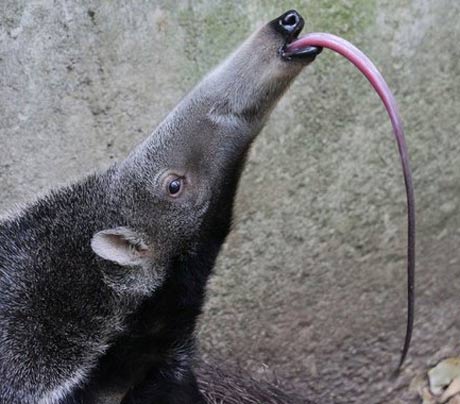
Its eyes are small and almost hidden beneath the dense fur, but it is its sense of smell that stands out the most. The long tongue, which can reach up to 60 centimeters, is adapted to reach inside ant hills. This organ is completely covered in sticky saliva, allowing the giant anteater to capture ants and termites in large quantities. In a single day, it can consume up to 30,000 insects. Nature has shaped the giant anteater in an unusual and intriguing way, reflecting the beauty of adaptation to the challenges of wildlife. For more about animal adaptations, check out this fascinating article.
Habitat and Distribution
The giant anteater, with its impressive two meters in length, inhabits a variety of biomes. Its tropical forests, savannas, and open fields provide an ideal home. As the sun rises, this magnificent mammal ventures through the dense vegetation, searching for its prey.
The geographical distribution of the giant anteater is broad, primarily found in Central and South America. It is a constant presence in countries like Brazil, Honduras, and Argentina. However, its presence is not uniform. The Amazon rainforest and the dry forests of the Cerrado are crucial for its survival.
Historically, this animal had a wider range, but human interventions have changed everything. Deforestation and urbanization have fragmented its habitat. This has forced giant anteaters to adapt to new environments, not always favorable. Over the years, this change in geographical distribution has been alarming, as entire populations have become vulnerable.
In addition to habitat loss, agricultural expansion threatens their homes. The open fields, which were once refuges, are now pastures or crop fields. This transformation not only impacts the geographical distribution of the giant anteater but also its behavior.
Giant anteaters need to move long distances. They seek alternatives for food and shelter. Resilience is an admirable trait, but long-term survival requires the preservation of their natural habitats. If you want to understand more about wildlife and how it is impacted by the environment, consult this article that explores the beauty and fragility of ecosystems.
Diet and Behavior
The giant anteater, a majestic creature, is known for its impressive tongue, which can reach 60 centimeters in length. This specialized tongue is an extraordinary tool, perfectly adapted for capturing ants and termites, its main food source. With a long, narrow snout, the giant anteater identifies the nests of its prey, using its keen sense of smell. In a swift motion, it inserts its sticky tongue, managing to extract thousands of insects in just a few minutes.
These animals play a crucial role in the ecosystem, controlling ant and termite populations. While feeding, they also help to heal the soil, promoting the growth of new plants. Their feeding is a silent and solitary performance, a hallmark of this fascinating mammal. Such solitary habits reflect its independent lifestyle. The giant anteater generally avoids social interactions, except during mating season.
During the mating season, males can be found searching for females. However, after this brief interaction, each returns to its solitary life. Although they are peaceful animals, they also have ways to defend themselves. Giant anteaters are equipped with powerful claws that can inflict significant damage on predators. They use these claws to climb trees and protect themselves.
To better understand the complexity of these interactions in nature, learn more about the fascinating lives of the inhabitants of our ecosystem.
Threats to Survival
The giant anteater, a magnificent example of biodiversity, faces serious threats to its survival. Deforestation is one of the main concerns. As forests are cleared for agriculture and urbanization, the giant anteater’s natural habitat diminishes. These animals depend on large forested areas for feeding and reproduction. Without trees and insect-rich soil, their natural diet is compromised.
In addition to deforestation, predatory hunting poses a significant threat. Although the giant anteater is not often hunted for meat, it is vulnerable to capture for the illegal wildlife trade. Many are removed from their habitats in search of exotic pets. This practice not only decreases the population but also disrupts local ecosystems.
Another critical issue is the fragmentation of its habitat. With deforestation, forests become increasingly fragmented, making it difficult for giant anteaters to move. Movement between separated areas is vital to avoid inbreeding and ensure genetic diversity. This is crucial for the resilience of populations.
These threats have a profound impact. Giant anteater populations are declining, making them vulnerable to extinction. To learn more about the importance of species preservation and their habitats, reading about elephant conservation can be fascinating. The interconnectedness of species in nature needs to be respected and protected.
Conservation and Future of the Giant Anteater
The giant anteater, with its indelible symbol of resilience and adaptation, faces ever-increasing threats due to habitat loss and forest fragmentation. Various organizations and initiatives have mobilized to protect this iconic creature. Local projects aim to establish ecological corridors that connect forest areas, allowing anteaters to move safely between remaining habitats. Environmental education has become an essential tool, raising community awareness about the importance of the giant anteater in the ecosystem.
In addition to preservation, monitoring programs, such as observing individuals in protected areas, help study their behaviors and needs. This knowledge is fundamental for implementing more effective conservation actions. There are also efforts to rehabilitate rescued individuals, reintegrating them back into nature. These initiatives not only help the animals but also promote a sense of responsibility within the community.
Individual actions can have a significant impact. Simple gestures, such as reporting sightings of anteaters or participating in habitat clean-ups, are valuable steps. Through support for conservation projects and conscious consumption, everyone can contribute. Preserving the giant anteater is not just a fight for a species but a battle for biodiversity.
Consider learning more about how nature can surprise and delight by exploring the stories of other animals, such as the fascinating jumping spider. This connection can inspire an even greater commitment to protecting our rich fauna and flora.
Conclusions…
The giant anteater is a unique species that plays a vital role in the ecosystem. Its protection is crucial for the preservation of biodiversity. Awareness and conservation are essential to ensure that this emblematic mammal continues to inhabit our forests.
Did You Know?
How does the anteater attack?
The giant anteater does not attack in a conventional way. It uses its long, sticky tongue to capture ants and termites in their nests.
What does the anteater eat?
The diet of the giant anteater consists mainly of ants and termites, which it consumes in large quantities.
Where does the anteater live?
This mammal is found in tropical forests and cerrado areas of South America, including Brazil, Paraguay, and Argentina.
Why is the anteater endangered?
The giant anteater is threatened by habitat loss due to deforestation and hunting. This reduces its food sources and living space.
What to do when encountering an anteater?
If you encounter an anteater, keep a safe distance and observe it quietly. Do not try to touch it, as it may feel threatened.
What do armadillos eat?
Armadillos feed on insects, fruits, roots, and, in some cases, small vertebrates, depending on the species.
What kills the anteater?
The main predators of the anteater are humans, due to hunting, as well as animals like jaguars and bush dogs, which occasionally attack it.
Which animal is at the highest risk of extinction in Brazil?
Several species are at risk, but the giant anteater and the golden lion tamarin are examples of animals severely threatened in Brazil.
How many ants can an anteater eat in a day?
A giant anteater can consume up to 30,000 ants and termites in a single day, depending on food availability.
How does an anteater drink water?
The giant anteater hydrates mainly through the insects it consumes, but it can also drink water from available sources with its tongue.
Which animal eats ants?
Besides anteaters, other animals that feed on ants include armadillos, some birds like the southern tamandua, and warrior ants that feed on other ants.
What is an interesting fact about the anteater?
An interesting fact is that the giant anteater has an extremely keen sense of smell, which it uses to locate ant hills from long distances.