Peacock Spider: The Dancer of the Animal Kingdom
The peacock spider, small and colorful, captures attention with its impressive courtship dances. This article explores the biology, fascinating behavior, and adaptations of this unique creature that stands out in the world of spiders.
The Universe of Spiders
Spiders are fascinating creatures, with an impressive diversity that intrigues scientists and nature lovers alike. There are over 45,000 known species, each with unique adaptations to survive in different environments. With bodies that vary in size and shape, spiders are experts at either camouflaging themselves or displaying, depending on their intent. Some, like the peacock spider, have vibrant colors and complex patterns that not only delight the eyes but also play crucial roles in their courtship rituals. Spiders are essential predators in many ecosystems. They play a fundamental role in controlling insect populations, contributing to the health of the environments they inhabit. Each spider, with its web or its active hunting ability, controls insects that can be pests to crops. In forests, grasslands, and even in our homes, these creatures help maintain ecological balance.
One of the impressive characteristics of spiders is their method of capture. Spiders use irregular webs or carefully crafted nets to catch their prey. Each silk thread is a work of art, meticulously manipulated to serve as both a home and a trap. By capturing insects like mosquitoes and flies, they reduce the spread of diseases and the impact on plants. This interconnectedness reveals the importance of spiders in our lives, not just as predators. Their presence signals a healthy, balanced, and vibrant ecosystem. To learn more about an animal with a remarkable ecological role, check out this article on jumping spiders.
The Courtship Dance
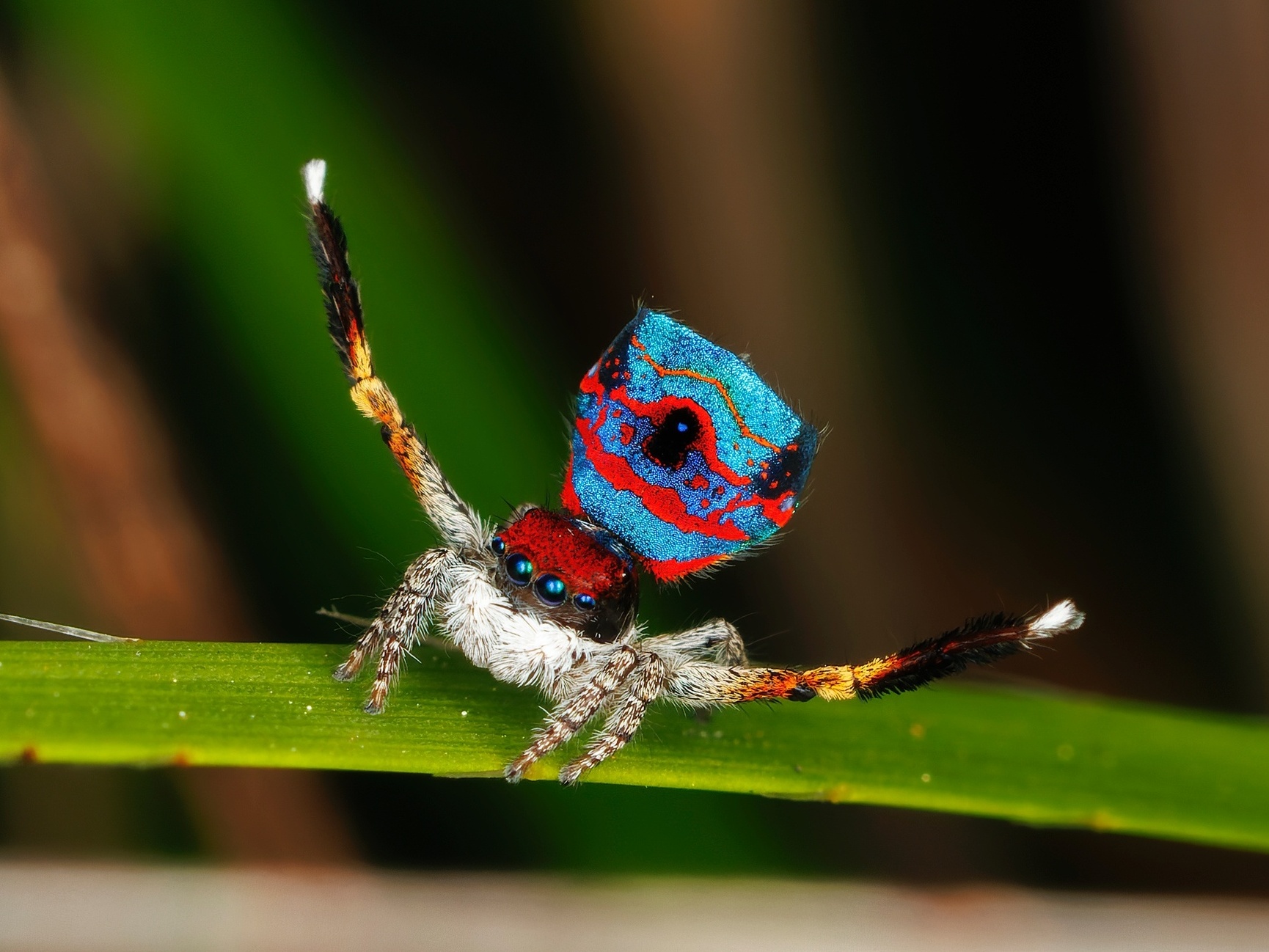
The courtship ritual of the peacock spider is a true spectacle of nature. When a male approaches a female, he begins a hypnotizing dance, marked by elaborate movements and bursts of color. The males, adorned with intense shades of blue, green, and red, display their impressive visual characteristics in a performance full of agility. They raise their front legs, amplifying their vibrant colors, while moving with grace and precision. This display is not just a dance; it is a test of strength and beauty that the females critically analyze.
During the performance, the male may perform jumps and rotations, creating an engaging atmosphere. The females watch closely, looking for not only the most impressive but also the most suitable partner. The highlight of colors and skill in movements speaks to the male’s genetic disposition and health. Those who manage to impress are more likely to attract the female for mating.
Visual communication plays an essential role in this dance, but it is not just that. The male’s behavior also reflects his ability to avoid predators while being vulnerable. This combination of risk and boldness is a dance of life and death. Thus, the female’s choice is influenced by both the performance and the perception of safety. The courtship ritual, therefore, is a display not only of beauty but of survival. To learn more about the fascinating characteristics of spiders, see jumping spiders, which also exhibit equally intriguing behaviors.
Survival Strategies
Peacock spiders, with their impressive vibrant coloration, offer a fascinating display of evolution and survival. These creatures are not just beautiful; they employ clever strategies to deceive their predators and attract their prey. Camouflage is a crucial skill. In natural environments, their ability to blend into the substrate helps them escape from predators like birds and lizards. With small bodies and varied patterns, they are masters of disguise.
Hunting, on the other hand, reveals a spectacle of acrobatics. Peacock spiders are agile predators that rely on keen vision to detect movement. The morphology of their eyes, more complex than in many other spiders, allows for depth perception similar to that of humans. This feature is fundamental for calculating distances when jumping towards their prey.
Moreover, the magnificent courtship strategies of peacock spiders are a true dance of seduction, where males perform displays not only to win over partners but also to demonstrate strength and virility. With quick and vibrant movements, they showcase their colors, ensuring that their skills are not just an attraction but also a survival tactic. These adaptations have allowed the peacock spider to become a force to be reckoned with in its habitat. With lynx-like eyes and a distinct way of hunting, the peacock spider has become an icon of beauty and cunning in nature. The complexities of its life reveal the interconnection between morphology and behavior, a true testament to the relentless evolution of species. For more on spider intelligence, see this article.
The Ecological Importance
With a delicacy that hypnotizes, the peacock spider stands out in this vast world of spiders. But beyond its beauty, they are essential for the health of ecosystems. As efficient predators, spiders, including the fascinating peacock spider, play a crucial role in controlling insect populations. They act as a natural guardian, limiting the growth of insects that could become devastating pests. By capturing insects, these creatures maintain the food balance in their habitats, preventing ecological collapses.
The habitats of spiders are diverse, including forests, fields, and even urban environments. However, these spaces are under increasing pressure due to climate change and urbanization. Deforestation and pollution threaten not only the peacock spider but all species that depend on healthy habitats. The rooting of native plants and the preservation of ecosystems are vital for the survival of these spiders and other interdependent species. Peacock spiders not only hunt but also serve as prey for birds and other animals, integrating into the complex web of life. The loss of these arthropods could cause domino effects at multiple levels of the food chain. Each spider species offers a unique ecological service, making the preservation of their populations not just a matter of aesthetic beauty. It is a matter of biodiversity. For a deeper insight into the importance of spiders in the ecosystem, check out this article.
Fascination and Conservation
The peacock spider, with its colorful dance and graceful movements, evokes undeniable fascination. These arachnids enchant nature enthusiasts and scientists alike. The choice of vibrant colors and the ability to perform stunning displays have attracted global attention. The fascinating courtship displays reveal an almost theatrical aspect of their existence. Such an enchanting show, in which males attract females with their skills, fosters a connection between nature and humans. It is no surprise that the peacock spider has become a symbol of the enchantment that wildlife can offer.
However, the beauty of the peacock spider cannot be dissociated from the urgent need for conservation. The importance of preserving spider species, including the peacock spider, is undeniable. These small predators play critical roles in their ecosystems, controlling insect populations and contributing to environmental balance. Often underestimated, spiders are essential for soil and plant health.
Moreover, the destruction of natural habitats compromises the survival of countless spider species. The ecosystems that harbor the peacock spider, such as tropical forests and open fields, are under threat from deforestation and urbanization. This loss of habitat affects not only the arachnids but also overall biological diversity. The preservation of these habitats is vital not only for the peacock spider but for the planet’s biodiversity. Thus, it is crucial that we fight for conservation, always remembering that each species plays an irreplaceable role in our ecosystem. For more information on the importance of biodiversity preservation, consult this article.
Conclusions…
This splendid courtship dance of the peacock spider illustrates the beauty of nature and how evolutionary adaptations shape animal behavior. By recognizing their ecological importance, we can appreciate these small wonders of the animal world even more.
Did you know?
What is the habitat of the peacock spider?
The peacock spider is found in diverse environments, including tropical forests and urban areas. They prefer sunny spots where they can hunt their prey efficiently.
How does the peacock spider communicate?
The communication of the peacock spider occurs mainly through its colorful visual displays and body movements during courtship, a dance that fascinates not only its partners but also observers.
What are the camouflage strategies of the peacock spider?
In addition to their vibrant colors, the peacock spider can camouflage itself in its environment, using patterns and textures that resemble the leaves and flowers around it, thus avoiding predators.
Is the peacock spider dangerous to humans?
No, the peacock spider does not pose a significant risk to humans. Its venom is weak and is not considered a threat unless someone has a specific allergy.
How do peacock spiders reproduce?
Peacock spiders perform an elaborate courtship dance, where males display their vibrant colors and intriguing movements to attract females, who choose their partner based on this performance.