Blue-Ringed Octopus: The Small Predator of the Ocean
The blue-ringed octopus, with its charming bright rings, is one of the most intriguing and dangerous inhabitants of the oceans. This article will explore its unique characteristics, devastating venom, and interactions with the marine environment. Get ready to dive into the universe of this magnificent animal.
Distinctive Characteristics
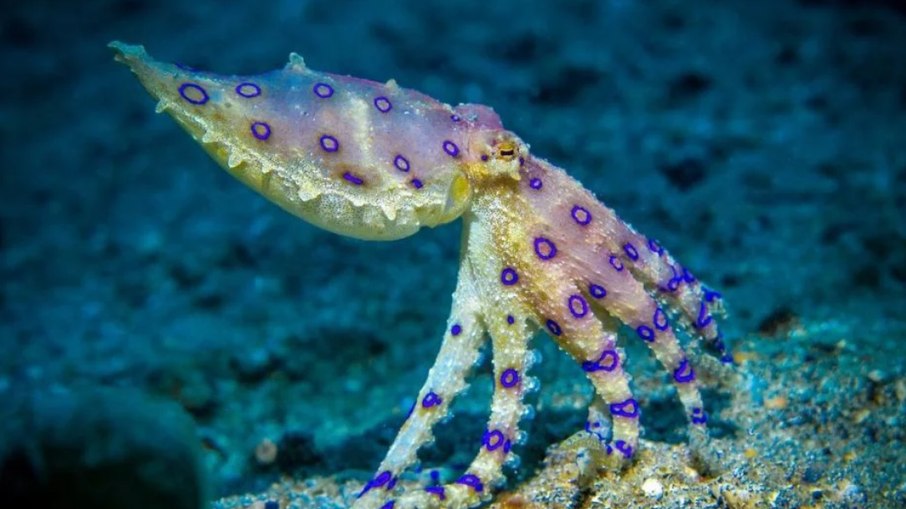
The blue-ringed octopus is a marvel of nature, small in size but powerful in appearance. With a body that does not exceed 10 centimeters, this cephalopod is adorned with bright blue rings that appear when it feels threatened. These rings, which glow like jewels from the ocean floor, are not just for display. They serve as a warning, a form of visual communication that signals danger to predators and potential threats. The body of the octopus is soft and flexible, allowing it to hide in crevices and holes, a vital tactic for its survival. Its coloration varies from yellow to light brown, enabling it to blend into its environment. When in danger, the octopus displays its vibrant colors, an act that can confuse predators and, in many cases, deter them.
The behavior of this small predator is equally intriguing. They are nocturnal, emerging from their hiding spots at night to hunt crustaceans and small fish. During the day, they remain safe, camouflaged in their shelters. This blending ability is one of the reasons for their success in diverse environments. A fascinating aspect of the blue-ringed octopus is its impressive intelligence. They exhibit exploratory behavior, using their motor skills to interact with their surroundings. This cunning, combined with their physical characteristics, ensures that the octopus not only survives but also thrives in the oceans they inhabit. To learn more about how colors aid in the survival of various creatures, check out the colors of orcas.
The Powerful Venom
The blue-ringed octopus, a small marine wonder, boasts one of the most powerful venoms on the planet. Its toxin, called tetrodotoxin, is a neurotoxic agent that attacks the nervous system. This substance is so potent that it can sometimes paralyze its prey within minutes. The crustaceans and fish that cross its path often become victims of this cunning predator. When the octopus feels threatened or is hunting, small bluish spots appear on its skin, a warning to those who approach. This vibrant coloration serves a crucial purpose. It warns its prey and potential predators of danger, demonstrating that it is armed with a lethal venom.
Tetrodotoxin works by blocking sodium channels in nerve cells. The result is the interruption of communication between the brain and muscles, leading to paralysis and often death. For the blue-ringed octopus, this venom is essential not only for hunting but also for self-defense. By employing this powerful strategy, it secures its position in the food chain. Although the octopus’s venom is highly effective in its hunting habits, it also poses a significant risk to humans. Accidents involving bites can cause severe symptoms and often require immediate medical intervention. Thus, the presence of the blue-ringed octopus and its venom not only shape its ecosystem but also reflect the complexity and dangers of marine life. For more information on how natural venoms affect the balance of nature, see this article about the squid, which has interesting defensive adaptations.
Feeding and Hunting Habits
The blue-ringed octopus is a remarkable predator, operating with hunting practices that are both ingenious and effective. This animal uses its impressive camouflage to blend into its environment. Its skin can change color and texture, allowing it to become almost invisible among rocks and corals. This ability is fundamental for approaching unsuspecting prey, such as small fish and crustaceans.
In addition to camouflage, the blue-ringed octopus has another lethal resource: its venom. The glands present in its bites contain a powerful neurotoxin capable of instantly paralyzing its victims. When the octopus detects a potential target, it patiently approaches, utilizing its camouflage skills. Once in proximity, it strikes quickly, injecting venom through its sharp beak.
The prey, after being bitten, has no chance of escape. The venom acts rapidly, affecting the nervous system, and the prey is easily captured. In the blink of an eye, the octopus consumes its meal, usually using its tentacles to manipulate and bring the food to its mouth. The blue-ringed octopus is not only an efficient hunter but also an attentive observer, always alert to any movement around it. To understand the threats that octopuses face and the defense methods of other marine animals, you can explore more about how interactions in the ocean impact predators and their prey in unusual nature.
Interactions with the Environment
In the fascinating underwater world, the blue-ringed octopus stands out as a cunning and enigmatic predator. This species is found in the warm waters of the Pacific, where the depths are teeming with life. The interaction of the blue-ringed octopus with its habitat is remarkable. It possesses an unparalleled ability to camouflage among rocks and corals, allowing it to hunt stealthily. The underwater world is its home, but it is not isolated; its role in the ecosystem is vital.
This small cephalopod not only feeds on crustaceans and small fish but also serves as prey for larger organisms, such as sharks and fish. This dynamic places the blue-ringed octopus in a complex web of interactions that help maintain the health of the marine ecosystem. Octopuses play an essential role in regulating the populations of their prey, preventing some species from dominating.
Moreover, the blue-ringed octopus indirectly contributes to the health of coral reefs. By controlling crustacean populations, it ensures that corals are not completely devastated by competing herbivores. Thus, the preservation of this fascinating animal is crucial for maintaining balance in its environment. Communication is another intriguing aspect of the blue-ringed octopus’s life. Through patterns of color and changes in skin texture, it communicates with other octopuses and signals dangers. This ability can also trigger interactions with other organisms, creating a dynamic dance in the marine environment. To learn more about aquatic lives, you can visit Squid: the animal with its feet on its head, which also highlights the complexity of marine life.
Conservation and Threats
The blue-ringed octopus, despite its small size and fascinating beauty, faces severe threats that compromise its survival. Among the main challenges, ocean pollution stands out. Microplastics and chemical waste accumulate in its habitat, affecting its health and marine ecosystems. Contaminated water not only harms the quality of the environment but also impacts the food chain on which octopuses depend.
Another complication is the over-exploitation of its habitats. Uncontrolled fishing, related to destructive methods, results in the loss of its natural shelter. By removing corals and other structures, the balance of the marine ecosystem is compromised. The rising water temperature also contributes to the deterioration of the environments where these octopuses thrive.
Additionally, accidental capture has been an increasing problem. Many blue-ringed octopuses become victims of traps and nets intended for other species. These unwanted interactions have an alarming impact on the population of these intriguing animals. The conservation of the blue-ringed octopus is essential not only for the species itself but for the overall health of the oceans. As predators, these animals play a significant role in controlling prey populations and maintaining ecological balance. Protecting this species means promoting a healthy marine environment. Therefore, conservation efforts, such as protected marine areas, are crucial. Rich biodiversity sustains healthy oceans. Thus, protecting these charming little creatures benefits all marine inhabitants, and consequently, us as well. For a deeper discussion on the challenges faced by octopuses, see more about marine biodiversity.
Conclusions…
The blue-ringed octopus is a creature of wonders and dangers. Its powerful venom reminds us of the beauty and fragility of the marine ecosystem. Understanding and respecting these creatures is essential for ocean conservation.
Did you know?
What does the venom of the blue-ringed octopus do?
The venom of the blue-ringed octopus can cause paralysis, respiratory difficulty, and, in extreme cases, death. It contains toxins that attack the nervous system.
Where is the venom of the octopus stored?
The venom of the blue-ringed octopus is stored in salivary glands located in the mouth area and is injected through bites.
What is the bite of an octopus like?
The bite of an octopus is usually not felt immediately, but shortly after, intense pain and paralysis may arise, depending on the amount of venom injected.
What is the most dangerous octopus in the world?
The blue-ringed octopus is considered the most dangerous in the world due to the toxicity of its venom, which can be fatal to humans.
Can you hold an octopus in your hand?
It is not advisable to hold a blue-ringed octopus in your hand, as its venom can be lethal. It is better to observe this creature from a distance.
What is the most venomous creature in the world?
The blue-ringed octopus is often classified as the most venomous animal in the world due to the potency of its venom and the risks it poses.
How to remove the venom from the body?
There is no specific antidote for the venom of the blue-ringed octopus. Treatment is symptomatic and may include respiratory support and intensive care.
How does the octopus attack?
The octopus attacks using its venom, biting its prey and injecting toxins that paralyze the target, facilitating capture and feeding.