The Magnificent Fire Salamander
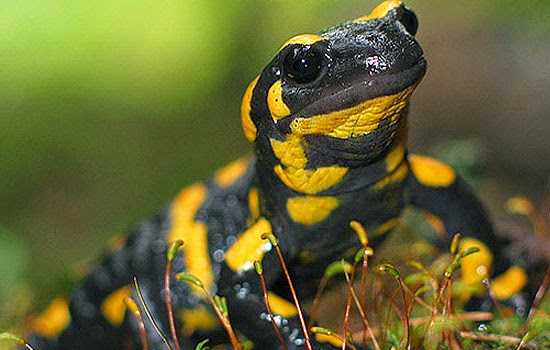
The Fire Salamander, with its black skin dotted with bright yellow spots, is a fascinating creature and a fundamental part of the ecosystem. In this exploration, we will dive into the biology, behavior, habitat, and importance of this unique species, a true gem of European fauna.
Biological Aspects
The Fire Salamander, with its vibrant colors, is a fascinating example of biological adaptation. This amphibian has smooth, shiny skin, filled with glands that produce toxins. These substances are an effective defense against predators, sending a warning of danger. Its alert coloration is not just aesthetic; it is an evolutionary strategy for survival in a world full of threats. The anatomy of the Fire Salamander is also adapted to its habitat. It has strong, agile limbs, allowing for quick movements among rocks and dense vegetation. Its body is proportionally wide, facilitating cutaneous respiration, a vital aspect for survival in humid environments.
The life cycle of this animal is equally intriguing. Fire Salamanders are oviparous, laying their eggs in aquatic environments. The larvae that emerge are aquatic and have external gills, adapted for life underwater. Over time, the larvae undergo metamorphosis, transforming into terrestrial adults. This process allows them to adapt to different ecological niches, a crucial skill for survival.
Moreover, Fire Salamanders exhibit notable behaviors that help them thrive in their environment. They are primarily active at night, avoiding exposure to the sun and dehydration. During the day, they may hide under stones or leaves. This nocturnal lifestyle strategy, combined with their anatomical adaptations, makes the Fire Salamander a sublime example of resilience in nature. To learn more about the lives of simply fascinating beings like salamanders, check out this article.
Habitat and Distribution
The Fire Salamander, with its vibrant coloration, is a true wonder of nature. This impressive amphibian prefers humid, shaded habitats, often found in forests, groves, and mountainous areas. Its ideal environment consists of soils rich in organic matter, where moisture prevails. This environment provides not only shelter but also the necessary conditions for reproduction and feeding.
In terms of geographical distribution, the Fire Salamander is typical of Europe, especially in central and southern regions. It is present in countries such as France, Germany, Italy, Switzerland, Spain, and Portugal. Its presence is most common in deciduous forest areas, but its adaptations to different habitats allow it to find shelter in other forest formations and even in agricultural areas near forests.
Fire Salamanders are nocturnal animals, which means they become active at dusk. During the day, they hide in tree crevices, under stones, or in leaf-covered soil. This behavior helps them avoid predators and maintain their moisture. The importance of water cannot be underestimated. The Fire Salamander requires aquatic environments for reproduction, as its eggs are laid in water.
Furthermore, the climatic conditions of the location affect the distribution of this magnificent creature. Temperature and humidity play a crucial role in the survival of the Fire Salamander, shaping its behavior and natural habitat.
Behavior and Feeding
The strawberry poison dart frog exhibits fascinating behavior, especially in its quest for food. These small creatures are voracious predators, primarily dedicated to capturing insects. Their diet mainly consists of ants, small beetles, and flies. This dietary selection is not accidental but crucial for obtaining their characteristic poison. The frogs absorb specific toxins present in the insects they consume, which subsequently accumulate in their tissues. Thus, what may initially seem like a simple meal reveals itself as a vital component of their chemical defense.
As part of their social behavior, strawberry poison dart frogs are known for their territoriality. Males, in particular, vigorously defend their breeding territories, vocalizing loud croaks to attract females and ward off rivals. This ritual, filled with color and sound, is a fundamental part of their reproduction. Additionally, the behavior of incubating eggs is fascinating. Females typically lay eggs in elevated locations, such as suspended leaves, where the tadpoles can fall into safe waters. This minimizes predation and optimizes the survival of the offspring. Even among the frogs, notable social interaction behaviors can be observed. They may group together at certain times of the year, especially during the breeding season. These behaviors are not only key to survival but also to the perpetuation of the species. For a detailed analysis of how insects influence the diet and poison of this species, it is interesting to check this link.
The Importance of Conservation
The Fire Salamander, with its vibrant yellow coloration and black stripes, is a true icon of biodiversity. However, the beauty of this fascinating creature is not enough to protect it from the threats it faces. Habitat loss, caused by human activities, is one of the main concerns. The rich forests where these salamanders thrive are being deforested to make way for agriculture and urbanization. Additionally, water and soil pollution has a devastating effect on their survival.
Another critical factor is climate change. Changes in temperature and rainfall patterns affect the ideal habitat of the salamander. Rising temperatures can trigger significant water stress, making the humid areas where these amphibians live inhospitable. To ensure the survival of the Fire Salamander, it is essential to develop and implement effective conservation strategies. Restoring damaged habitats is a priority, as well as creating protected areas. Awareness forums are essential to educate local communities about the importance of the salamander and the ecosystem in which it lives.
Moreover, population monitoring initiatives help understand how these creatures respond to environmental changes. Conservation programs involving direct actions, such as introducing protective measures and strengthening environmental legislation, can make a difference. Salamanders, so vital to ecological balance, deserve vigilance. Protecting these unique creatures is an essential step toward preserving global biodiversity. For more information on wildlife and its conservation, check out this article on rhinos, which also face similar threats in nature.
Myths and Curiosities
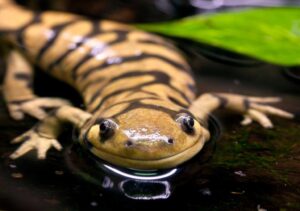
The fascination with the Fire Salamander transcends biology. This amphibian, with its vibrant orange-yellow body dotted with dark spots, evokes admiration and respect. It is often surrounded by myths that spring from the depths of popular culture. One of the most well-known beliefs claims that the salamander can live in fire, emerging unscathed from flames. While this is fanciful, the truth is that this species has secretion glands that can make its skin toxic. Thus, its perception as a magical creature solidifies.
In various cultures, the salamander symbolizes transformation and rebirth. In mythology, it is often associated with the element of fire, a connection that can be attributed to its appearance. Mythical and poetic, tales of the salamander often revolve around its power of regeneration and renewal. It is a powerful metaphor for the adversities faced in life.
Its presence in art and literature is also notable. Painters and writers have drawn inspiration from it throughout history, reflecting the duality of beauty and danger that it represents. Additionally, folklorists often viewed it as a guardian of ancient wisdom. This desire to explore the unknown is one of the reasons why the Fire Salamander continues to capture human imagination. People of all ages feel a deep connection with this animal. For those seeking a greater understanding of the animal kingdom, there is always something intriguing about the salamander. The combination of its unique beauty and the mysteries surrounding its history only amplifies the charm it exerts over people. Discover more about the fascinating nature.
Conclusions…
The Fire Salamander is more than just a simple beauty of nature; it is an indicator of environmental health and an example of the complexity of ecological interactions. Its preservation is vital to maintaining balance in its habitat and ensuring the continuity of its presence in our ecosystems.
Did you know?
What is the Fire Salamander?
The Fire Salamander is a species of European amphibian known for its black skin with yellow spots and its ability to secrete defensive venom.
Where does the Fire Salamander live?
It inhabits forests and humid areas in Europe, preferring environments rich in vegetation and water sources.
What is the diet of the Fire Salamander?
The diet of the Fire Salamander mainly consists of insects and small invertebrates, which it captures at night.
What is the ecological role of the Fire Salamander?
The Fire Salamander plays an important role as an insect consumer, helping to maintain the balance of their populations.
Is the Fire Salamander an endangered species?
Yes, the Fire Salamander faces threats such as habitat destruction and pollution, making its conservation crucial.