The Fascinating World of the Blue Macaw
The blue macaw is one of the most impressive birds in Brazilian fauna, standing out for its vibrant plumage and intelligent behaviors. In the following paragraphs, we will explore its characteristics, habitat, social behavior, conservation challenges, and the importance of protecting this magnificent species.
Physical Characteristics
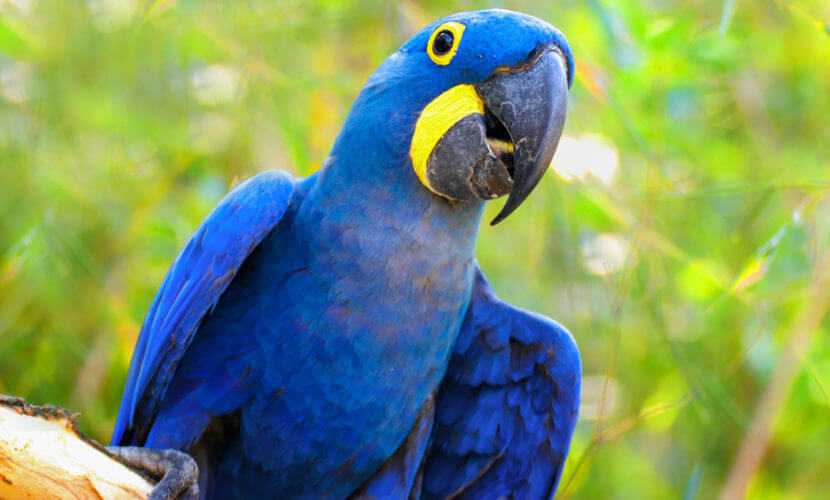
The blue macaw, one of the most majestic birds on the planet, is distinguished by its impressive size and vibrant colors. With a length that can reach up to one meter, it is a true giant among birds. Its size is almost as impressive as its plumage, which features a stunning shade of blue that shines under sunlight. This color is often complemented by yellow and green feathers, creating a striking visual contrast that is unmistakable in its natural habitat.
The feathers on its head are a more intense blue, almost as if they are illuminated. Its face, adorned with a strong, curved beak, is designed to crack the hard shells of the seeds that make up most of its diet. This unique characteristic sets it apart from other birds and makes it an excellent forager among the dense foliage of tropical forests.
Another fascinating aspect of the blue macaw is its long tail. These tails are not only visually impressive but also serve as essential tools for navigating through branches and vegetation. Additionally, the macaw displays a remarkable ability to mimic sounds, including the calls of other birds and even noises made by humans. This ability makes it a social bird that frequently interacts with other species.
If you want to learn more about fascinating birds, I recommend visiting this link to better understand the role of birds in their ecosystem.
Habitat and Distribution
The blue macaw inhabits the tropical forests of South America, especially in the regions of Brazil, Paraguay, and Argentina. These magnificent birds are deeply adapted to forest ecosystems, where they can be seen gracefully flying among the treetops. The environment is characterized by dense vegetation that provides ample shelter and food. The macaw primarily feeds on fruits but also consumes insects and small vertebrates.
The favorable environmental conditions for the survival of the blue macaw include an average temperature ranging from 20°C to 30°C, with adequate humidity. These conditions are essential for the growth of the fruits they feed on. Macaws also need large trees, which provide safe nesting sites and places to rest.
Although the blue macaw is a resilient species, changes in its habitat have direct impacts on its survival. Deforestation and urbanization reduce the areas where macaws can live and feed. Additionally, the wildlife trade also poses a threat to their population. The secondary forests that emerge after uncontrolled exploitation are not sufficient to maintain a healthy population.
Conserving their habitat is vital. Preserving forests and replanting deforested areas are crucial activities. Protecting the trees that provide fruits is essential to ensure the macaws’ food supply. For those who wish to learn more about the crucial connection between birds and their habitat, I recommend visiting this link.
Social Behavior
Blue macaws are social birds that form strong bonds with their peers. They live in groups, where they interact in complex and intriguing ways. The flocks can vary in size, often consisting of up to 30 individuals. This social dynamic is fundamental to their survival in the natural habitat. Communication among blue macaws is rich and varied. They use distinct vocalizations to communicate with each other. Loud calls may be used to mark territory, while softer sounds serve to locate and interact within the group. These vocalizations are an essential part of their social behavior, allowing for flock cohesion.
During feeding, blue macaws demonstrate a curious organization. They often gather in areas abundant with fruits and seeds. The act of feeding in groups is not only a social practice but also a security strategy. Being in a flock reduces the risk of predators. The macaws observe each other while feeding, learning about new food sources and ensuring they are always nourished. Additionally, social interactions include play and mutual grooming. Macaws often engage in playful activities, such as acrobatic flights and sunbathing. These behaviors not only strengthen social bonds but also promote robust mental and physical health within the group. The social life of blue macaws, therefore, is a fascinating spectacle, full of interactions that illustrate the complexity of their communal lives. For a deeper look at how these social interactions are fundamental to the lives of birds, check out this article about toucans, which addresses similar themes related to social behavior in birds.
Threats and Conservation
The blue macaw, with its vibrant plumage and large size, faces serious threats to its survival. The illegal wildlife trade is one of the main dangers. These birds are often captured from their natural habitat to be sold as pets. This clandestine practice not only reduces the population of blue macaws but also compromises the genetic diversity of the species. Furthermore, habitat loss is a significant threat. The tropical forests where they typically live are being devastated to make way for agriculture, construction, and logging. This degradation of habitat interferes with the natural life cycles of the blue macaw, making reproduction and feeding difficult. A macaw needs large areas to forage and glide in search of fruits and nuts, activities that become impossible in fragmented environments.
Fortunately, several conservation initiatives are underway to protect this fascinating species. Local and international organizations have been working to combat wildlife trafficking, promoting education and awareness about the preservation of the blue macaw. Reforestation projects aim to restore degraded areas and create ecological corridors that allow safe movement for these birds. Additionally, community involvement in protecting their natural environments is also crucial.
Only through collective and sustainable efforts will it be possible to ensure a future for the blue macaw. For more information about endangered birds, visit this link.
Ecological Importance
Blue macaws, with their vibrant plumage and remarkable intelligence, play a vital role in their ecosystems. They are an integral part of tropical forests, where they act as seed dispersers. By feeding on fruits and seeds, macaws contribute to the regeneration of trees. This is essential for the health of forests, as many plants depend on these birds for propagation. The diversity of vegetation, in turn, supports a wide range of other species. This life cycle, generated by the interaction between the macaw and the plants, is a pillar of biodiversity. Without the blue macaw, this dynamic would be threatened, putting the habitat of many other creatures at risk.
Moreover, macaws are indicators of ecosystem health. Their presence signals a healthy environment, free from pollution and degradation. When blue macaws begin to disappear, it is a sign that something is wrong. This decline can be attributed to habitat loss, hunting, and trafficking. Therefore, preserving blue macaws is not only important for the species itself but also for maintaining ecological balance.
The conservation of the blue macaw brings benefits that go beyond the forests they inhabit. They capture people’s attention, stimulating ecotourism and environmental awareness. Thus, protecting macaws means protecting the very identity of an ecosystem. Every action in favor of their preservation helps ensure that the beauty and complexity of life on Earth can thrive. For more information about the importance of biodiversity, see this fascinating bird from Brazil’s waters.
Conclusions…
The blue macaw represents not only the beauty of Brazil but also the challenges faced by many endangered species. Preserving its habitat and raising awareness about its importance are essential to ensure that future generations can admire these majestic birds.
Did You Know?
What is the natural habitat of the blue macaw?
The blue macaw primarily inhabits tropical forests, especially in areas of cerrado and riparian forests in Brazilian regions.
What are the main threats faced by the blue macaw?
The main threats include habitat destruction, wildlife trafficking, and capture for the pet trade.
How does the blue macaw communicate?
The blue macaw uses a variety of vocalizations and visual behaviors to communicate, both with other group members and for protection.
What is the diet of the blue macaw?
The blue macaw has a diet based on seeds, fruits, and nuts, being especially attracted to nuts.
Is the blue macaw a social bird?
Yes, the blue macaw is a very social bird, often forming groups to feed, socialize, and protect itself from predators.