Giant Asian Hornet
The Giant Asian Hornet, known as the largest hornet in the world, is a fascinating example of biodiversity in Asia. With its impressive size and painful sting, this species plays a crucial role in its habitat. Let’s explore the characteristics, behavior, and impacts this hornet has on the ecosystem.
Physical Characteristics
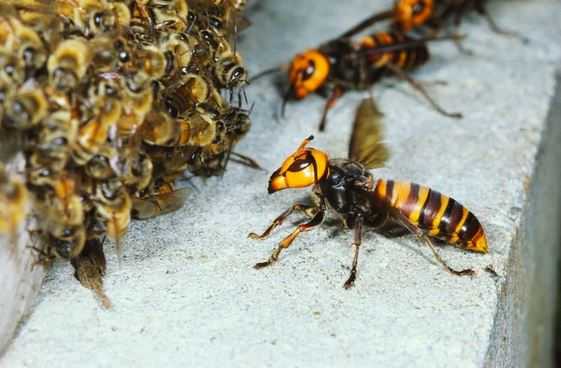
The Giant Asian Hornet is truly impressive, with a size that can reach an astonishing 5 centimeters in length. Its robust and distinctive body makes it the largest hornet in the world. The females, which are the largest, boast a width that can reach 1.5 centimeters. This size is remarkable when compared to other hornet species, which tend to be significantly smaller.
The coloration of the Giant Asian Hornet is equally distinctive. Its body is adorned with a rich pattern of orange and yellow, segmented by dark patterns that create a visually striking yet intimidating effect. The transparent wings reflect light in a mesmerizing way, while the legs exhibit a yellowish hue that contrasts with the body. In addition to its vibrant color, its long, slender antennae are adapted to detect scents, an evolutionary trait that aids in locating prey.
One of the most striking features of this hornet is its powerful mandibles. These notably wide mandibles are adapted for crushing food and capturing prey, such as bees. The stingers, which can extend up to one centimeter, are an effective defense tool, ensuring that this species is not easily intimidated. Its unique combination of size, color, and physical structure establishes the Giant Asian Hornet as a magnificent example of diversity within the hornet kingdom, setting it apart from other species. For a deeper analysis of fascinating insects, check out this article on another equally intriguing creature.
Behavior and Habits
The Giant Asian Hornet is a fascinating example of social complexity and dexterity in nature. In its colonies, the hierarchy is well-defined. A queen, several workers, and males play specific roles. The workers are responsible for foraging, nest building, and defending the colony. They are tireless, quickly adapting to different environments. This cooperative behavior ensures the survival of the group in a world full of challenges.
When it comes to hunting, the Giant Asian Hornet is a formidable predator. Utilizing its agile flying skills, they chase and capture other insects, often bees, which become part of their diet. The hunting process is a combination of individual strategies and teamwork. The hornets communicate with each other to identify the best approach, demonstrating sophisticated social behavior. They attack in groups to take down larger prey, using their powerful mandibles and lethal stings.
The nest, which can be found in trees, shrubs, or human structures, is a masterpiece of engineering. The workers use chewed wood to create a paste that transforms into paper. With this, they build cells that house eggs. As the colony expands, the queen remains at the center, continuously laying eggs. This life cycle is fundamental for the continuity of the species. The complex interaction between the hornets, their social structure, and their hunting ability makes them an impressive example of adaptation and survival in the animal kingdom. For a deeper look at social behaviors in insects, see this article on jumping spiders.
Diet and Predators
The Giant Asian Hornet is one of the most feared predators in the insect kingdom. Its diet is varied, consisting of insects, fruits, and nectar. Adult individuals typically feed on other creatures. Among their favorites are bees. The hornets hunt and bring their captures back to the nest. This behavior is not just a matter of survival but also a strategy to feed their larvae. Adult hornets need proteins found in insects, while the larvae consume carbohydrate-rich foods. This intricate relationship with the food chain makes the Giant Asian Hornet a vital piece in the local ecosystem. Their feeding habits influence the insect population in their habitat. The presence of this hornet can help curb the overpopulation of bees and other insects. By controlling these numbers, the Giant Asian Hornet helps balance and maintain the health of the environment. However, it’s not just what they eat that matters, but also who preys on them. The main threats to the Giant Asian Hornet come from predators like birds and mammals. Some specific species, such as the modern ornithologist, take advantage of the hornets’ vulnerability, especially during the foraging phase. The relationship between hornets and their predators is a primitive dance. In this crucial plot of nature, each actor plays its role. Often, hornets are seen as merely a nuisance, but they actually have a profound impact on the life around them.
Impact on the Ecosystem
The Giant Asian Hornet, magnificent in appearance, plays a crucial role in ecosystems. This incredible insect, with its impressive wingspan, not only terrifies but also contributes to the balance of nature. Among its functions, it stands out for controlling insect populations.
These hornets are voracious predators of a variety of insects, including pesky grasshoppers and even other hornets. In doing so, they help regulate populations that, if unchecked, could harm plant life. This ability to control maintains biodiversity and ensures that various species coexist in harmony.
Another fascinating aspect is the contribution of the Giant Asian Hornet to pollination. While feeding, the hornets transport pollen from one flower to another, allowing for plant reproduction. This transfer is vital for the health of many ecosystems, as it promotes botanical diversity and provides food for a variety of organisms.
The interactions of the Giant Asian Hornet with the environment are complex and multifaceted. The balance it maintains extends beyond flora, influencing the entire food chain. The presence of these hornets can even reflect on the survival of predators like birds and small mammals, which depend on them as a food source.
In summary, the Giant Asian Hornet, far from being a mere threat, is a vital component of ecosystems, serving as an excellent controller of insect populations and an effective pollinator. To better understand the diversity of insects and their role in ecosystems, you can visit this link.
Safety Issues
The Giant Asian Hornet, with its impressive 5 centimeters in length, poses one of the greatest challenges to human safety. This creature, often admired for its beauty, carries a powerful venom in its sting. The sting of a Giant Asian Hornet is not only extremely painful but can also lead to severe allergic reactions in some individuals. The venom contains compounds that cause an intense burning sensation and, in severe cases, can even result in anaphylactic shock.
The impact of the sting is devastating. Studies indicate that the amount of venom released in a single sting can be enough to cause more than just discomfort. Factors such as the amount of venom, the part of the body affected, and the victim’s pre-existing health can increase the severity of the reaction. Unfortunately, it’s not just the physical pain that raises concern. Many deaths have been recorded due to extreme allergic reactions.
Prevention is key to avoiding unwanted interactions with these hornets. Keeping outdoor areas clean and free of food scraps is crucial. Hornets are attracted to sweet odors, making caution even more necessary at outdoor parties. Wearing clothing that covers most of the body can provide additional protection.
Furthermore, identifying and removing nests in strategic locations can minimize risks. If you encounter a nest, it is wise to contact specialists. For more information on social insects and their interactions, you can check out this article.
Conclusions…
The Giant Asian Hornet, with its impressive wingspan and notable characteristics, is not only fascinating but also vital to the ecosystem. Understanding its behavior and habitat enhances our appreciation for the diversity of life and the roles different species play in the natural world.
Did You Know?
What is the Giant Asian Hornet?
The Giant Asian Hornet is the largest hornet in the world, native to Asia, known for its extremely painful sting.
What is the impact of the Giant Asian Hornet on the ecosystem?
This hornet plays an important role in pollination and in controlling populations of certain insect species.
How painful is the sting of the Giant Asian Hornet?
The sting of the Giant Asian Hornet is extremely painful, being considered one of the most intense among insects.
Where is the Giant Asian Hornet found?
It is primarily found in Asia, but sightings have been recorded in other parts of the world.
What are the physical characteristics of the Giant Asian Hornet?
It has a large body, with a wingspan that can reach 10 cm and coloration that varies between yellow and black.