The Fascinating World of Grasshoppers
In the lush landscapes of our planet, grasshoppers stand out as intriguing creatures, known both for the beauty of their wings and the devastating power they exert in swarms. This article explores the fascinating world of grasshoppers, from their behavior to the impact they have on crops and ecosystems.
The Biology of Grasshoppers
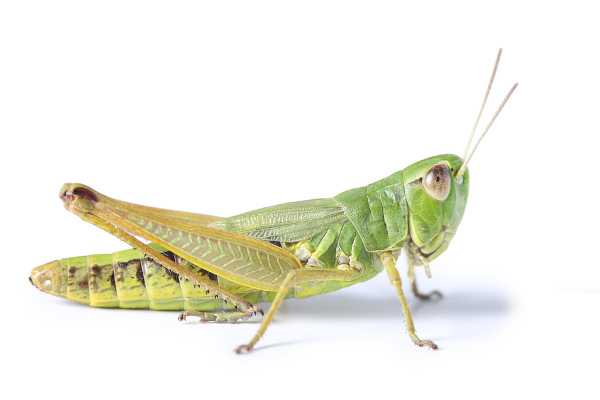
Grasshoppers, belonging to the order Orthoptera, are fascinating creatures. With a body that can vary in size, most grasshoppers have an elongated and skeletal body, with powerful legs adapted for jumping long distances. Their long, slender antennae are vital sensory instruments, allowing them to perceive their surroundings with precision.
The dietary habits of grasshoppers are predominantly herbivorous. They feed on leaves, grasses, and other plant parts, playing an important role in regulating the ecosystem. Their strong mandibles allow them to efficiently tear through vegetation. During the growth phase, known as nymph, grasshoppers feed voraciously to accumulate energy for metamorphosis.
The life cycle of grasshoppers is an admirable example of transformation. After reproduction, females lay eggs in fertile soil. These eggs incubate for several weeks, giving rise to nymphs. The nymphs resemble adults but lack wings and go through several instars before becoming adults. This transformation phase is crucial for adapting to seasonal changes.
One of the notable characteristics of grasshoppers is their ability to change behavior in response to the environment. When in low population density, they are solitary, but in situations of overpopulation, they can become gregarious. This behavioral transformation can lead to the phenomenon of plagues. To explore more about the incredible animal diversity, you can read about the jumping spider, another remarkable creature of the animal kingdom.
Behavior and Social Interaction
Grasshoppers are fascinating creatures that exhibit complex and intriguing social behavior. They are not solitary by nature; on the contrary, many live in large groups. This social phenomenon is known as gregarism. During their youth, grasshoppers tend to gather in bands, creating an interesting social dynamic that helps them survive. In large masses, social pressure plays a crucial role in shaping grasshopper behavior. When in dense groups, they feed, shelter, and reproduce together.
These insects have sophisticated forms of communication. Through sounds produced by rubbing their wings and legs, they can convey various messages. These sound vibrations can signal everything from the presence of predators to a warning for mobilization for collective movement. Communication is not limited to sound; body language is also of great importance. When one grasshopper approaches another, it is common to observe subtle movements of their antennae, indicating their intentions.
Gregarism occurs in response to environmental changes, such as food scarcity. In practice, this means that when conditions become unfavorable, grasshoppers may aggregate into swarms. The consistency and social forces exerted in these groups lead to the formation of swarms that can move in search of new habitats. Thus, grasshoppers show us a precious example of community life and mass survival. For a deeper analysis of how insects interact, you can read about the intelligence of arachnids in jumping spiders.
Environmental and Economic Impacts
Grasshoppers are fascinating creatures that play crucial roles in ecosystems and agriculture. Their impacts, however, can be both beneficial and devastating. With a voracious appetite, these insects can cause considerable damage to crops, leading to significant losses in agricultural production. When in swarms, they consume everything in their path, destroying vast stretches of crops. This is not a new occurrence; history is filled with accounts of devastating swarms. A notable example occurred in the 1930s when large clouds of grasshoppers unfortunately devastated parts of North America, exacerbating the already critical situation of the Great Depression and contributing to hunger and mass migration.
In terms of ecosystems, grasshoppers also play an important role as herbivores. Their feeding can help shape vegetation and influence the dynamics of plant communities, promoting greater diversity. However, when conditions are favorable and grasshopper populations grow uncontrollably, the balance of the ecosystem can be compromised. Cases of desertification can be observed in areas where swarms establish themselves. In turn, this phenomenon affects local fauna and the communities that depend on these plants. Besides their direct impact on ecosystems, grasshoppers have significant economic consequences. The costs of control and the effects on agricultural production can create major challenges for communities and countries. To better understand how agriculture is affected, explore the relationship between insects and nature conservation in Natureza Incomum.
Control and Management Strategies
Grasshoppers, with their ability to devastate crops, become a significant concern. Various control strategies have been developed over time, reflecting a growing understanding of the ecology and biology of these fascinating insects. It is essential to approach this topic with a focus on sustainability.
The use of biological techniques is a promising approach. Natural predators, such as birds and insects, play a vital role in regulating grasshopper populations. Protecting these predators is crucial for maintaining balance. Advances in technology also offer new options. Monitoring through drones allows for the identification of large groups of grasshoppers, enabling rapid actions. This method reduces the need for chemical pesticides, minimizing environmental impact. Another relevant method is the use of pheromones. These chemical compounds can confuse grasshoppers, preventing their congregation and migration. In the end, land management practices are indispensable. Crop rotation and intercropping with plants less favorable to grasshoppers are also effective measures. Additionally, choosing more resistant plant varieties can help mitigate damage. It is essential to educate farmers about these techniques, promoting more conscious agriculture that is less dependent on chemical interventions. Each approach should be integrated into a comprehensive management plan that considers not only grasshoppers but also the overall health of the ecosystem. For more information on sustainable management strategies, consult this article discussing conservation practices in agricultural environments.
Grasshoppers in Culture and Mythology
Grasshoppers, creatures that leap gracefully and agilely, have a striking presence in the culture and mythology of various civilizations. In many traditions, these insects have been symbolized in multifaceted ways, reflecting both their beauty and their destructive potential. In ancient China, for example, grasshoppers were considered symbols of fertility and wealth. Their presence was believed to bring good harvests, a sign of abundance. However, this same species, in times of overpopulation, transformed into a symbol of plagues and devastation. In an interesting contrast, in Egyptian mythology, they were associated with the goddess Serket. For the Egyptians, their ability to jump far represented protection and strength, reflecting a true admiration for these creatures. In Islamic religion, grasshoppers are mentioned with reverence. They were seen as a permissible food during the exodus of the people of Israel. This image of the grasshopper as food elevated to an almost spiritual status refers to the exploration of nature and its gifts. In Native American cultures, grasshoppers also entered as mythical elements. They were seen as messengers, representing the voices of nature and the cycles of life. This connection reveals a deep relationship of respect between humans and the natural environment. Thus, grasshoppers teach us about the duality of life, their meanings varying immensely according to time and place.
Conclusions…
Grasshoppers are extraordinary beings, whose beauty and complexity hide a darker side. By understanding their behavior, we can better deal with the challenges they present to the environment and agriculture. Protecting the natural balance is essential to mitigate the risks posed by these insects.
Did You Know?
What are grasshoppers?
Grasshoppers are insects belonging to the order Orthoptera, known for their jumping ability and for forming large swarms that can devastate crops.
What is the impact of grasshoppers on agriculture?
Grasshoppers can cause significant damage to crops, consuming leaves, flowers, and even fruits, resulting in considerable economic losses for farmers.
How do grasshoppers organize into swarms?
When the grasshopper population becomes very high, they can group into swarms through a phenomenon known as ‘gregarism,’ which increases their efficiency in searching for food.
What are the control strategies for grasshoppers?
Strategies include biological, chemical, and cultural methods, such as the use of insecticides, biological control by natural predators, and planting selections.
Are grasshoppers dangerous to humans?
Grasshoppers are not dangerous to humans, but their swarms can impact food security by destroying crops.