
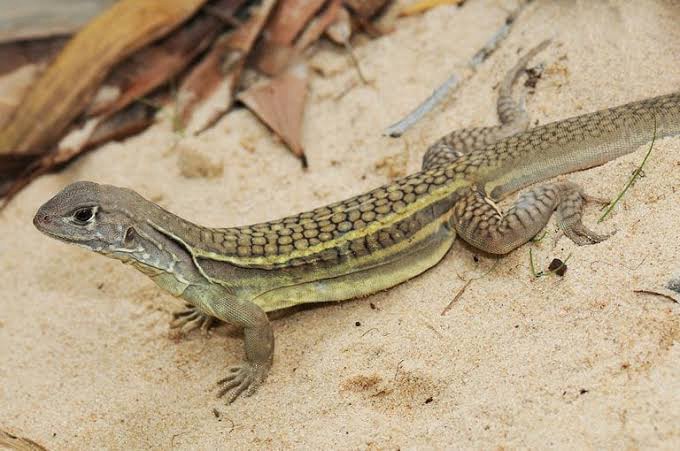
The Fascinating World of the Leiolepis ngovantrii Lizard
Diving into the depths of the fascinating biology of the Leiolepis ngovantrii lizard, this recently discovered species surprises us with its unique ability for asexual reproduction. In this article, we will explore the characteristics, habitat, and intriguing behaviors of this lizard that lives in harmony with nature.
Discovering the Leiolepis ngovantrii Lizard
In the vastness of the tropical forests of Vietnam, a new and intriguing inhabitant has been unveiled. The Leiolepis ngovantrii lizard is a fascinating species, recently discovered in 2015, that quickly captured the attention of the scientific community. This lizard is a member of the Agamidae family, which possesses some of the most impressive adaptations among reptiles. The species name honors the renowned Vietnamese herpetologist Nguyen Van Tri, who has contributed immensely to the understanding of the herpetofauna of that region.
The Leiolepis ngovantrii was identified through a combination of field observations and genetic analyses. Scientists focused on its morphological characteristics and compared it with closely related species, revealing significant differences that distinguish it from its relatives. These discoveries not only expanded the taxonomic horizon of the Leiolepis genus but also opened new avenues for future research on Southeast Asian biodiversity.
The impact of this discovery on biology is profound. It reveals not only the richness of biodiversity but also the need for habitat protection. The study of Leiolepis ngovantrii, with its lush appearance and unique behavior, can help raise public awareness about local wildlife conservation and the impacts of environmental degradation. Each new species discovered is one more step in understanding the web of life and the importance of preservation. The beauty of Leiolepis ngovantrii lies in its vital role within this vast ecosystem. To learn more about the importance of biodiversity, visit this article on biodiversity in the Amazon.
Physical and Behavioral Characteristics
The tube-nosed bat, scientifically known as Nyctimene albiventer, exhibits fascinating physical characteristics that distinguish it in the animal kingdom. Its tubular nose is the most impressive of these features. This peculiar adaptation is not merely aesthetic but functional, allowing the bat to have a keen sense of smell. Thanks to this distinct nose, it can detect subtle floral aromas. This ability is essential for its survival in tropical forests.
The body of the tube-nosed bat is slender, with soft fur that varies between gray and light brown. Its ears are large and mobile, complementing its acute hearing, crucial for navigating its nocturnal habitat. The eyes, small but expressive, provide it with vision adapted to darkness, fundamental for its feeding habits.
These bats primarily feed on nectar, pollinating flowers as they feed. With their agile movement in rapid flights, they are excellent pollinators, moving from flower to flower. Their flight pattern is often erratic, allowing them to maneuver between branches and avoid predators.
During foraging, tube-nosed bats display intriguing social behavior. Known for being gregarious, they form small groups and continuously communicate through vocalizations and subtle touches. This social interaction is important for the effectiveness of pollination and food searching.
To understand more about the importance of bats in pollination, visit Bat: The Flying Mammal.
The Surprising Reproductive Method
The Leiolepis ngovantrii lizard presents a fascinating and unique reproductive method: asexual reproduction. This is an uncommon characteristic among lizards, allowing females to reproduce without the presence of males. This biological phenomenon is known as parthenogenesis. This ability to reproduce without male fertilization results in genetically homogeneous populations.
Through parthenogenesis, females can generate identical copies of themselves. This process not only ensures the continuity of the species in environments where males may be scarce but also allows for rapid population expansion in favorable habitats. For example, when environmental conditions are ideal, small populations will thrive, creating a notable impact on local ecosystems.
The biology of Leiolepis ngovantrii reflects this extraordinary adaptation. They exhibit accelerated growth, which is crucial for survival in habitats with predators or intense competition. This ability to reproduce efficiently is advantageous in environments where resources are limited.
However, the genetic homogeneity resulting from asexual reproduction can present disadvantages. The lack of genetic diversity makes the species vulnerable to diseases and abrupt environmental changes. Thus, the ecology of this species is intertwined with the delicate balance that Nature imposes.
To learn more about the fascinating life cycle of other organisms, discover the incredible adaptations of the tardigrade, a creature that survives in the most extreme conditions.
Habitat and Ecology
The Leiolepis ngovantrii lizard is primarily found in dense tropical forests and areas of lush vegetation. These regions provide shade and a humid environment, which are crucial for its survival. The ability to move quickly through the foliage aids in capturing insects and evading predators.
These lizards typically inhabit the forest floor or under decomposing leaves, where they remain camouflaged. With their vibrant coloring, they blend into the landscape, confusing both predators and even prey. Tree trunks and rocks are also common locations, offering protection and a platform from which they can bask in the sun.
The presence of Leiolepis ngovantrii in an ecosystem is significant. As insect predators, they help control pest populations, balancing the ecosystem. Additionally, they serve as food for birds of prey and other predators, inserting themselves into this complex food web.
Studies show that the extinction of key species can lead to the collapse of entire habitats. The biodiversity of tropical forests is challenged by human activities, and the preservation of species like the Leiolepis ngovantrii is vital. Protecting its habitat benefits not only the lizards but all the flora and fauna that depend on the same ecosystem.
To learn more about the incredible diversity of animal life in similar biomes, you can check out this article on toucans, which also play important ecological roles in their habitats.
The Future of the Leiolepis ngovantrii Lizard
As climate change and habitat loss threaten the future of the Leiolepis ngovantrii lizard, the importance of conserving this species becomes increasingly evident. This lizard, which demonstrates impressive beauty and adaptability, is a crucial part of the ecosystem in which it lives. Therefore, understanding its biology and behavior is fundamental to ensuring its survival.
Research continues to play a vital role in conservation. It allows us to better understand the specific needs of the lizard and how environmental changes may affect it. Through field studies, scientists can monitor their populations and the state of their habitat. This data is essential for creating effective conservation strategies. For example, the preservation of natural habitats is a priority that can be directly guided by the data collected in this research.
Moreover, public awareness and education about the importance of the Leiolepis ngovantrii lizard are indispensable. When communities understand the role of these animals in their ecosystem, they become allies in protection. Awareness programs can encourage the population to participate in conservation initiatives.
Finally, collaboration between scientists and the local community can yield positive results. When this union occurs, conservation becomes a community task, not an isolated effort. Thus, the future of the Leiolepis ngovantrii lizard depends not only on research but also on compassion and collective responsibility. To inspire this responsibility, learning about other endangered species like the rhinoceros can be a powerful path. Learn more about the importance of conservation by visiting this article.
Conclusions…
The Leiolepis ngovantrii lizard reveals a remarkable example of adaptation and resilience in nature. Its ability to reproduce without males not only ensures its survival but also raises intriguing questions about evolution. As we continue to study this species, new biological mysteries will be unveiled, reminding us of the complexities of life.
Did You Know?
What is the Leiolepis ngovantrii lizard? The Leiolepis ngovantrii lizard is a recent species known for its asexual reproduction, where females reproduce without the need for males.
What is the habitat of the Leiolepis ngovantrii lizard? This lizard is found in forests, where it plays an important role in the local ecosystem, contributing to environmental balance.
How does the Leiolepis ngovantrii lizard reproduce? Females of the Leiolepis ngovantrii lizard reproduce through cloning, meaning they can generate genetically identical offspring.
Is the Leiolepis ngovantrii lizard endangered? No, the species is not at risk of extinction due to its asexual reproduction method, ensuring population continuity.
What characteristics make the Leiolepis ngovantrii lizard special? Besides asexual reproduction, its vibrant appearance and ecological adaptations make it unique in the animal kingdom, sparking interest among biologists.