Manta Ray
The manta ray, the largest member of the elasmobranch family, fascinates with its elegance and colossal size. This article explores its characteristics, habitat, diet, and the importance of this creature in marine biodiversity.
Physical Characteristics
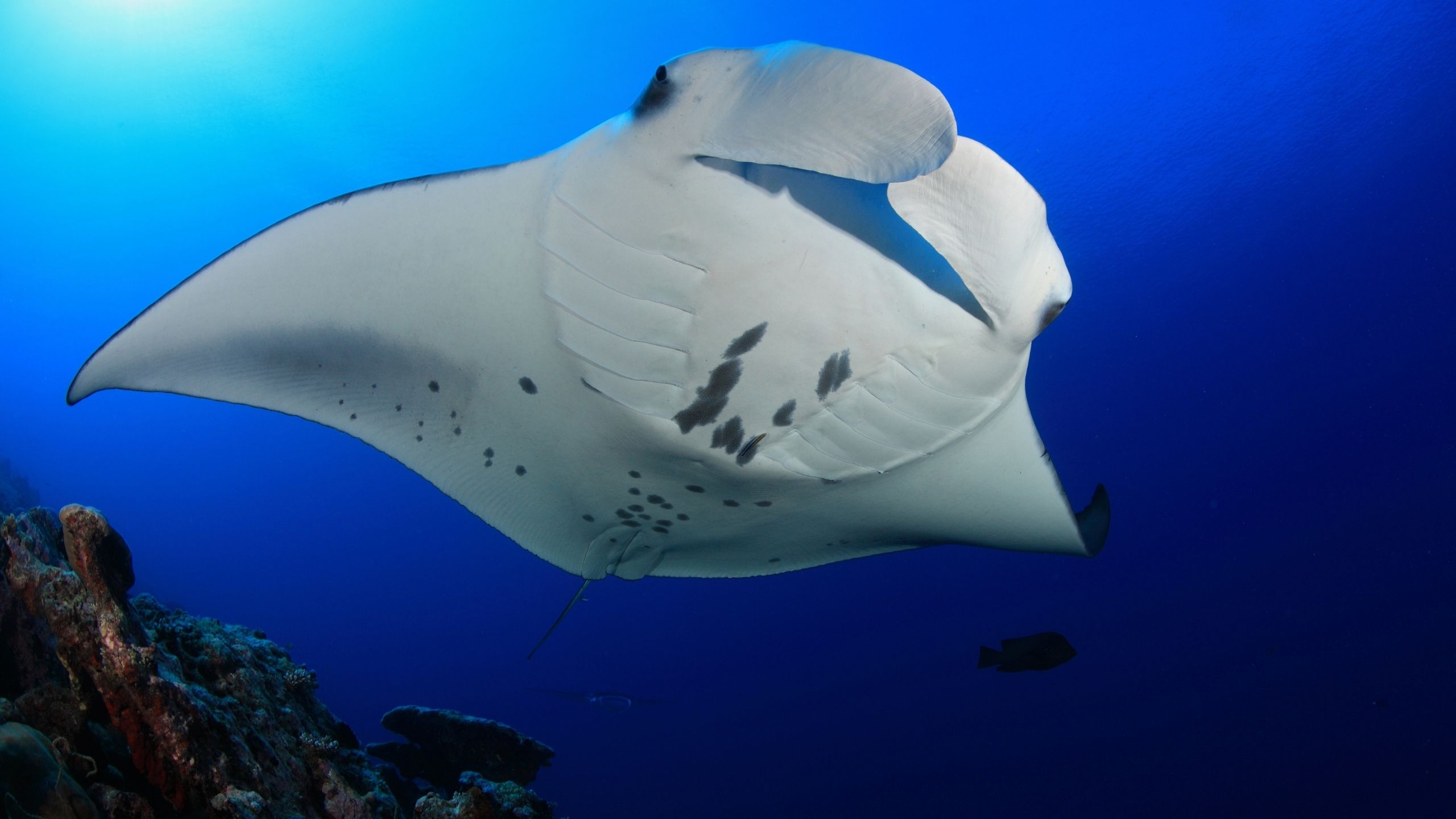
The manta ray, one of the largest fish in the ocean, is a marvel of nature. Its body, which can reach up to seven meters in diameter, is a masterpiece of evolution. The almost circular shape is complemented by long pectoral fins that extend elegantly, making it appear to float gracefully in the water.
The colors of the manta ray range from an elegant shade of gray to a deep blue, providing subtle camouflage in its habitat. The belly is a striking contrast, often featuring a lighter pattern. This design is not only aesthetic but also functional, helping in protection against predators.
One of the most impressive features is its head, which smoothly merges with the body. The eyes, positioned on the sides, offer a wide field of vision. The mouth, located on the underside, is broad and designed to filter plankton from the marine environment. The gills, visible on the surface, create a design that is both beautiful and practical.
In addition to its large size, the manta ray is known for its unique markings, which serve as fingerprints. No two manta rays are identical. These distinct patterns not only beautify the animal but also play a vital role in identification among individuals.
Indeed, its singular beauty makes the manta ray a symbol of majesty in the seas. For more about incredible marine creatures, one can explore the fascinating bird of the Brazilian waters.
Natural Habitat
The majestic manta rays inhabit warm, tropical waters, often associated with coral reefs and coastal regions. These environments are more than mere homes; they play a crucial role in the survival of the species. Manta rays are large predators that move gracefully through the waters. In their habitat, they find an abundance of food and places to shelter and reproduce. These creatures are often seen in shallow waters, where the nutrient-rich seabed supports a variety of smaller species, creating a vibrant ecosystem.
The sandy or coral substrate provides an ideal location for manta rays to carry out their daily activities, such as burying themselves for camouflage and hunting for prey. The combination of sunlight and the diversity of marine life is crucial for the health of the habitat they occupy. Interestingly, their interactions with the environment also reflect social dynamics. The presence of companions like cleaner fish, which feed on parasites on their skin, exemplifies a remarkable symbiosis. While moving in search of food, manta rays not only benefit but also contribute to the health of marine ecosystems by maintaining the balance of prey and predator populations.
Environmental degradation and overfishing threaten these delicate habitats. It is imperative to protect the oceans and coral reefs, which act as sanctuaries, ensuring the continuity of marine life. To better understand the importance of marine habitats, you can explore more about the interactions between species in this complex ecosystem relationship.
Feeding and Diet
Amidst the calm, warm waters of the oceans, the manta ray plays a fascinating role in the marine food chain. This majestic animal feeds almost exclusively on small crustaceans, mollusks, and plankton, which it collects in large quantities while moving gracefully through the water column. With its wide, flat jaws, the manta ray is an exceptional filter feeder. Its feeding occurs primarily in nutrient-rich coastal areas.
Manta rays glide smoothly along the ocean floor, taking advantage of the current to capture their prey. They open their enormous mouths, sucking in water, which is then filtered through their gills. The smaller organisms get trapped in the gills while the water is expelled. This feeding method is vital for the health of the marine ecosystem. By feeding on plankton, they help control the population of this organism and, consequently, influence the dynamics of the marine environment.
Moreover, the manta ray acts as a food resource for larger predators, such as sharks and orcas. Its presence in the food chain is an indicator of the health of the ecosystem. A decrease in their populations may signal deeper problems, such as pollution or climate change.
Therefore, the feeding of the manta ray is not just a matter of survival but also a critical component of the web of marine life. The delicate balance that keeps the oceans healthy depends, in part, on these adorable giants. To explore more about the importance of ecological relationships among marine organisms, check out this fascinating article.
Ecological Relationships
The manta ray, a majestic giant of the oceans, plays a crucial role in the complex webs of marine life. This magnificent organism, with its large fins and distinct shape, is closely linked to a diverse set of species. Its presence in coral reefs and coastal areas is vital for ecological balance. The manta ray is primarily a filter feeder, consuming plankton and small organisms through a process that helps control their populations. Thus, it ensures that there is no overcrowding of smaller organisms, allowing for a healthy marine environment.
Among its interactions, the manta ray establishes intriguing symbiotic relationships. Cleaner fish, such as species from the genus Labroides, often associate with these giants, removing parasites and debris from their skin. This behavior promotes not only the health of the rays but also provides food for the cleaner fish. Such reciprocity exemplifies interdependence in marine communities.
Additionally, manta rays also serve as prey for large predators, such as sharks and orcas. Their presence echoes through food chains, influencing the population dynamics of other species. It is fascinating to observe how such a large and imposing being can be a vital part of an ecosystem that is so delicate and interconnected.
Thus, the manta ray stands out not only for its beauty but as a symbol of the importance of preserving marine remnants. To understand even more about the wonders of the underwater world, check out this article on the orca, which also illustrates the complex relationships within the marine ecosystem.
Conservation and Threats
The majestic manta rays, with their large and graceful bodies, face an uncertain future. Among the most significant threats is accidental capture in fishing nets. These adorned creatures have little protection against traps set by humans in search of other marine species. Furthermore, ocean pollution, especially plastic waste, compromises their habitats. Microplastics can accumulate in their bodies and potentially affect their health, as well as the health of marine ecosystems. The destruction of coral reefs and coastal habitats, also caused by destructive fishing practices and climate change, exacerbates the situation. Reefs provide shelter and food for many species, including manta rays. The exponential decrease of vital sections of their homes makes their survival even more challenging. An increase in water temperature and ocean acidification has a direct impact on marine life.
In response to these threats, conservation initiatives are being implemented. Organizations and local communities are working together to establish marine sanctuary sites. These refuges not only protect manta rays but also promote the recovery of their habitats. Research and education are fundamental. Raising awareness about the importance of these creatures helps mobilize preservation efforts. Protecting marine areas includes restrictions on fishing and actions against pollution. Monitoring projects aim to collect data on the population and behavior of manta rays, helping to outline a framework for future conservation. These measures are critical steps to ensure that future generations can admire the beauty and grace of manta rays.
Conclusions…
The manta ray is not just a wonder of nature but also a symbol of the fragility of marine ecosystems. Protecting these majestic creatures is essential for maintaining the health of the oceans and global biodiversity.
Did You Know?
What is the size of the manta ray?
The manta ray can reach up to 7 meters in width and weigh over 1,500 kg, making it the largest ray species in the world.
Where does the manta ray live?
The manta ray is found in warm and temperate waters, usually in coral reefs and coastal areas of the Indian and Pacific Oceans.
Which ray does not have a stinger?
The manta ray is one of the few rays that do not possess a stinger, making it one of the least dangerous species to humans.
What does the manta ray eat?
The manta ray primarily feeds on plankton, small fish, and crustaceans, filtering these organisms through its gills.
What is the spiritual meaning of the ray?
Spiritually, the ray symbolizes adaptation, transformation, and the importance of moving smoothly in difficult environments.
What is the difference between ray and stingray?
The term ‘ray’ is a general reference to various species of cartilaginous fish, while ‘stingray’ usually refers to a specific group within that category.
Who is the predator of the ray?
Sharks, especially whale sharks and tiger sharks, are the main predators of the manta ray.
How long does a ray live?
The manta ray can live between 20 and 30 years in the wild, depending on environmental conditions and the absence of predators.