The Return of Sir David’s Echidna: A Rare Rediscovery
Recently, Sir David’s echidna, a unique mammal known for laying eggs, was rediscovered in the Cyclops Mountains of Indonesia after six decades of scientific inactivity. This rediscovery not only highlights the rich biodiversity of the region but also raises questions about the conservation of rare species.
The Story of Sir David’s Echidna
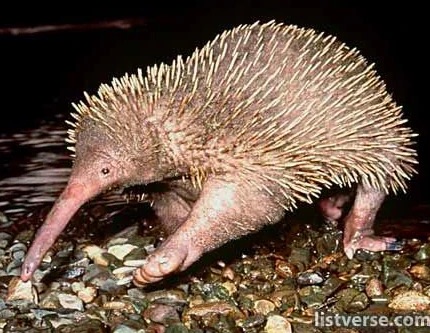
In a remote corner of the world, the intriguing story of Sir David’s echidna (Zaglossus attenboroughi) awaits its rediscovery. This unique mammal, a cousin of the platypus, made its first appearance in scientific records in 1994 when it was described by researchers fascinated by its peculiar characteristics, such as its elongated snout and thick fur. However, the journey of Sir David’s echidna would not be continuous; it quickly became a species with an uncertain fate.
The Discovery and Disappearance
Initially, scientists were greeted with enthusiasm upon finding this emblematic animal in the forests of New Guinea. However, in the two decades that followed, Sir David’s echidna hid in the shadows, leaving researchers with reasons for speculation. Theories about its absence varied, suggesting everything from habitat destruction, exacerbated by deforestation, to the possibility that it was in a natural population low cycle.
Assuming the Impossible
While many awaited a new discovery, others made even more drastic assumptions. Some scientists theorized that Sir David’s echidna might have become extinct without anyone ever witnessing its vibrant life. This conjecture, in turn, generated a mix of despair and hope within the scientific community. Each day without a sighting only added more layers of mystery to its enigma. Thus, the search for this rare mammal continued to captivate and intrigue, suggesting that the adventure of rediscovering Sir David’s echidna was far from over.
The Ecosystem of the Cyclops Mountains
The Cyclops Mountains, with their majestic altitude and lush vegetation, are a vibrant testament to the biodiversity that nature can achieve. Here, every shadow of the forest and every sound from the underground reveal secrets of an incredibly complex and interconnected ecosystem. From the towering trees that rise like sentinels to the rich fauna that graces the fertile soil, each element plays a crucial role in maintaining this unique ecological habitat.
A Symphony of Life
In the Cyclops Mountains, biological diversity is not merely an accumulation of species; it is a harmonious symphony. The local climatic conditions, combined with nutrient-rich soil, create a perfect environment for an incredible variety of plants and animals. Endemic species, such as Sir David’s echidna, thrive here, showcasing how interactions between flora and fauna can result in extraordinary adaptations. Furthermore, the presence of crystal-clear streams and a microclimate that favors the growth of rare orchids contributes to a vibrant mosaic of life.
Habitat Challenges
However, not everything is peaceful in the Cyclops Mountains. This ecosystem faces serious dangers, such as environmental degradation and the invasion of exotic species. The exploitation of forests for timber resources and agricultural expansion jeopardizes the integrity of this precious habitat. Additionally, global warming is making climatic conditions more unpredictable, destabilizing rainfall patterns and directly impacting animal and plant life. Preserving what remains of this natural treasure is imperative, as the story of Sir David’s echidna and many other species depends on it. Thus, as we explore the challenges and triumphs in this ecosystem, we find a parallel with the journey of rediscovering this incredible animal that awaits us, revealing more about the interdependence between species and their habitat.
The Rediscovery: Facts and Findings
The rediscovery of Sir David’s echidna, one of Australia’s most elusive creatures, is an achievement that encapsulates the beauty of exploration and the resilience of science. After years of speculation and tireless searching for this rare marsupial, researchers faced both technical and environmental challenges. The fact that Sir David’s echidna had been considered extinct for so long made this search not only a scientific mission but a journey of hope.
Innovative Research Methods
Scientists employed a combination of traditional methods and modern technology to locate the echidna. Initially, expeditions were conducted in areas of natural habitat where clues about the animal’s presence had been reported. They implemented camera trap techniques, which allowed them to capture real-time images of any fauna passing through a specific location. This initial approach had a significant impact on data collection regarding species diversity, as well as providing insights into feeding and behavioral habits. Additionally, researchers applied environmental acoustic methods. These sensitive devices recorded sounds that could indicate the presence of the echidna. During hours of monitoring, what was once a deafening silence transformed into a symphony of wildlife sounds.
Finally, the combination of fieldwork with collaboration from local inhabitants was crucial. Residents provided valuable information about possible previous sightings.
The Triumph of Collaboration
This collective effort resulted in recent sightings, bringing hope for the conservation not only of the echidna but of many other threatened species. Undoubtedly, this success reiterates the importance of collaborative research and conservation in remote areas. As researchers share their findings, the world begins to better understand not only Sir David’s echidna but the vital importance of biodiversity on our planet. Through this effort, the light of hope is ignited, leaving us with the expectation that what has revealed itself as a challenge can be overcome, a vital step in the next phase of conservation and protection of endangered species.
Conservation Challenges
As we delve into the difficulties faced by the charming and rare Sir David’s echidna, our attention turns to a troubling reality. What should be a sanctuary of diversity becomes a battleground where the lights of modernity clash with the shadow of deforestation. Here, each click of a saw represents the loss not only of trees but of essential habitats for the survival of at-risk species, including the echidna itself.
Deforestation and Habitat Impacts
Deforestation, primarily driven by the demand for agricultural land and timber exploitation, poses one of the greatest threats to Sir David’s echidna. These nocturnal animals depend on dense forests, where they can hide from predators and find food. Unfortunately, forest fragmentation, resulting from human land use, creates isolated habitat islands. Thus, mobility is affected, hindering reproduction and genetic diversity.
Effects of Climate Change
Beyond deforestation, climate change presents an increasing threat. Rising temperatures and altered rainfall patterns affect the ecosystem as a whole. Local flora and fauna face the pressure to adapt quickly to these new conditions, further complicating the echidna’s survival. Each of these changes serves as a powerful reminder of the fragility of the networks that sustain our biodiversity. Conservation, therefore, is not only about preserving species but also about protecting the delicate balance of life. In conclusion, as we face these devastating challenges, it is essential that awareness of the conservation of Sir David’s echidna and other endangered species is widely disseminated. Education and research are fundamental to providing the necessary tools to reverse or at least mitigate the impacts of human activity on the environment. The struggle for the survival of the echidna teaches us that preservation is not just about protecting the past but an investment in the future.
The Future of Sir David’s Echidna
Imagining a world without Sir David’s echidna, such a singular creature, is to think of an irreparable loss for biodiversity. With its future threatened, the conservation of this species becomes an urgent priority. Thus, understanding its needs and strengthening the communities that inhabit the ecosystems where the echidna lives are crucial elements for its survival.
The Role of Research in Conservation
Scientific research is key to unraveling the mysteries of Sir David’s echidna. Through detailed studies of its habitat, behavior, and genetics, we can develop effective preservation strategies. Moreover, continuous monitoring initiatives allow for the adaptation of conservation actions as new information emerges. Collaboration between scientists, institutions, and local communities enhances the effectiveness of these efforts, creating a fabric of mutual knowledge and action.
Community Work and Local Support
Working side by side with the communities that inhabit the regions where the echidna is found is equally essential. Encouraging sustainable practices and promoting environmental education are steps that cannot be overlooked. When people feel part of the solution, they become advocates for their own biodiversity. Sustainable tourism programs that highlight the importance of the echidna can provide an economic alternative that benefits both wildlife and local inhabitants. It is through this bond that the future of the echidna can be secured.
Therefore, as we look to the horizon, we understand that the survival of Sir David’s echidna depends on a joint effort between research and communities. Only then can we ensure that this extraordinary creature continues to inhabit our planet. With this, we move towards the next fascinating discovery: the Rediscovery of the Orange Crocodile.
Conclusions…
The rediscovery of Sir David’s echidna underscores the need for greater investment in conservation and research on endangered species. This species is not just a zoological curiosity but a crucial indicator of the state of biodiversity in the Cyclops Mountains of Indonesia. The future of Sir David’s echidna will depend on joint efforts between researchers, conservationists, and local communities to preserve its habitat and ensure its long-term survival.
Did You Know?
What is Sir David’s echidna?
Sir David’s echidna (Zaglossus attenboroughi) is a monotreme mammal that lays eggs and was recently rediscovered.
Where was it found?
It was rediscovered in the Cyclops Mountains, Indonesia, after 60 years without scientific records.
Why is this rediscovery important?
It highlights the rich biodiversity of the region and the urgency of conserving rare species.
Is Sir David’s echidna threatened?
Yes, species like the echidna are often threatened due to habitat loss and climate change.
What efforts are being made to conserve it?
Researchers and conservationists are working to protect its habitat and local biodiversity.
How can local residents help?
By engaging in sustainable practices and supporting conservation activities in the region.
What are the characteristics of Sir David’s echidna?
It has a spiny body, is nocturnal, and stands out as one of the few mammals that lay eggs.
How can I learn more about the echidna?
Follow scientific publications and documentaries about Indonesia’s fauna and conservation efforts.