
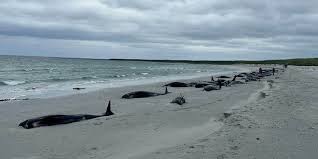
Why Whales Strand: Understanding the Mysteries of Stranding
Whale strandings are intriguing phenomena that have concerned scientists and environmentalists. This article explores the reasons behind this behavior and how we can help.
Natural Causes of Stranding
Imagine a giant of the sea, lost in the sands of a beach. This is the agonizing reality many whales face when they strand. Researchers and marine biologists are trying to understand the underlying causes of these tragic and often inexplicable events. This reveals an intriguing panorama that highlights the delicate balance between nature and the health of these majestic aquatic mammals.
Illnesses and Health Conditions
One of the natural factors that can lead whales to strand is the presence of diseases. These creatures are susceptible to various ailments that affect their immune system and, ultimately, their ability to navigate. Viruses, parasites, and bacteria can compromise the health of whales. It is fascinating to note that, especially in nutrient-rich areas, some of the greatest threats to whale health come from the very prey they consume.
Migration Behavior
Moreover, migratory behavior also plays a crucial role. Whales are known for their long journeys in search of food and reproduction. However, during these migrations, changes in ocean currents or water temperature can result in disorientation. When these giants of the sea find themselves outside their usual habitat, stranding becomes a more likely tragedy. Therefore, when considering the natural causes of stranding, we realize that whales face not only diseases but also the challenge of navigating in a constantly changing world. These complexities underline the importance of exploring how human activities may further affect the vulnerability of whales, a question that will be our next discussion.
Impact of Human Activities
As we unravel the mysteries of whale stranding, a predominant factor emerges from the dark and polluted depths of the oceans. Each stranding represents not only a tragic individual fate but also a painful reflection of human activities that shape the habitat of these majestic creatures. Pollution, in its various forms, acts as a subtle poison, disrupting the natural balance that whales depend on. Industrial chemicals, microplastics, and organic waste penetrate their ecosystems, often with devastating consequences.
Pollution and Its Effects
These impurities are not merely a visible nuisance; they directly impact the health of whales, affecting their behavior and navigation. When these magnificent creatures ingest toxic substances, their cognitive and physiological capabilities deteriorate. Furthermore, noise pollution caused by human activities confuses the echolocation systems that whales use to navigate and hunt. In this tumultuous sea, the opportunities for disorientation and, consequently, stranding increase.
Maritime Traffic and Collisions
Another criminal factor contributing to whale stranding is intense maritime traffic. Massive ships cross the oceans, creating an insurmountable barrier for whales in some areas. Collisions with vessels are one of the most alarming dangers they face, often resulting in fatal injuries or death. Thus, the increase in trade routes is becoming a critical factor in stranding patterns. Therefore, as we explore possible solutions to these challenges, it is up to us, as stewards of preservation, to protect these magnificent and vulnerable beings. This account of the impact of human activities leads us to consider another vital aspect: climate change and its effects.
Climate Change and Its Effects
As the planet warms, whales face unprecedented challenges that threaten their existence. The majestic sight of these creatures swimming freely in our oceans hides a struggle against climate change that transforms the marine environment into a tumultuous battlefield. So, what is behind this alarming phenomenon?
Ocean Warming
Ocean temperatures are rising, which has drastic effects on marine life. The increase in temperature affects the distribution and migration of species that are essential food for whales. With the displacement of schools, many whales may find themselves forced to travel greater distances in search of food. This relentless quest not only demands more energy but also exposes them to additional dangers, such as fishing nets and vessels. Thus, a cycle of stress begins, affecting both individual health and population sustainability.
Impacts on Marine Habitats
Climate change also causes alterations in marine habitats, including coral reefs and seagrass meadows. Thermal stress and ocean acidification are destroying these vital ecosystems, which serve as nurseries for many species. Without these safe habitats, whales may struggle to find suitable places to give birth and raise their young, further compromising the sustainability of their populations. Therefore, the marine ecosystem is becoming a less hospitable place, signaling an important alert about conservation.
As whales attempt to navigate the changes in their environment, each stranding brings urgent questions about our interaction with nature. Thus, our reflections lead us to the next chapter, where we will explore how science seeks to understand these complex phenomena through studies and research.
Scientific Studies and Research
Whale strandings have always captivated the attention and curiosity of scientists and environmentalists. These giants of the sea, often appearing on deserted beaches, bring an intrinsic mystery. Ongoing research into these complex phenomena reveals not only the reasons behind these tragic events but also the measures we can take to mitigate them. Historically, mass strandings have intrigued researchers, leading them to investigate factors that go beyond the mere biology of whales.
The Role of Technology in Investigations
With advancements in technology, new tools have been developed to monitor and understand whale behavior. Equipment such as satellites, underwater sensors, and sonars have been used to track feeding locations and the migration of these marine mammals. As a result, scientists can gather crucial data on how climate change and pollution affect their migratory routes. Studies reveal that maritime noise from industrial vessels can confuse whales, disorienting them and potentially leading to stranding.
Recently, some researchers have focused on analyzing the social behavior of whales. Scientists’ work suggests that, in some cases, whales strand in groups, possibly in an attempt to help a sick or lost group member. This social dynamic raises questions about the evolution of behavior and collective survival. Furthermore, research indicates that whales are becoming increasingly vulnerable to environmental changes and human activity. Consequently, new strategies are being proposed for the conservation of these majestic beings, such as those you can discover in this article about actions to protect whales. Thus, as we investigate the mysteries of stranding, we notice that science not only strives to unveil reality but also inspires us to act for the oceans.
Understanding the intricate details behind strandings is crucial. This highlights the need for interactive collaboration among scientists, governments, and communities. In the next section, we will explore practical actions we can undertake to protect these magnificent sea beings.
What Can We Do?
Imagine a world where majestic whales can swim freely, without the fear of stranding or harm to their habitat. Unfortunately, this ideal scenario is far from reality, but the good news is that each of us can contribute to a safer future for these magnificent creatures. By understanding the challenges they face, we can turn empathy into action.
Education and Awareness
The first crucial step is education. Learning about whales and the reasons behind strandings is fundamental. By raising awareness in schools, communities, and social networks, it is possible to create an army of advocates. Additionally, local events promoting marine preservation can be organized to engage people. Together, we can disseminate vital information about the importance of conservation and safe practices when encountering these incredible creatures. This includes following guidelines on whale watching, avoiding disturbing their space.
Active Participation
Another important step is active participation in beach and ocean cleanup initiatives. Removing trash, especially plastics, contributes to the health of the marine ecosystem. Thus, coastal residents should unite and participate in cleanup efforts. Information on how to do this can be obtained from organizations working in whale conservation. Finally, it is vital to pressure regulatory bodies and engage in discussions about marine protection policies. Real change begins when communities demand action, ensuring a safe future for whales and their habitats. As we carry forward these actions, we are also invited to reflect on the connection we have with the ecosystem. After this journey of awareness, we can move toward another fascinating topic: the history of incense and its traditions, where we can further explore how humanity interacts with the natural world.
Conclusions…
Whale strandings reflect serious problems affecting our oceans and the planet as a whole. Understanding their causes, from natural factors to human interference, is essential for the conservation of these magnificent creatures. Simple actions can make a difference and preserve marine life, showing that we can all contribute to a better future. By raising awareness and practicing sustainable attitudes, we can create an environment that favors the survival of whales and other marine inhabitants.
Did You Know?
What causes whale strandings?
Whale strandings can be caused by various factors, including diseases, disorientation, pollution, and climate change.
How do scientists study strandings?
Scientists conduct necropsy analyses, collect data about the environment, and observe whale behaviors in their natural habitat.
What can I do to help whales?
You can help by reducing plastic use, supporting organizations that work in marine conservation, and informing others about strandings.
Do climate changes affect whales?
Yes, climate changes affect the habitats and migratory routes of whales, making them more vulnerable to stranding.
What are the consequences of stranding?
The consequences include the death of whales, impact on local populations, and damage to the marine ecosystem.
Do whales strand only at certain times of the year?
While they can strand at any time, some periods of the year are more frequent due to migrations and environmental changes.
Is it safe to approach a stranded whale?
No. Approach with caution and preferably inform authorities or experts, as the whale may be in danger.
How do whales communicate with each other?
Whales communicate mainly through sounds like songs and clicks, which are important for social interaction and navigation.