
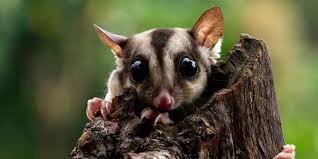
Sugar Glider: The Little Wonder That Charms
The sugar glider is a captivating species, found in the forests of Australia and New Guinea. In this article, we explore its habitat, behavior, and peculiarities, revealing why this little creature is so special.
The Origin of the Sugar Glider
Imagine a small creature that combines beauty and complexity of life in a rich and vibrant habitat. The sugar glider, with its vibrant coloration and unique characteristics, is a true symbol of what nature can create. This fascinating marsupial, primarily found in Australia and New Guinea, stands out not only for its appearance but also for the history that led to its evolution in these unique habitats.
A Refuge in Australia and New Guinea
The habitats where the sugar glider thrives are crucial for its existence. The tropical rainforests and wet woodlands of the region provide shelter and abundant food. The diverse vegetation, composed of eucalyptus and native plants, creates an ideal environment for the sugar glider’s nocturnal life. Additionally, the varied climates allow these marsupials to adapt and survive under different conditions, resulting in a unique evolution.
The Evolution of the Sugar Glider
The evolution of the sugar glider dates back thousands of years. While many marsupials have gone extinct, the sugar glider has perfectly adapted to its environment. Its ability to glide between trees is an essential adaptation, allowing it to locate food and escape predators. This skill makes it a fascinating example of how nature shapes its inhabitants. To better understand the vital adaptations of creatures inhabiting remarkable ecosystems, such as the platypus, it is important to observe their unique interactions with the environment.
As we continue to explore the incredible world of the sugar glider, we can appreciate not only the beauty of its habitat but also the complex interactions that nocturnal life brings to this charming little marsupial.
Behavior and Lifestyle
As we delve into the fascinating universe of the sugar glider, we are immediately drawn to its social peculiarities and nocturnal habits. These small nocturnal marsupials not only enchant with their appearance but also with their complex interactions within their colonies.
Social Behavior
When darkness falls over the sugar glider’s habitat, their activities come to life. In groups, usually composed of up to fifteen individuals, they become more than just solitary beings; they form a true community. This social behavior is not just a matter of survival but also of comfort and safety. Through soft vocalizations and subtle gestures, these marsupials communicate with each other, reinforcing bonds and establishing hierarchies. It is observed that each sugar glider plays an important role in maintaining the cohesion of the group.
Nocturnal Habits
As night settles in, the sugar glider becomes more active, venturing out to explore its surroundings in search of new territories. This nocturnal activity is fundamental, as it avoids competition with daytime predators. During these explorations, they often interact with other species, thus contributing to the rich tapestry of the ecosystem. It has been noted that their interactions are not limited to their kind; they often venture close to the young of other species. Such behavior demonstrates remarkable curiosity and a sociable character.
Thus, as we conclude our observation of the intricate social behavior and nocturnal habits of the sugar glider, we realize that every aspect of its life is interconnected by a common thread of interaction and coexistence. This leads us to the next chapter, where we will address its feeding and diet, equally essential elements for its survival in this web of life.
Feeding and Diet
Diving into the fascinating world of the sugar glider, we find a delicate and intriguing being, whose diet is key to its survival. This creature, common in tropical forests, does not limit itself to a single type of food. Instead, it has a varied diet that reflects the abundance of its habitat. Its main source of sustenance is nectar, found in the most vibrant flowers. These sugary fluids are not only tasty but also essential for the sugar glider’s survival.
The Variety in the Diet
In addition to nectar, the sugar glider feeds on ripe fruits. The diversity of its diet, therefore, not only ensures indispensable nutrients but also aids in the pollination of the plants it visits. By seeking nectar, it becomes a pollinator, essential for the cycle of life in the forest. Thus, the connection between its feeding and the ecosystem is noteworthy.
Impacts on Survival
The feeding habits of the sugar glider have a significant impact on its survival. This becomes evident, especially during dry periods when the availability of flowers decreases. During these times, these beings develop adaptive strategies. For example, they may change their foraging routes, exploring less visited areas. This ability to adapt is crucial; otherwise, a shortage of nectar could lead to their extinction. Thus, the delicate balance between feeding, habitat, and ecology unfolds incessantly, weaving the tapestry of the sugar glider’s life. Understanding the feeding of this exceptional insect is, therefore, a vital step in appreciating all its charm. Throughout this journey, we note that feeding habits are more than choices; they are matters of life and death. In the next chapter, we will explore how their gliding abilities complement their survival and enrich their dance in nature.
Gliding Abilities
Imagine yourself in a tropical forest, where sunlight filters through vibrant leaves. Suddenly, a gentle movement catches your attention. The sugar glider stands out, gliding gracefully between the trees, utilizing its exceptional gliding abilities. This capacity is not just a display of beauty; it is a crucial element for its survival.
The Wings That Enchant
The wings of the sugar glider are more than locomotion organs; they are adapted to maximize time in the air. With a lightweight structure and a generous wingspan, these stunning beings can glide long distances. By spreading their wings, they take advantage of air currents, saving energy while moving.
The Importance of Gliding
This ability is vital not only for locomotion but also for defense. In dense environments, where predators are a constant threat, gliding offers a tactical advantage. Instead of moving quickly on the ground, the sugar glider floats gently away from danger. Furthermore, this dexterity allows them to reach fruits and nectar, an essential part of their diet. Thus, as we consider the resilience of the sugar glider, we realize how its gliding abilities are a true wonder of nature. These adaptations not only sustain its life but also enrich the ecosystem around it, promoting a harmonious relationship with the environment. In the next chapter, we will explore the threats this little wonder faces and the initiatives aimed at ensuring its future.
Conservation and Future of the Sugar Glider
In the magical dance of life, where each creature plays its role, the sugar glider faces a silent danger that threatens its existence. This magnificent species, with its stunning beauty, finds itself in a scenario of challenges ranging from habitat loss to climate change. The struggle for the sugar glider’s survival is a powerful reminder that nature needs protection.
Threats to the Sugar Glider
The tropical forests, which serve as the sugar glider’s home, are being deforested at alarming rates. Additionally, pollution and excessive pesticide use deteriorate the vital environments of these delicate beings. It is in this context that the sugar glider becomes a symbol of the fight against environmental destruction. If nothing is done, we may lose this wonder of nature.
Conservation Initiatives
The good news is that various conservation initiatives are underway. Research groups and environmental organizations work tirelessly to protect the sugar glider’s natural habitat. Replanting and environmental education programs have been implemented, encouraging communities to participate in preserving local biodiversity. The collective awareness generates a wave of hope, and with it, new possibilities arise.
As we look to the future, maintaining conservation efforts will be crucial. Climate change and environmental degradation can only be faced with a united and sustained effort. Therefore, protecting the sugar glider is not just about one species; it is a fight for the integrity of our planet. Every action counts, and the future depends on what we do now.
Conclusions…
The sugar glider is more than just a simple species of possum; it is a symbol of the unique biodiversity of Australia and New Guinea. Its adaptations to the environment, social behavior, and ability to glide are just some of the reasons why this creature continues to fascinate biologists and nature lovers. Protecting its habitat is crucial to ensure that future generations can appreciate this charming little marsupial. The study and conservation of wildlife, such as the sugar glider, remind us of the importance of nature and the need to care for our planet.
Did You Know?
Where is the sugar glider found?
The sugar glider is native to the East and North of Australia, New Guinea, and the Bismarck Archipelago.
What is the diet of the sugar glider?
This species primarily feeds on nectar, fruits, and leaves, having a diet adapted to its arboreal environment.
How does the sugar glider move?
It is known for its ability to glide, using a membrane between its limbs to move between trees.
What is the size of the sugar glider?
This small marsupial measures about 20 to 30 cm in length, excluding the tail, which can be equal to or longer than its body.
What are the social characteristics of the sugar glider?
Sugar gliders are generally social and can live in groups, interacting amicably with each other.
What is the lifespan of the sugar glider?
On average, these marsupials can live between 5 to 10 years in captivity.
Is the sugar glider an endangered species?
Although the sugar glider is not currently endangered, habitat destruction is a concern that could affect its populations.
How can we help preserve the sugar glider?
Contributing to the preservation of its natural habitat and supporting conservation initiatives are important ways to help this charming species.