
Bacteria MRSA: The Invisible and Super Resistant Enemy
MRSA is a super-resistant bacterium that poses a growing challenge in healthcare settings. Discover its characteristics and how to protect yourself.
What is MRSA Bacteria?
After exploring the history of super-resistant bacteria, let’s focus on one of the most formidable agents that has emerged in the medical field: methicillin-resistant Staphylococcus aureus, better known as MRSA. Silent and relentless, this bacterium defies conventional treatments and represents a cunning adversary in the global health battle.
Scientific Classification and Characteristics
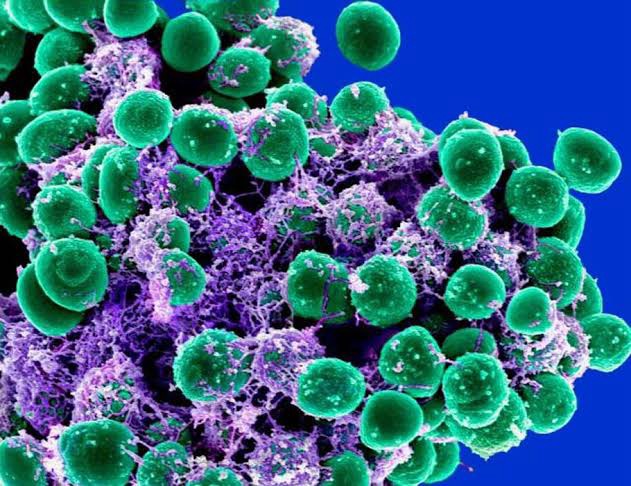
MRSA belongs to the genus Staphylococcus, which includes spherical bacteria commonly found on human skin and in the nose. However, this microorganism stands out for its ability to survive adversities, aided by genetic modifications. Understanding how this bacterium exploits its genetic potential is crucial.
Classified as Gram-positive, MRSA has a robust cell structure that protects it from many antibacterial agents. Its colonies, easily cultivated in laboratories, often display a golden sheen, indicating the dangerous arsenal they possess. Over time, through mutations and gene exchanges, this bacterium has developed a particularly notorious resistance to methicillin, an antibiotic once effective.
Antibiotic Resistance: An Alarming Evolution
The 1940s celebrated the introduction of antibiotics, revolutionizing bacterial infection treatment. However, we regret to realize that over the decades, indiscriminate and improper use of these drugs paved the way for bacterial resistance development. For MRSA, excessive drug use propelled its evolution, allowing it to repair damage more quickly and resist traditional therapies.
Reflecting on the challenges posed by MRSA is a reminder that antibiotics may become less effective than initially imagined. In the next chapter, we’ll explore how to identify and diagnose MRSA infections, continuing our journey in this ongoing fight against this invisible enemy.
Symptoms and Diagnosis of MRSA
After delving into the microscopic world of MRSA, the question arises: how does this invisible enemy manifest? Often imperceptible, MRSA infections unfold in a variety of symptoms, challenging both patients and doctors.
Symptoms of MRSA Infection
MRSA, resilient and cunning, often begins as small red bumps on the skin, which can be mistaken for insect bites or early acne. These lesions, however, quickly worsen, turning into painful abscesses requiring surgical drainage. Such manifestations are more common in areas like armpits, back of the neck, groin, and often on limbs.
Additionally, depending on the severity and the body’s ability to resist, the infection can spread beyond the skin, affecting the lungs with symptoms like high fever, chest pain, and productive cough, a condition known as MRSA pneumonia. Without proper treatment, the bacterium can invade the bloodstream and cause potentially fatal systemic infections.
Medical Diagnosis of MRSA
In combating this threat, early identification is crucial. Doctors usually start with a visual inspection of skin lesions. However, for confirmation, samples from wounds, nasal secretions, and blood are collected for laboratory culture. This procedure reveals the presence of MRSA, distinguishing it from less resistant Staphylococcus bacteria.
Besides culture, antibiotic sensitivity tests are conducted to determine the most effective treatment, considering MRSA’s natural resistance to traditional medications. With these diagnostic techniques, doctors can devise treatment strategies that will be explored in the next chapter, where the challenges faced by healthcare professionals are highlighted. Amid this microscopic battle, we remember that, as in nature, adaptability and knowledge are our greatest weapons. For those interested in natural survival stories, check out the resilience of elephants.
Treatment and Challenges of MRSA
Bacterial resistance is one of the greatest challenges of the 21st century, and MRSA symbolizes this ongoing struggle. This tiny and almost invisible enemy challenges modern medicine, forcing researchers and doctors to relentlessly seek new solutions for effective treatments. How do you deal with an adversary that strengthens with each eradication attempt?
Too Many Limited Options
The most common approach to MRSA treatment involves using specific antibiotics designed to overcome the bacterium’s natural resistance. However, not all antibiotics work. Only medications like vancomycin and linezolid show some efficacy. However, administering these drugs can be complicated, requiring strict medical supervision due to potential side effects. As MRSA resistance increases, the effectiveness of these treatments is also at risk.
Beyond conventional treatments, research is advancing in areas like bacteriophage therapy, which uses viruses to attack bacteria. This promising line of treatment seeks to circumvent natural resistance but still requires extensive testing to prove its safety and efficacy.
The Challenges for Healthcare Professionals
In every hospital ward, the challenge of controlling MRSA infections is monumental. Healthcare professionals face the urgent need to diagnose and treat quickly while preventing spread in community settings. Infection control practices are essential, but effectively implementing these protocols faces practical barriers, such as overcrowding and lack of resources.
For all these reasons, the search for effective treatments continues, spiced with a dose of innovation and a thread of hope. The mandatory connection between prevention and treatment should guide future efforts, as we will see in the next chapter: Prevention and Control of MRSA Infections.
Prevention and Control of MRSA Infections
After examining MRSA’s adaptability and resistance, it’s essential to understand how we can potentially halt its advance. Imagine yourself in a modern hospital—the last line of defense in the war against the invisible. Here, meticulously crafted strategies come into play to prevent MRSA from multiplying, reaching the community beyond its walls.
Prevention Strategies in Hospital Settings
At the heart of hospitals lies a complex prevention system. Here, hand hygiene is the first line of defense, a simple yet crucial act against infections. Sterilized equipment and a clean environment are of utmost importance, as the threat persists on every surface. Healthcare workers, therefore, become the guardians employing aseptic techniques for any procedure. Additionally, technological implementations, such as contact tracing and infection monitoring, facilitate solid early detection.
On the other hand, responsible antibiotic use is indispensable. It’s not only for individual protection that these practices endure but to preserve the efficacy of medications for all of us. Thus, with rigorous plans integrated into daily practices, hospitals aim to minimize the escalation of resistant MRSA.
Prevention in Communities
Moving from hospital structures to community spaces, MRSA prevention demands effective public education. Informative campaigns teach how to recognize early signs of infection while promoting the importance of hygiene practices. An engaged community environment, sharing the responsibility of health, is fundamental.
A collaborative approach, involving schools, community centers, and public health management, strengthens protection. The simple act of covering wounds and avoiding sharing personal items becomes an essential element in combating MRSA.
With hospital and community environments working together to reduce MRSA spread, we now turn to the impact of these infections on society, exploring how they are woven into the broader fabric of public health.
Impact of MRSA on Society and Public Health
Exploring the complex infections caused by MRSA, we encounter a microscopic enemy, but of gigantic proportions in its consequences. In every corner of our healthcare institutions, the fleeting vision emerges of what easily transforms from a simple bacterial occurrence into a multifaceted calamity. Meanwhile, the implications resonate beyond clinical walls, echoing at the heart of our communities. The impact on society and public health not only appears in infection and mortality rates but also exacts a heavy toll on global social and economic well-being.
Economic and Social Implications
MRSA often emerges as a protagonist in overcrowded hospitals, where it promotes an infection cycle that not only increases medical costs but also prolongs the occupation of scarce hospital beds. These costs have affected healthcare systems already in financial difficulty, reallocating resources that could have been directed to other medical needs. Additionally, the families of victims see their homes crumble under the pressure of recurring infections, while employees sometimes face months away from their workplaces due to complications.
Concern grows even more when considering vulnerable communities facing barriers to effective treatment access. These populations often serve as fertile ground for the exacerbated spread of infection, a spiral that further aggravates the social injustice so prevalent in our societies.
Public Health Initiatives and the Battle Against MRSA
Public health strategies emerge as bulwarks in this conflict. The implementation of preventive measures, such as rigorous hygiene and reducing indiscriminate antibiotic use, has been a central focus in attempting to mitigate the spread of this resistant bacterium. Educational campaigns are also gaining ground, teaching the public and healthcare professionals to recognize symptoms early and act quickly.
In conclusion, as we continue our investigative journey, we must consider not only the immediate threat of MRSA but how it weaves a complex web into the fabric of our society. Moving to the next chapter, we will examine the potential in scientific innovation that can help us face this challenge.
Conclusions…
In this article, we explored MRSA, a bacterium known for its resistance to common antibiotics. This bacterium represents a significant challenge for healthcare systems worldwide due to its ease of spread and difficulty in treatment. We discussed its causes, typical symptoms of the infections it causes, and available treatment strategies. We also addressed essential preventive measures to control its spread. It’s vital that healthcare professionals and the general public are aware of the risks and know how to protect themselves adequately to prevent the proliferation of this dangerous bacterium.
Did You Know?
- What is MRSA? MRSA is a methicillin-resistant bacterium, making it difficult to treat with common antibiotics.
- How does MRSA spread? It can spread through direct contact with an infected person or contaminated surfaces.
- What are the symptoms of an MRSA infection? Symptoms include red, swollen, and painful skin, often with pus or other signs of infection.
- How to prevent MRSA infections? Regular hygiene, especially handwashing, and using disinfectants in public places are essential.
- What are the treatments for MRSA? Treatments include specific antibiotics and drainage of infected areas under medical supervision.
- Is MRSA dangerous? Yes, it can lead to severe complications, especially in people with weakened immune systems.
- Where is MRSA most commonly found? MRSA is frequently found in hospitals but can also occur in communities.
- What is the difference between MRSA and other bacteria? The main difference is MRSA’s resistance to many antibiotics that would kill other common bacteria.